
 Tolo News: The Ministry of Public Health reported a 38% increase in Congo fever in the last two months compared to the first month of the solar year. Sharafat Zaman Amarkhil, the spokesman for the Ministry of Public Health, said that in the first five months of this year, over 200 people across the country have been infected with this disease, and six people have died due to it. Click here to read more (external link).
Afghan migrant attacks German police with knife
 Khaama: German media reported that a 22-year-old Afghan man attacked police with a knife on Wednesday evening on the island of Rügen in northeastern Germany. The Bild newspaper wrote that the attacker was arrested and hospitalized, and the police were not injured in the attack. Last week, another Afghan asylum seeker, Sulaiman Atayi, attacked an anti-Islam rally in the city of Mannheim. In this attack, one police officer was killed, and several others were injured. Click here to read more (external link).
Related
Tolo News in Dari – June 8, 2024
US forces remain postured outside Afghanistan to address threats: Biden
 Ariana: US President Joe Biden has emphasized that American forces “remain postured” outside Afghanistan to address terrorist threats. Biden said this in a letter to the Speaker of the House of Representatives and President pro tempore of the Senate. Click here to read more (external link).
Afghanistan shock New Zealand by 84 runs for first win in history
 Ariana: Rampant Afghanistan mauled a lethargic New Zealand by 84 runs to grab top spot in Group C at the T20 World Cup with a shock win at the Guyana National Stadium on Saturday AEST. Afghanistan will next face Papua New Guinea at Brian Lara Cricket Academy on Friday, with the first ball scheduled for 10.30am AEST. Click here to read more (external link).
From refugee camps to World Cup glory: Inspiring journey of Afghanistan cricket

Jafar Haand
Matiullah Abid Noor
VOA News
June 5, 2024
WASHINGTON — When the parents of Karim Sadiq and Taj Maluk fled a wrecked Afghanistan torn apart by the 1979 Soviet invasion and infighting warlords, they didn’t imagine their children — Karim and Taj — would return to reunite the war-torn nation through cricket.
Taj Maluk became the first coach of the Afghan national team. Fans refer to him as one of the founding fathers of Afghan cricket. Younger brother Karim Sadiq played a key role in Afghanistan’s qualification in the World Cup in 2010, creating history for the cricket-loving nation of more than 40 million.
The brothers were brought up in a refugee camp called Katcha Garhi, in Peshawar, Pakistan. The family left a decent life in the eastern Nangarhar province to live in a sea of mud houses and poverty.
“Life was all struggle those days,” Karim Sadiq recalls. “Doing odd jobs in the night and playing cricket in the daytime. We used a stick as a bat, used to make plastic balls from plastic waste material.”
There was an old black-and-white TV set in their refugee camp where the young and elders watched international matches, including Pakistan winning the 1992 World Cup. These events had a huge influence on aspiring cricketers in Afghan refugee camps.
The elder brother, Taj Maluk, searched for talent in refugee camps and founded the Afghan Cricket Club, which arguably laid the foundation of the future Afghanistan team.
Another Afghan cricketer, Allah Dad Noori, also played a key role by pioneering a path for cricket in Afghanistan.
Like the brothers, many international Afghan players, such as Mohammad Shehzad, Raees Ahmadzai, Mohammad Nabi, and the country’s first global star Rashid Khan, now captain, all grew up learning cricket and becoming cricketers in Peshawar, Pakistan.
“It was our passion. We didn’t know then that Cricket would bring such happiness to the Afghan nation,” Karim Sadiq told VOA. “Cricket conveys a message that Afghanistan is not a country of war and drugs. It’s a country of love and sports.”
In 2001, after the invasion of the U.S. forces against the Taliban rule, cricket flourished in Afghanistan, which became an associate member of the ICC, the world’s cricketing body.
A new younger generation of cricketers emerged. Now, Afghanistan is a full member of the ICC’s elite club of 12 countries, and it enjoys the status of a test-playing nation.
The Afghan team won many hearts in the 2023 World Cup after earning wins against the former world champions — Pakistan, England and Sri Lanka.
“Afghan players fight for every match as they are fighting for the nation,” Pakistan’s former captain, Rashid Latif, who coached Afghanistan, told VOA. “T20 cricket needs aggression and Afghanistan players have it. They are capable of surprises in the World Cup.”
Now, Afghanistan is playing in the T20 Cricket World Cup co-hosted by the United States and West Indies. It has strong contenders like New Zealand and West Indies in the group, along with minnows Papa New Guinea and Uganda. Some experts call it the “Group of Death” because only two teams will make it through the knockout stage.
The Taliban banned all women’s sports and put restrictions on some men’s sports, but not cricket. There is speculation it’s because they enjoyed the game themselves or were apprehensive about the possible public reaction if they banned it, given its massive popularity.
A few weeks ago, when Afghanistan’s team captain, Rashid Khan, visited Afghanistan to meet family and friends, Taliban officials presented him with bouquets and took selfies with the superstar.
Rashid and his team members, including young superstars — batters Rehmanullah Gurbaz and Ibrahim Zadran, allrounder Azmatullah Omarzai, spinners Mujeeb-ur Rehman and Noor Ahmed — have arrived in the West Indies, as have their diehard supporters from Europe, Canada and the U.S.
Back in Afghanistan, Karim Sadiq is now working to promote the sport, while his elder brother, 49-year-old Taj Maluk, has turned to religion. “Cricket is not just a game. It reunites Afghans and brings joy to the lives of people,” Taj Maluk told VOA. “We will pray for their success.”
Karim Sadiq recalls when Afghanistan qualified for the T20 World Cup in 2010. “When we returned home, it was a festival. Everywhere, celebrating crowds held up the Afghan flag. We all wish to see such festivity again, to see Afghanistan become the World Champion.”
Across Afghanistan, fans have made special arrangements to view the matches. Some have pooled their money to buy dish antennas. Others have decorated the hujras, or living rooms, with national flags.
“Afghanistan is a wounded land. Cricket helps people stitch those wounds,“ said Shams ul Rahman Shirzad, a cricket fan in Nangarhar, from where the brothers Taj Maluk and Karim Sadiq hailed and once dreamed of having a national cricket team.
This story originated in VOA’s Afghan service.
Other Afghan Cricket News
Taliban official facing $10 million US bounty makes rare UAE visit

Sirajuddin Haqqani
Ayaz Gul
VOA News
June 5, 2024
ISLAMABAD — A senior Taliban leader in Afghanistan, wanted by the United States for terrorism, has concluded a rare visit to the United Arab Emirates, where he met with the host country’s leadership, an Afghan official said Wednesday.
Interior Minister Sirajuddin Haqqani traveled abroad for the first time since the Taliban took over the war-torn South Asian nation nearly three years ago. Reward for Justice, a U.S. Department of State program aimed at combating international terrorism, offers $10 million for information that will lead to Haqqani’s arrest.
UAE President Sheikh Mohamed bin Yazed Al Nahyan received Haqqani in Abu Dhabi, the Emirati capital, on Tuesday. The state-run WAM news agency reported the meeting and included a picture of them shaking hands.
“The two sides discussed strengthening the bonds of cooperation between the two countries and ways to enhance ties to serve mutual interests and contribute to regional stability,” WAM reported. It added that the discussions “focused on economic and development fields, as well as support for reconstruction and development in Afghanistan.”
There was no immediate U.S. response to Haqqani’s visit and meeting with the UAE president.
Zabihullah Mujahid, the chief spokesman of the Taliban government in Kabul, also confirmed the meeting but shared no other details. He said the Taliban’s spy chief, Abdul Haq Wasiq, accompanied Haqqani in the talks.
Wasiq was held for years in the U.S. military’s Guantanamo Bay detention center before being released with four other Taliban insurgents in 2014 in exchange for American soldier Bowe Bergdahl.
The Haqqani network of militants led by the Afghan interior minister captured Bergdahl after he left his post in 2009.
The network staged high-profile suicide and road bombings as well as guerrilla attacks on U.S.-led coalition forces during their nearly two-decades-long presence in Afghanistan until the then-insurgent Taliban returned to power in August 2021 as foreign militaries exited the country.
The U.S. FBI’s list of most wanted men identifies Haqqani as a specially designated global terrorist who maintains close ties to al-Qaida. It says the militant leader is wanted for questioning in connection with the January 2008 attack on a Kabul hotel that killed six people, including an American citizen.
While in Kabul, Haqqani regularly meets foreign diplomats and speaks in public. Regional diplomats say the interior minister meets visitors in secrecy and keeps changing venues, fearing a U.S. drone strike.
Haqqani appeared on CNN in 2022 with a conciliatory message for Americans. “In the future, we would like to have good relations with the United States,” he told the U.S. media outlet.
A U.S. drone strike in a posh neighborhood in the Afghan capital killed fugitive al-Qaida leader Ayman al-Zawahiri in 2022. U.S. officials said the slain terror leader was residing in a three-story safe house that was linked to Haqqani.
The Taliban protested the strike, saying it was a breach of the 2020 Doha agreement they signed with Washington, which paved the way for the U.S. to withdraw from the longest U.S. war in history.
The Taliban also pledged in line with the terms of the agreement not to harbor al-Qaida and other transnational militant groups seeking to attack America and its allies.
No country has recognized the Taliban government, citing human rights concerns and bans on Afghan women’s access to education and work.
While the U.S. and other Western nations moved their diplomatic missions out of Afghanistan, mostly to Qatar after the Taliban takeover, neighboring and regional countries, including China and Russia, have retained their diplomatic posts in Kabul and allowed Taliban envoys to run Afghan embassies.
U.S. officials have since held several meetings with Taliban representatives in Qatar’s capital, Doha, but they have had no interaction with Haqqani.
The UAE, Saudi Arabia, and neighboring Pakistan were the only countries that had recognized the previous Taliban government until it was ousted by the U.S.-led invasion for sheltering al-Qaida planners of the September 2001 terror strikes on America.
Haqqani’s visit to the UAE comes as the United Nations prepares to convene another international gathering in Doha of special envoys for Afghanistan later this month.
The Doha meeting on June 30 aims to increase, facilitate, and coordinate the world’s engagement with the country facing one of the worst humanitarian crises in the world amid deepening economic and financial troubles stemming from the Taliban takeover.
The Taliban were invited to two previous huddles but refused to join the Doha process of consultations. Kabul, however, has said it is conducting internal consultations after receiving a U.N. invitation to decide whether to attend the coming meeting.
De facto Afghan rulers had previously linked their participation to their acceptance as the sole official representatives of the country, meaning that Afghan civil society activists and members of opposition groups would not be present. The U.N. rejected those conditions, and it was not known if the world body would review its stance to ensure the Taliban’s participation.
Tolo News in Dari – June 5, 2024
ISIS In Afghanistan Has Capacity To Attack Across Region, Reports AUF
Sadat
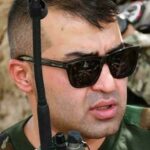
Afghanistan International: The Afghanistan United Front (AUF), led by Sami Sadat, former commander of Afghanistan’s special forces, published a report on the threats posed by ISIS. The report states that ISIS-Khorasan currently has 9,000 soldiers in Afghanistan and, with it has the capacity to conduct attacks “throughout the region”. The detailed report by the front was released on Wednesday. The report indicates that the number of ISIS forces in Afghanistan is rapidly increasing, and is gaining the operational capacity for suicide attacks, insurgency, and assassinations in cities as well as attack government facilities or economic centres throughout the region. Click here to read more (external link).
Taliban Publicly Flogs Dozens Of People In Northern Afghanistan
 By RFE/RL’s Radio Azadi
June 5, 2024
The Taliban has publicly flogged dozens of people in a sports stadium in northern Afghanistan after their convictions for crimes involving “immoral relations.”
In a statement, the Taliban’s Supreme Court said 63 people, including 15 women, were flogged in Sar-e Pol Province in the presence of local officials on June 4.
The court said those flogged were accused of theft and so-called moral crimes, including adultery, homosexuality, and eloping.
Public punishments are on the rise in Afghanistan, where the Taliban’s spiritual leader, Mullah Haibatullah Akhundzada, ordered the return of Islamic sentences in November 2022.
That included “qisas” and “hudood” punishments, which allow “eye-for-an-eye” retribution and corporal punishments for offenses considered to be in violation of the boundaries set by God.
Since then, hundreds across Afghanistan have been publicly flogged or had body parts amputated for crimes such as theft and adultery. The extremist group has also publicly executed at least five people convicted of murder.
The executions and punishments have underscored the Taliban’s commitment to imposing its extremist interpretation of Shari’a law.
The punishments have provoked strong criticism from human rights watchdogs and Afghans.
“Because of the bad deed of one person, the reputation of an entire family or community is destroyed,” a resident of the southwestern province of Nimroz told RFE/RL’s Radio Azadi. “Punishments shouldn’t be carried out in public.”
Shaharzad Akbar, an Afghan rights campaigner who headed the former Afghanistan Independent Human Rights Commission, said the aim of the Taliban’s “theatrical acts” is to incite fear.
“The Taliban’s form of governance is contrary to human rights,” she told Radio Azadi. “The human rights and human dignity of men and women are not important to them.”
Meanwhile, Islamic scholars have said the Taliban has failed to meet the stringent conditions required by Islamic law in implementing such harsh punishments.
Salahuddin Saeedi, an Afghan religious scholar, told Radio Azadi that the Taliban also lacks the legitimacy to carry out Islamic punishments.
The Taliban’s hard-line government is not recognized by any country in the world, while its extremist policies are opposed by many Afghans.
Under the Taliban’s first regime in the 1990s, public executions and punishments were common. The group gained international notoriety for using sports stadiums to carry them out.