
ISIS In Afghanistan Has Capacity To Attack Across Region, Reports AUF
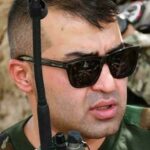
Sadat
Afghanistan International: The Afghanistan United Front (AUF), led by Sami Sadat, former commander of Afghanistan’s special forces, published a report on the threats posed by ISIS. The report states that ISIS-Khorasan currently has 9,000 soldiers in Afghanistan and, with it has the capacity to conduct attacks “throughout the region”. The detailed report by the front was released on Wednesday. The report indicates that the number of ISIS forces in Afghanistan is rapidly increasing, and is gaining the operational capacity for suicide attacks, insurgency, and assassinations in cities as well as attack government facilities or economic centres throughout the region. Click here to read more (external link).
Taliban Publicly Flogs Dozens Of People In Northern Afghanistan
 By RFE/RL’s Radio Azadi
June 5, 2024
The Taliban has publicly flogged dozens of people in a sports stadium in northern Afghanistan after their convictions for crimes involving “immoral relations.”
In a statement, the Taliban’s Supreme Court said 63 people, including 15 women, were flogged in Sar-e Pol Province in the presence of local officials on June 4.
The court said those flogged were accused of theft and so-called moral crimes, including adultery, homosexuality, and eloping.
Public punishments are on the rise in Afghanistan, where the Taliban’s spiritual leader, Mullah Haibatullah Akhundzada, ordered the return of Islamic sentences in November 2022.
That included “qisas” and “hudood” punishments, which allow “eye-for-an-eye” retribution and corporal punishments for offenses considered to be in violation of the boundaries set by God.
Since then, hundreds across Afghanistan have been publicly flogged or had body parts amputated for crimes such as theft and adultery. The extremist group has also publicly executed at least five people convicted of murder.
The executions and punishments have underscored the Taliban’s commitment to imposing its extremist interpretation of Shari’a law.
The punishments have provoked strong criticism from human rights watchdogs and Afghans.
“Because of the bad deed of one person, the reputation of an entire family or community is destroyed,” a resident of the southwestern province of Nimroz told RFE/RL’s Radio Azadi. “Punishments shouldn’t be carried out in public.”
Shaharzad Akbar, an Afghan rights campaigner who headed the former Afghanistan Independent Human Rights Commission, said the aim of the Taliban’s “theatrical acts” is to incite fear.
“The Taliban’s form of governance is contrary to human rights,” she told Radio Azadi. “The human rights and human dignity of men and women are not important to them.”
Meanwhile, Islamic scholars have said the Taliban has failed to meet the stringent conditions required by Islamic law in implementing such harsh punishments.
Salahuddin Saeedi, an Afghan religious scholar, told Radio Azadi that the Taliban also lacks the legitimacy to carry out Islamic punishments.
The Taliban’s hard-line government is not recognized by any country in the world, while its extremist policies are opposed by many Afghans.
Under the Taliban’s first regime in the 1990s, public executions and punishments were common. The group gained international notoriety for using sports stadiums to carry them out.
Copyright (c) 2024. RFE/RL, Inc. Reprinted with the permission of Radio Free Europe/Radio Liberty, 1201 Connecticut Ave NW, Ste 400, Washington DC 20036.
Afghan Taekwondo star Rezaee appointed head coach of Nepal national team

Khaama: The Afghanistan Taekwondo Federation has announced that Seyed Hassan Rezaee, a former national taekwondo team member, has been appointed as the head coach of the Nepal national team. On Tuesday, June 4, the federation congratulated Rezaee on his new position in Nepal and wished him success. Click here to read more (external link).
With Pensions Scrapped, Afghan Retirees Forced To Work As Street Vendors
 By RFE/RL’s Radio Azadi
June 4, 2024
Atel hauls a wooden cart every day around the Afghan capital, Kabul, selling vegetables.
The 70-year-old pensioner retired around five years ago. But since seizing power in 2021, the Taliban has stopped paying pensions.
That has forced thousands of pensioners like Atel back to work, often as street vendors, to feed their families amid a devastating economic and humanitarian crisis in the country.
“It’s been nearly three years since we last received our pensions,” Atel told RFE/RL’s Radio Azadi. “I don’t have the strength to do manual labor. But I buy onions and potatoes at the market each day and resell them.”
The work is grueling, and he only earns around $1 per day. But Atel, who has a family of eight, said he has no choice but to work.
Mohammad Nasim is another pensioner who has been forced to find a job. He sells notebooks and pens on the street, earning around $1 per day.
“I don’t have the means to do other work,” Nasim, who has a disability, told Radio Azadi. “On the other hand, I’m in pain and I don’t even have money to pay for my prescriptions.”
‘Un-Islamic’
An estimated 150,000 pensioners received a monthly payment of around $100 from the state before the Taliban takeover of Afghanistan, where the retirement age is 65.
But retirees have not been paid their pensions since then, pushing some families toward starvation. Many of the pensioners served governments that had fought against the Taliban.
In April, the Taliban’s spiritual leader, Mullah Haibatullah Akhundzada, ordered his government to stop deducting retirement contributions from the salaries of civil servants, effectively dismantling the pension system. Akhundzada suggested the system was “un-Islamic.”
The move triggered protests by retirees who said they cannot survive without state assistance.
Scores of retired civil servants and retired members of the armed forces staged a rally in Kabul on April 20. The protest was dispersed by the Taliban.
‘Poorest People’
Mass unemployment and rising poverty as well as the lack of government assistance have forced the elderly and even children to find what work they can. The Taliban’s severe restrictions on female employment has also deprived families of breadwinners.
Not all pensioners are able to work due to illness or their advanced age. And those who can find it difficult to secure even menial jobs.
“We have gray beards, our hands and feet tremble, and no one gives us work,” a pensioner, who attended the April protest and spoke on condition of anonymity, told Radio Azadi.
Aafandi Sangar, head of the Afghan Pensioners Association, said the “poorest people in Afghanistan are pensioners who can no longer work.”
“Some of them are doing hard work but some are sick [and unable to work],” he told Radio Azadi.
Sangar said pensioners will continue to protest and demand their rights from the Taliban government.
“This money is the personal money of the pensioners,” he said. “It’s not government money. Pensions are the inalienable right of every retiree.”
Written by Frud Bezhan based on reporting by RFE/RL’s Radio Azadi.
Copyright (c) 2024. RFE/RL, Inc. Reprinted with the permission of Radio Free Europe/Radio Liberty, 1201 Connecticut Ave NW, Ste 400, Washington DC 20036.
Tolo News in Dari – June 4, 2024
Iranian Newspaper Accuses Taliban Consulate Staff Of ‘Torturing’ Photographer
 By RFE/RL’s Radio Farda
June 3, 2024
A centrist Iranian newspaper has accused a Taliban representative in Iran of “torturing” a photographer, ultimately leading to his expulsion from the country.
The Jomhuri-ye Eslami newspaper claimed on June 1 that a Taliban representative in the Afghan Consulate in the northeastern city of Mashhad had “dragged” the unnamed Iranian photographer into the consulate and “tortured” him.
The paper said the photographer later filed a complaint against the “diplomat,” identified as “Dr. Salim,” which ultimately resulted in him being expelled from Iran and replaced by another Taliban representative.
The newspaper has been a staunch critic of the Taliban since the group seized power in Afghanistan in 2021 and has questioned Tehran’s willingness to maintain relations with the group.
In its report, Jomhuri-ye Eslami alleged that “Dr. Salim” was one of three “diplomats” who had moved into the consulate prior to receiving Iran’s approval. It described the move as a “sign of disrespect toward Iran.”
In the same piece, the newspaper claimed that the same trio had “kidnapped” Qari Eisa Mohammadi, a prominent Afghan opposition figure based in Germany who had traveled to Mashhad several months ago.
According to Mohammadi, he was held “prisoner” in the consulate for several days until Iranian authorities secured his release.
The authorities in Iran have been criticized for maintaining relations with the Taliban after it took control in Afghanistan. The Islamic republic has kept its embassy in Kabul open and handed over the Afghan Embassy in Tehran to the Taliban.
Nevertheless, Iran has not formally recognized the Taliban’s rule in Afghanistan and has called for the formation of an inclusive government.
Since the extremist group seized power in Kabul, Iran and the Taliban have had disputes over water rights and engaged in sporadic border clashes.
Copyright (c) 2024. RFE/RL, Inc. Reprinted with the permission of Radio Free Europe/Radio Liberty, 1201 Connecticut Ave NW, Ste 400, Washington DC 20036.
Afghanistan coach lifts the lid on his side’s secret playmaker
 Ariana: The presence of a two-time T20 World Cup winner is providing additional help to Afghanistan as they plot their way through the initial stages of the ICC Men’s T20 World Cup 2024. Afghanistan’s statement win in their opening group match shows they have the goods to make a deep impact in this edition of the ICC Men’s T20 World Cup. The Asian side’s openers showed solid form, while speedster Fazalhaq Farooqi ran through Uganda’s batting line-up. Such was their impact, that even ace spinner Rashid Khan wasn’t needed to do Rashid Khan things to win it for Afghanistan. Click here to read more (external link).
Tajikistan claims risk of radicalism from Afghanistan increasing
 Ariana: The risk of penetration of radical ideology from Afghanistan into the member countries of the Collective Security Treaty Organization (CSTO) is increasing, said Rustam Emomali, chairman of Tajikistan’s upper chamber of parliament. Addressing the Council of the Parliament Assembly of the Collective Security Treaty Organization in Almaty, Emomali said that more than 1,000 religious madrassas have been established in Afghanistan, most of which are located in provinces bordering CSTO countries, Russia’s TASS news agency reported. He claimed that these centers also train suicide bombers. Click here to read more (external link).
Related
Kazakhstan Takes Taliban Off Of Its Terrorist List
 By RFE/RL’s Kazakh Service
June 3, 2024
Kazakh President Qasym-Zhomart Toqaev said on June 3 that his country has taken the Taliban off of its terrorist list. Addressing a session of the parliament speakers of the Collective Security Treaty Organization (CSTO) in Almaty, Toqaev stressed the move was made to develop trade and economic ties with Taliban-led Afghanistan. Toqaev also called on the parliament speakers of Russia, Belarus, Kyrgyzstan, and Tajikistan to support Kazakhstan’s proposal to establish a UN regional center for the stable development of Central Asia and Afghanistan.
Copyright (c) 2024. RFE/RL, Inc. Reprinted with the permission of Radio Free Europe/Radio Liberty, 1201 Connecticut Ave NW, Ste 400, Washington DC 20036.