
UN Deviating From Primary Mission, Say Taliban Opponents at Vienna Meeting
 Afghanistan International: On the final day of the Vienna meeting, opponents of Taliban stated that setting the Doha meeting’s agenda according to the Taliban’s demands and the group’s unilateral participation indicates that the UN has deviated from its primary mission. In a declaration, they warned against any engagement and normalisation of relations between the international community and the Taliban. The final declaration of the Vienna conference stated, “The unilateral participation of the Taliban and setting the agenda according to their wishes not only delegitimizes the Doha meeting, but also the entire Doha process.” The participants of the Vienna meeting called on regional countries to refrain from cooperating with the Taliban in mining activities, stating that minerals are a national asset and should only be utilised by a legitimate government representing the people. Click here to read more (external link).
Related
Afghanistan National Cricket Team to face South Africa
 Khaama: The national cricket team is set to face South Africa in the 2024 Cricket World Cup semi-finals tomorrow, Thursday, June 27th. The match will take place at 5 AM local time in Afghanistan. This marks the first time the national cricket team has reached the semi-finals of the Cricket World Cup. Afghanistan’s cricket team defeated Papua New Guinea, Uganda, and New Zealand in the group stage and Australia and Bangladesh in the Super Eight stage, advancing to the 2024 Cricket World Cup semi-finals. The game is scheduled to be held at the Trobago Stadium in Trinidad, where Afghanistan defeated Papua New Guinea in the group stage. Click here to read more (external link).
Related
Cholera Outbreak Hits Afghanistan Amid Natural Disasters, Crumbling Health Care
 By Sana Kakar and Abubakar Siddique
June 25, 2024
Radio Free Europe/Radio Liberty
Shahabuddin had a brush with death when floods ripped through his community and washed away his home in northern Afghanistan.
Having survived one near-death experience, Shahabuddin soon encountered another foe: disease.
“Within 24 hours, I was so weak that I could barely walk,” the father of four, who lives in the province of Baghlan, told RFE/RL’s Radio Azadi.
Shahabuddin is among the nearly 47,000 Afghans who have contracted cholera so far this year, according to the World Health Organization (WHO).
A highly infectious bacterial disease, cholera spreads through contaminated food and water and results in acute diarrhea, fever, and dehydration. If untreated, it can lead to death.
At least 25 people have died of the disease so far in 2024 in Afghanistan, which has the highest number of cases in the world, according to a WHO report released on June 19.
Experts said a series of natural disasters, including floods that devastated swaths of northern and central Afghanistan in the spring and the country’s crumbling health-care system, are behind the sharp rise in cases.
‘No Access To Clean Water’
Sharafat Zaman Amar, a spokesman for the Taliban’s Ministry of Health, said Afghanistan “does not have any confirmed” cases of cholera.
But Faridullah Omari, a physician at the National Infectious Disease Hospital in Kabul, said each day the hospital receives up to 80 patients who are suffering from water-borne diseases like cholera.
He suggested the cholera outbreak has been fueled by lack of hygiene and more people drinking unsafe water.
Communities affected by the recent floods, which killed hundreds and impacted tens of thousands of people, said the deluges destroyed much of the water supply and infrastructure in the region. They also said there was a severe shortage of medicines available to treat infectious diseases like cholera.
“People don’t have access to clean water,” said Sharifullah, a resident of the northern province of Sar-e Pol, which was hit by floods.
“All the water is muddy from the floods,” he told Radio Azadi. “But people use this [dirty] water, and they don’t have the means to clean it. So people, especially children, are suffering from diarrhea.”
Khodayaqal, a resident of Baghlan, said they have little access to health-care facilities after the mobile clinics deployed by aid agencies and the Taliban government in the aftermath of the floods left.
“Our children are battling with diseases,” he told Radio Azadi. “We have one clinic here, but it doesn’t have any medicine.”
In its report, the WHO said diminishing stocks of cholera vaccines, as well as population growth, natural disasters, and climate change, have led to cholera outbreaks.
The public health-care system in Afghanistan, which was largely funded by foreign aid for nearly two decades, has been in free-fall since the Taliban takeover in 2021. The militants’ seizure of power led international donors to immediately cut financial funding.
Hundreds of health facilities have been closed in the past three years, with no funds to pay the salaries of doctors and nurses. Hospitals that are still open suffer from severe shortages of medicine.
While some foreign aid organizations continue to operate in Afghanistan, many of them have been forced to curb their work as international funding diminishes.
Copyright (c) 2024. RFE/RL, Inc. Reprinted with the permission of Radio Free Europe/Radio Liberty, 1201 Connecticut Ave NW, Ste 400, Washington DC 20036.
Tolo News in Dari – June 25, 2024
NRF & AFF Report Armed Attacks on Taliban in Kabul

Afghan Resistance Leaders: Zia (left) and Massoud (right)
Afghanistan International: The National Resistance Front (NRF) and the Afghanistan Freedom Front (AFF) announced on Monday evening that they had attacked a Taliban checkpoint and outpost in Kabul. The two groups claimed that seven Taliban fighters were killed in these attacks. On Monday, the National Resistance Front wrote on X that they had attacked a Taliban outpost in the Saray Laghman area in Kabul’s ninth security district, resulting in the deaths of two Taliban members and injuring one. The Afghanistan Freedom Front also posted a video on X stating that their attack on a Taliban checkpoint at the Alauddin intersection killed five Taliban members and wounded two others. Click here to read more (external link).
Joy in Afghanistan as national team makes cricket World Cup semifinal debut
Ayaz Gul
VOA News
June 25, 2024
Acting Minister of Foreign Affairs of the Islamic Emirate of Afghanistan, Mawlawi Amir Khan Muttaqi, had a telephone conversation with Rashid Khan, the captain of the team after guiding Afghan national cricket team to the semi-finals of the ongoing T20 Cricket World Cup. pic.twitter.com/XCoHzihORx
— Muhammad Jalal (@MJalalAf) June 25, 2024
ISLAMABAD — Thousands of people in Taliban-ruled Afghanistan took to the streets Tuesday to celebrate their national team’s first-ever entry into the cricket World Cup semifinals by beating Bangladesh.
Video from several cities, many bordering Pakistan, showed joyous rallies in the streets early in the morning, with reports of celebratory gunfire by fans in some areas, including the capital, Kabul.
The celebrations erupted shortly after the Afghan team completed a dramatic eight-run victory over the Bangladeshi side in a rain-affected, low-scoring match in St. Vincent in the West Indies late Monday.
“It’s something of a dream for us as a team…it’s unbelievable. I don’t have the words to describe my feelings,” Rashid Khan, the Afghan team captain, said after the match. “I’m sure it’s going to be a massive celebration back home. It’s a massive achievement for us. The country will be very proud.”
Taliban Foreign Minister Amir Khan Muttaqi in Kabul telephoned Khan and congratulated him on the landmark victory, his office said on social media platform X, formerly known as Twitter.
Authorities in the southern Afghan city of Kandahar officially ordered residents to celebrate the cricket team’s success inside their homes and avoid taking to the streets and roads for security reasons.
Hibatullah Akhundzada, the reclusive supreme leader of the Taliban, lives and governs the country from Kandahar, issuing edicts based on his strict interpretation of Islamic law, which includes restrictions on women’s and girls’ rights and freedom of movement.
Afghanistan scored 115 runs in their allotted 20 overs, but weather conditions led Bangladesh to chase a revised target of 114 runs in 19 overs under relevant cricketing rules.
Khan and Afghan pacer Naveen ul Haq displayed a brilliant bowling performance, bagging four wickets each and dismissing the Bangladeshi team for 105 in 17.5 overs.
Afghanistan will now face South Africa in the first semi-final in Tarouba, West Indies. Its historic semifinal appearance came two days after it surprised the world by scoring its first-ever victory over Australia, the cricketing superpower, in the Twenty20 World Cup jointly hosted by the United States and West Indies.
The Afghan victory has eliminated Australia from the tournament. After losing its crucial match to India earlier on Monday, Australia needed Bangladesh to defeat Afghanistan to advance to the semifinals.
Cricket began to gain popularity in Afghanistan following the ouster of the Taliban in 2001 by a U.S.-led military invasion of the country. Afghans, who had been living in refugee camps in Pakistan, are credited with bringing the game to their impoverished South Asian nation.
Afghanistan joined the International Cricket Council (ICC) in 2017. Since the Taliban returned to power in 2021, the national team has mostly trained and played outside the country.
The international community has not formally recognized the Taliban government mainly for restricting Afghan women’s access to education, employment, sports, and public life at large. The curbs have prompted some countries to boycott bilateral cricket competitions with Afghanistan.
Australia has declined to play Afghanistan several times.
This past March, Australian cricketing officials canceled a three-match series due to take place in the United Arab Emirates in August. They referenced government advice that the situation for women and girls was deteriorating in Afghanistan under Taliban rule.
The rare World Cup success of the national team and the resulting celebrations in Afghanistan contrast with the country’s deepening economic, humanitarian, and human rights crises caused by years of war and natural disasters.
Related
Armed Nomads Invade Central Afghanistan: Crops Destroyed, Locals Shot At
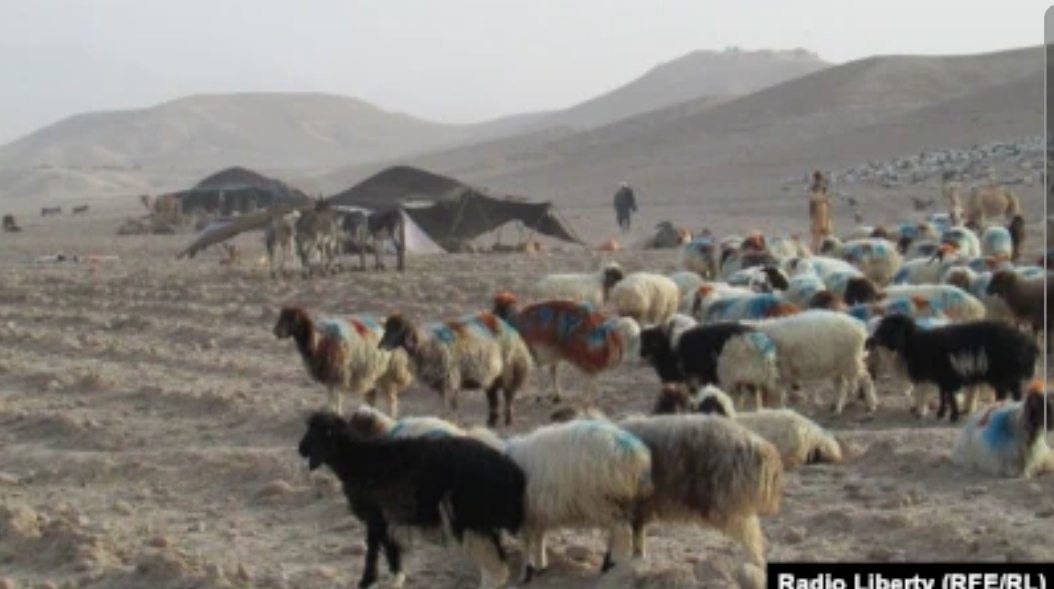
A Kuchi camp (file photo)
8am: Over the past month, armed nomads have attacked parts of the Hazara-populated districts in the provinces of Ghazni and Maidan Wardak. Residents of these areas report that the nomads, in addition to destroying their crops, have engaged in shooting and beating local people. In one instance, they claimed ownership of individuals’ private lands. Residents of the affected areas who have complained about the harassment by the nomads say they approached local Taliban authorities in these districts, but the officials directly supported the nomads and refused to expel them from residential areas. Since the Taliban’s takeover of Afghanistan, nomads have, with the group’s support, claimed ownership of lands in several Hazara-populated areas in the central provinces of Afghanistan, sometimes forcing people to relocate and pay exorbitant fines. Click here to read more (external link).
Tolo News in Dari – June 24, 2024
Afghans Moving Toward Political Unity, Says NRF

Nazary
Afghanistan International: Ali Maysam Nazary, the head of foreign relations for the National Resistance Front (NRF), stated that the people of Afghanistan are closer to achieving political unity and consensus about the future of their country. Speaking on the sidelines of the Vienna conference on Monday, Nazary called on the international community to “abandon the failed policy of appeasement” and support the Vienna conference. Meanwhile, Rangin Dadfar Spanta, former National Security Advisor of Afghanistan, described the Taliban as a “disaster” at the fourth Vienna Conference for a democratic Afghanistan. Click here to read more (external link).
Related