
 Afghanistan International: On Monday, the Afghanistan Freedom Front (AFF) stated that its members had attacked a “convoy of Taliban intelligence militia” in the Karte Sakhi area of Kabul city. The AFF claimed that four Taliban members had been killed and another individual had been injured in this attack. This is the second attack by this group in the past two days. The Afghanistan Freedom Front also claimed on Monday that it had targeted the director of Taliban transportation in Baghlan province. Click here to read more (external link).
Interview: Pakistani Islamist Leader Opposes Military Operation To Root Out Militants
 By Tahir Khan
Radio Free Europe/Radio Liberty
July 23, 2024
Maulana Fazlur Rehman, leader of the largest Islamist party in Pakistan, has voiced his opposition to a planned operation by the military to root out militants along the Afghan border.
In an interview with RFE/RL’s Radio Mashaal on July 22, the controversial cleric called for peace talks between Pakistan and Tehrik-e Taliban Pakistan (TTP), the most lethal militant group waging war against Islamabad.
The comments from Rehman, the head of the Jamiat Ulema Islam-Fazl (JUI-F) party, came as militant violence has surged across the predominately Muslim nation of some 240 million people.
A high-profile bomb-and-gun attack on a military base in the northwestern city of Bannu on July 15 killed 10 government security personnel.
But residents of Khyber Pakhtunkhwa, the northwestern province that has been the scene of devastating military operations that uprooted millions of people and killed thousands of civilians in the past, have protested against any new military operations in the region.
“People are not ready to suffer yet again,” Rehman, who hails from Khyber Pakhtunkhwa, told Radio Mashaal. “We have been through bitter times.”
Thousands of people waving white flags and calling for peace rallied in Bannu on July 19 calling for an end to military operations in the region. The demonstration turned violent and security forces fired on protesters, killing one person.
Since then, thousands of people have been participating in a sit-in protest in Bannu.
“The voices in Bannu are the voices of all the residents of Pakhtunkhwa,” Rehman said.
Islamabad earlier this year said the military would launch a new offensive to combat militants along the Afghan border, without offering details.
Pakistani military spokesman Lieutenant General Ahmed Sharif on July 22 said the planned operation would be a “comprehensive counter-terrorism campaign” that would not displace locals.
But those comments have done little to quell the concerns of protesters and locals who fear for their lives and livelihoods in any new military offensive.
Since 2003, tens of thousands of civilians have been killed in major counterterrorism offensives in Khyber Pakhtunkhwa, where more than 6 million people have been displaced. The province was a former stronghold of the Afghan Taliban, the Haqqani network, and Al-Qaeda.
“People are ready to be buried in the ruins of their homes,” Rehman said. “But they do not want to be humiliated again.”
Peace Prospects
The TTP has intensified its deadly insurgency against Pakistan since the Afghan Taliban seized power in Kabul.
Islamabad has repeatedly accused the Afghan militants of sheltering the TTP, with which it has close ideological and organizational ties. Kabul has rejected the claim, and ties between Pakistan and the Taliban, which have been close allies for decades, have plummeted.
In January, the 71-year-old Rehman visited Afghanistan to repair ties. During his stay in Kabul, he met with Taliban officials, including its reclusive chief, Mullah Haibatullah Akhundzada, and TTP leaders.
In his interview with Radio Mashaal, Rehman said he presented a plan to resolve the conflict between Islamabad and the TTP with the mediation of the Afghan Taliban.
“But our [security] establishment and rulers are so incompetent that they didn’t accept that solution,” said Rehman.
Rehman said a peace deal was the only way to end the TTP’s 17-year insurgency against Islamabad.
In 2022, the Afghan Taliban brokered yearlong peace talks between the TTP and Islamabad. But the talks broke down and the TTP resumed its attacks.
Rehman has courted controversy for his support of the Afghan Taliban.
A JUI-F-led coalition governed Khyber Pakhtunkhwa between 2002-2007. Critics blame the party for sheltering the Afghan Taliban whose presence in the region led to the emergence of the TTP. Many Afghan Taliban leaders were educated in Islamic seminaries run by JUI-F leaders.
Written by Abubakar Siddique based on reporting by Tahir Khan of RFE/RL’s Radio Mashaal
Copyright (c) 2024. RFE/RL, Inc. Reprinted with the permission of Radio Free Europe/Radio Liberty, 1201 Connecticut Ave NW, Ste 400, Washington DC 20036.
Tolo News in Dari – July 23, 2024
Fazlur Rehman: Taliban to revise curriculum to foster positive Afghan perception of Pakistan
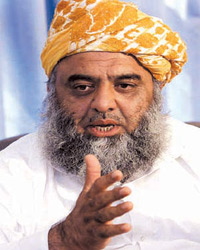
Fazlur Rehman
Khaama: Maulana Fazlur Rehman, leader of the Jamiat Ulema-e-Islam party in Pakistan, has stated that the Taliban are working on a new educational curriculum aimed at fostering a positive perception of Pakistan among the people of Afghanistan. Mr. Rehman mentioned that this new mindset would be based on principles of brotherhood, Islamic beliefs, and neighborly relations. He noted that previous Afghanistan governments promoted a negative view of Pakistan. Click here to read more (external link).
ACB proposes ODI fixtures against top-tiered teams
 Ariana: Afghanistan Cricket Board’s (ACB) Chairman Mirwais Ashraf, and CEO Naseeb Khan, this week discussed the possibility of a white-ball series with representatives from Cricket South Africa, Cricket New Zealand, and Cricket West Indies. Attending the ICC Board Meeting this week in Sri Lanka, Ashraf and Khan discussed potential bilateral ODI series ahead of the ICC Champions Trophy next year. Click here to read more (external link).
Other Cricket News
Taliban Intensifies Crackdown On Dissent In Afghanistan
By Firuza Azizi
Radio Free Europe/Radio Liberty
July 22, 2024
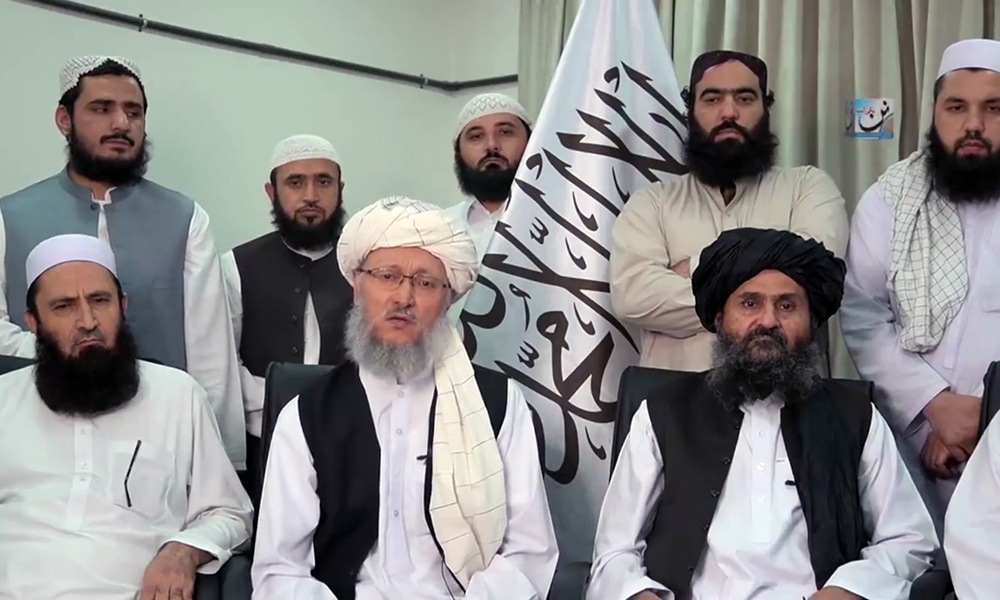
The Taliban has detained a former politician, a journalist, and a filmmaker in recent days across Afghanistan, according to their relatives.
The detentions mark a sharp escalation of the extremist group’s crackdown on dissent, a violent campaign that has targeted reporters, activists, and political figures.
The latest target of the clampdown was Sayyed Rahim Saeedi, a television producer and filmmaker based in the capital, Kabul.
Relatives of Saeedi, who spoke on the condition of anonymity for fear of retribution, told RFE/RL’s Radio Azadi that members of the General Directorate of Intelligence, the Taliban’s notorious intelligence agency, detained him and his son on July 20.
His son was freed on July 21, the relatives said.
It was not clear why they were detained. The filmmaker’s whereabouts remain unknown, and the Taliban has not commented on his detention.
Meanwhile, the Taliban detained Rohullah Rauf, the former head of the provincial council in the northeastern province of Takhar, a source close to him who spoke on condition of anonymity told Radio Azadi.
The source said Rauf was detained by the Taliban after returning home from Friday Prayers on July 19. It was unclear why he was detained, the source said.
Mowloda Tawana, an Afghan rights campaigner, said Rauf’s detention showed that the Taliban was not committed to the amnesty that it announced shortly after seizing power in 2021.
The blanket amnesty included all Afghan officials, security forces, and individuals who cooperated with the departed U.S.-led military presence in Afghanistan.
But international rights watchdogs and the United Nations have documented widespread cases of retribution — including extrajudicial killings and torture.
Meanwhile, freelance journalist Mohammadyar Majrooh was detained by the Taliban in the southern city of Kandahar, according to his relatives.
Relatives of Majrooh said the reporter was detained on July 12. His whereabouts are unknown, they said.
Majrooh was previously detained in February 2023 while working on a report for the private Tolo News channel.
In a statement issued on July 17, the Afghanistan Journalists Center, a local media watchdog, demanded that Majrooh be released “without further delay and without conditions.”
Hamid Obaidi, head of the Afghanistan Journalists Support Organization, another media watchdog, said the “illegal detentions and harassment of journalists violate the freedom of speech.”
“We strongly condemn these detentions,” Obaidi told Radio Azadi.
The Taliban’s intelligence agency did not respond to Radio Azadi’s requests for comment about the recent detentions.
Since its takeover in August 2021, the Taliban has detained and jailed scores of journalists, activists, and academics for publicly opposing its repressive policies.
Hundreds of Afghan journalists have fled their homeland because of intimidation or for fear of persecution. The Taliban has banned several international broadcasters and denied visas to foreign journalists.
As part of its assault on dissent, the militant group has also clamped down on political parties and local nongovernmental organizations. The Taliban banned all political groups and NGOs last year.
Written by Abubakar Siddique based on reporting by Firuza Azizi of RFE/RL’s Radio Azadi
Copyright (c) 2024. RFE/RL, Inc. Reprinted with the permission of Radio Free Europe/Radio Liberty, 1201 Connecticut Ave NW, Ste 400, Washington DC 20036.
AFF Claims Attack On Taliban Official In Baghlan
 Afghanistan International: The Afghanistan Freedom Front (AFF) announced on Sunday evening that its forces targeted “Mullah Zarin Gujar, the Taliban’s head of transportation” in Baghlan province. According to the front, in this attack, two Taliban members were “killed”, and there is “no precise information available” about the fate of Mullah Zarin. Click here to read more (external link).
Afghanistan has massive opium stockpiles despite Taliban ban: UN report
 Hindustan Times: Afghanistan continues to have massive stockpiles of opium that can be used to meet the needs of narcotics trafficking networks despite a ban imposed by the Taliban on poppy cultivation, according to a new report by the United Nations Security Council. A majority of drugs trafficked to India comes from Afghanistan, and Pakistan’s Inter-Services Intelligence (ISI) agency controls the network that is used to smuggle the narcotics to different Indian regions, particularly via the maritime route, Indian officials said. Click here to read more (external link).
Tolo News in Dari – July 22, 2024
Devastating Despair Under Taliban Rule: Sense of National Attachment Eroding

Taliban militants (file photo)
8am: In conversations with the Hasht-e Subh Daily, many citizens confirm that the Taliban’s administrative, financial, and sexual corruption has unprecedentedly increased and is rarely reported due to the repressive atmosphere. They claim that the squandering of public assets, particularly the country’s mines, has peaked, sounding the alarm for plunder. Moreover, the Taliban shot a 10-year-old child in Nangarhar province after he disobeyed their order to stop collecting wood and firewood. Sources say the child, named Taha, was shot by Taliban fighters when he ignored their command. Click here to read more (external link).