
Afghan consul general in Mumbai Zakia Wardak resigns
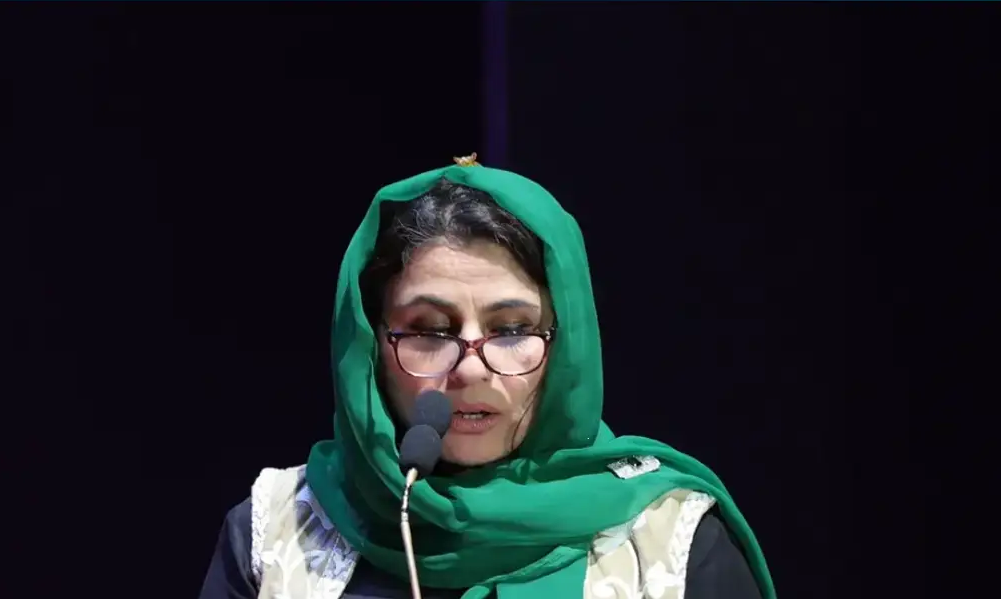
Zakia Wardak
Ariana: Zakia Wardak, Afghanistan’s consul general in India’s Mumbai city, resigned on Saturday, following reports of gold smuggling. The Times of India has reported that Wardak was caught at Mumbai airport with 25 kilograms of gold smuggled from Dubai. Click here to read more (external link).
Sarsabz Yashlar and Sorkh Poshan win Saturday’s ACL matches
 Ariana: In the continuation of Afghanistan Champions League (ACL) tournaments, Sarsabz Yashlar FC beat Khadim FC 2-1 in the 29th match of this league. In Sunday’s matches, Mawj Sahil FC will face Adalat Farah FC at 1:00pm and Abu Muslim Farah FC will face Maiwand FC at 3:30 p.m. The matches are broadcast live on Ariana Television. Click here to read more (external link).
Other Sports News
Protect The Afghan People: Time For The Resistance to Set Priorities

Afghan Resistance Leaders: Zia (left) and Massoud (right)
Michael Hughes: Anthropologist Jesse Barfield argued that throughout history Afghans never “united” in the strict sense of the term to oust an invader, they actually scattered and became ungovernable, while attacking the enemy from all different directions. This fundamental disunity embedded seeds of future discord. Of course when the infidel began exiting during the anti-Soviet jihad, the insurgents quickly turned the guns on each other, as we noted in AOP four years ago.
“The last remaining thread that had bound the mujahideen into a marriage of convenience broke when they no longer had a common enemy,” Barfield wrote in Afghanistan: A Cultural and Political History. “Its leaders had no clear goals because their unity had been based on resistance against the Soviet Union and its client Afghan government, not any popular political platform.”
The current fragmented resistance suffers from these same defects and more. Click here to read more.
Afghanistan third worst in world for press freedom
 Roshan Noorzai
Noshaba Ashna
VOA News
May 3, 2024
Reporters and media analysts in Afghanistan report steadily increasing censorship and deteriorating conditions for local journalists.
Media on the ground feel as though “no stories can be filed” without Taliban approval, said a Kabul-based journalist who asked not to be identified for fear of retaliation.
The journalist has been covering politics and security issues in Afghanistan for more than a decade. He said he used to be able to go straight to the scene of an incident, get eyewitness accounts and ask officials for their story.
“But no one can imagine doing that [now],” he told VOA. “We must have the Taliban’s account of a story first or else we cannot publish it.”
Government control over content is just one of the challenges the country’s journalists face, media advocates say. Female reporters face dress code regulations. And in April alone, Taliban officials in Khost province detained three journalists and blocked access to the privately owned channels Noor TV and Barya TV, according to media reports.
Officials said the broadcasters were not respecting “national and Islamic values.”
Afghan journalists try their best to cover stories, but it is challenging, said Gul Mohammad Graan, president of the Afghan chapter of the South Asian Association of Reporters Club and Journalists Forum.
“Censorship is increasing day by day. The Taliban aim to control what the media say,” Graan said. “By control, I mean, whatever they want is covered, and whatever they do not want is not covered.”
That environment is reflected in the 2024 World Press Freedom Index, which saw Afghanistan drop 26 points over the past year. The country ranks 178 out of 180, with 1 assigned to the country with the best media environment, in the report published Friday by Reporters Without Borders, or RSF.
Under the Taliban, Afghanistan is the “most repressive country” in South Asia, said Célia Mercier, who covers the region for RSF. “Directive[s] of all kinds that are restricting press freedom,” she added.
Neither the Taliban spokesperson nor its Foreign Ministry responded to VOA’s request for comment. But the Taliban have previously said that media outlets have unrestricted freedom and support from the government if they follow the country’s laws and Islamic values.
The Afghanistan Journalists Center has recorded more than 450 media violation cases since the Taliban took power.
“These include three journalists killed, 219 detentions and 235 cases of threats and physical violence,” said Ahmad Quraishi, the center’s executive director.
Quraishi told VOA that when the Taliban took over, they announced that the country’s existing media law would remain in effect. But then “they issued about 17 edicts that are in opposition to media law,” he said.
Beh Lin Yi, head of the Committee to Protect Journalists’ Asia program, said the Taliban try to control media so that Afghans and the world “won’t know what was going on in the country.”
Beh said the international community should speak up for the female journalists who “are bearing the brunt of the Taliban crackdown on the media because they have been denied an equal opportunity to work inside Afghanistan.”
More than 80% of the country’s female journalists lost their jobs in the first four months of the Taliban’s takeover, according to RSF.
Among all female media workers including journalists, the drop-off was 73% during those months, according to RSF.
Those women who continue to work as journalists in Afghanistan face strict limitations. The Taliban require all women to wear the hijab. But female journalists were also told they must be covered from head to toe. And they also have to grapple with the restrictive mandates imposed on all Afghan women, such as not being allowed to travel more than short distances unaccompanied by a male relative.
“The limitations made it impossible for women journalists to continue their work,” said Farogh Tarin, who used to work for the Pajhwok News Agency in Kabul.
“I was not allowed to go to events or attend conferences, interviews and protests. Therefore, I was forced to leave Afghanistan,” she told VOA.
Tarin left Afghanistan in March 2022 and is now living in France.
Despite the restrictions, journalists in the country and those in exile are still working hard to cover events.
One reporter in Khost province, who asked for anonymity, said there are limitations on coverage but “in general, we continue to report.”
Samiullah Jalalzai, Najiba Salam and Mohammad Ahmadi from VOA’s Afghan Service contributed to this report. This article originated in VOA’s Afghan Service.
Related
Tolo News in Dari – May 3, 2024
Taliban opponents lack strong leadership and foreign support: SIGAR
 Khaama: Special Inspector General for Afghanistan Reconstruction, known as SIGAR, has written in a new report that anti-Taliban groups do not have foreign support and strong leadership. However, SIGAR stated that resistance groups have taken responsibility for 43 attacks against the Taliban in the past three months. The report by the United States Special Inspector General for Afghanistan Reconstruction states that Afghan people’s fatigue from war and retaliatory actions by the Taliban are two other major reasons for the lack of escalation in anti-Taliban attacks. It also quoted the UN report stating that the Afghan Freedom Front continued its guerrilla attacks in cities and villages. Additionally, it was quoted that the National Resistance Front of Afghanistan, led by Ahmad Massoud, did not launch any attacks in Panjshir, its traditional base. A resident of Panjshir told SIGAR that due to pressures imposed by the Taliban on the people of Panjshir, the resistance front is currently not operating in this province. Click here to read more (external link).
Hostility Grows Between Kandahari Taliban & Fasihuddin’s Forces, Reports AGT

Qari Fasihuddin
Afghanistan International: The Afghanistan Green Trend (AGT), led by Amrullah Saleh, has reported that hostility between the Kandahari Taliban and the forces of Fasihuddin Fitrat, the group’s Chief of Army Staff, in Badakhshan, is growing. The AGT also suggested that the Kandahari Taliban, who now control Badakhshan, have started disarming the local Taliban and imposing strict measures on them. According to the report, the Badakhshani Taliban, who have close ties with Fasihuddin, feel marginalised in their own province. This report coincides with protests in Darayim district in Badakhshan, where residents demonstrated against what they called “oppression and tyranny by non-Badakhshani Taliban”. Reports indicate that, following these protests, the Taliban fired shots, resulting in at least one fatality. Click here to read more (external link).
Protesters Condemn Taliban Members’ Invasion Of Privacy In Badakhshan
 Afghanistan International: In video clips sent to Afghanistan International, protesters can be heard accusing the Taliban of invading people’s privacy and “assaulting women”. One protester accused the Taliban of disrespecting the “honour, religion, and privacy” of the people. The protesters accused the Taliban of demolishing property and oppressing locals. Click here to read more (external link).
No Evidence of Reduction in Drug Production in Afghanistan, Says Iranian Official
 Afghanistan International: Mohammad Reza Kazemi, Iran’s Deputy Head of the Drug Control Headquarters, said that there is still no documented evidence of a reduction in drug production in Afghanistan. Kazemi pointed out that the activities of smugglers in the region indicate that there hasn’t been any significant decrease in drug production. In April 2022, the Taliban banned poppy cultivation as well as its production, consumption, purchase, and sale. In a decree attributed to Hibatullah Akhundzada, the leader of the group, it was announced that anyone engaging in poppy cultivation would have their land destroyed and face consequences. However, regional countries continue to report seizure of drugs originating from Afghanistan. Click here to read more (external link).