 Ariana: With the rise in security incidents in Badakhshan province, authorities have installed more than 20 security cameras in crowded places of the provincial capital Faizabad. Provincial police say that they have installed 23 security cameras in Faizabad, which are active round the clock. Click here to read more (external link).
Afghan Leaders Call For Liberation Of Afghanistan From Taliban ‘Occupation’

Massoud
Afghanistan International: On the anniversary of the killings of two former senior police commanders by the Taliban, various anti-Taliban leaders highlighted the need to free Afghanistan from the group’s “occupation”. The leaders accused the Taliban of transforming Afghanistan into a nexus for fostering terrorism and exporting it internationally. Ahmad Massoud, leader of the National Resistance Front, was among the Taliban’s opponents who spoke at a virtual event to mark the thirteenth anniversary of the deaths of General Dawood Dawood and General Shah Jahan Noori, former commanders of the Afghan police. Click here to read more (external link).
Related
Which Countries Have Relations With The Taliban’s Unrecognized Government?
By Abubakar Siddique
Radio Free Europe/Radio Liberty
May 30, 2024
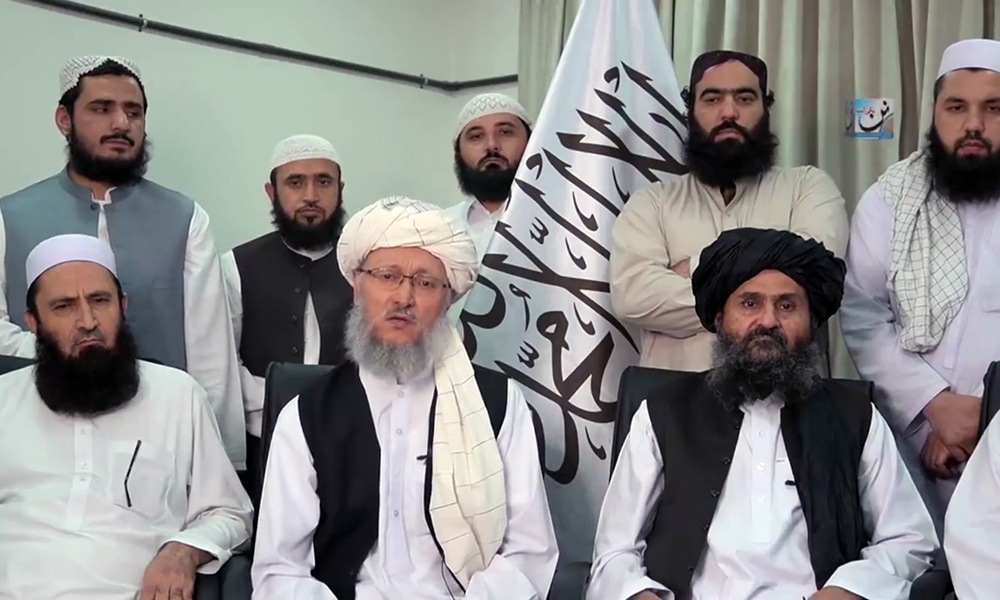
No country in the world formally recognizes the Taliban-led government in Afghanistan, where the extremist group seized power in 2021.
But some countries operate embassies in Kabul and have accepted diplomats appointed by the Taliban, which controls Afghan missions in some 14 nations in the region.
Russia is the latest country that is set to expand diplomatic ties with the militants. Moscow appears poised to delist the Taliban from its list of terrorist groups.
“This could be a step toward the Taliban gaining regional legitimacy,” said Graeme Smith, a senior Afghanistan analyst at the Brussels-based International Crisis Group.
Many countries have tied recognition to the Taliban establishing an inclusive government, ensuring women’s rights, and breaking ties with extremist groups — issues that the militants have refused to budge on.
But Afghanistan’s neighbors, concerned about security, trade, migration, and drug trafficking, have been more open to establishing ties with the Taliban, said Smith.
The militants face major hurdles in gaining international legitimacy, and many Afghan missions around the world are still run by diplomats appointed by the former internationally recognized Afghan government.
But the hard-line Islamist group appears to be making headway in its strategy to gain recognition from countries in Afghanistan’s backyard.
Russia
Russia is one of the few countries that has maintained its embassy in Kabul. In April 2022, Russia handed over the Afghan Embassy in Moscow to the militants, becoming the latest country to accredit Taliban-appointed diplomats without officially recognizing the Taliban-led government. Commenting on removing the Taliban from Russia’s list of terrorist organizations, Russian President Vladimir Putin said on May 28 that Moscow should “build relations” with the group.
China
In January, Chinese President Xi Jinping formally accepted the credentials of a Taliban-appointed ambassador, becoming the first head of state to do so. The Chinese Foreign Ministry clarified the move did not mean Beijing officially recognized the Taliban-led government. But the militants celebrated the move as a major diplomatic victory.
Pakistan
The Taliban gained control of the Afghan Embassy in Islamabad in October 2021. It was one of the first Afghan missions the group took over after regaining power. Pakistan is a longtime ally of the Taliban, although the sides have fallen out recently over the militants’ alleged support for the Tehrik-e Taliban Pakistan extremist group.
Iran
Tehran also kept its embassy in Kabul open after the Taliban seized control of the capital. Iran formally handed over the Afghan Embassy to the Taliban in February 2023. Former foes, Iran and the Taliban have forged close ties despite sporadic border clashes.
India
New Delhi reopened its embassy in Kabul last year. But Afghan diplomatic missions in India are in limbo as diplomats appointed by the former Afghan government have tried to stave off Taliban attempts to take over the embassy and two consulates.
Kazakhstan
In December, Astana removed the Taliban from its list of terrorist groups. That came months after Kazakhstan accepted a new Afghan ambassador appointed by the Taliban.
Uzbekistan
Tashkent engaged the Taliban soon after the militants returned to power. In February, the Taliban appointed a diplomat to take charge of the Afghan Embassy in the Uzbek capital.
Turkmenistan
Ashgabat accepted a Taliban ambassador in March 2022. The sides have worked closely on regional energy and transport projects. But there have been sporadic tensions and border clashes.
Tajikistan
The Taliban controls the Afghan consulate in the eastern Tajik city of Khorog. But the embassy is run by the ambassador appointed by the ex-Afghan government. Tajikistan is the only neighboring country to publicly oppose the Taliban’s return to power, and Dushanbe has hosted some of the leaders of the National Resistance Front, an anti-Taliban resistance group.
Azerbaijan
Baku officially reopened its embassy in Kabul in March, following through on a pledge made last year. But it is not clear if there are any Taliban diplomats present in Azerbaijan.
Turkey
The Afghan Embassy in Ankara is controlled by the ambassador appointed by the ex-Afghan government. But the consulate in Istanbul, Turkey’s largest city, is run by the Taliban. Several exiled Afghan political leaders are believed to reside in Turkey, including former Vice President Abdul Rashid Dostum.
Qatar
Doha has hosted a Taliban political office since 2013. The Qatari capital was the scene of negotiations between Taliban and U.S. officials that paved the way for the complete withdrawal of all foreign troops from Afghanistan in 2021. Qatar has engaged with the Taliban at the highest level and remains a key international interlocutor for its government, which controls the Afghan Embassy in Doha.
Saudi Arabia
Riyadh maintains an embassy in Kabul and continues to offer consular services for Afghans, thousands of whom work in the kingdom as laborers. After the Taliban takeover, Riyadh helped establish an Organization of Islamic Countries mission in Kabul. It is unclear if the Taliban controls all Afghan diplomatic missions in the oil-rich country.
United Arab Emirates
Abu Dhabi also maintains an embassy in Kabul. The Taliban has appointed diplomats to the Afghan Embassy in Abu Dhabi and the consulate in Dubai.
Copyright (c) 2024. RFE/RL, Inc. Reprinted with the permission of Radio Free Europe/Radio Liberty, 1201 Connecticut Ave NW, Ste 400, Washington DC 20036.
Tolo News in Dari – May 30, 2024
Expansion of ISIS Influence in Afghanistan: Taliban’s Simultaneous Fear and Denial
 8am: Taliban leaders have spoken of suppressing ISIS over the past three years, yet they have simultaneously denied the presence of ISIS in Afghanistan. Now, some officials within the regime express concerns about ISIS’s presence in the country. Sources from within the Taliban report that hundreds of ISIS Khorasan (IS-K) fighters, who were released from prisons during the fall of Afghanistan to the Taliban, have resumed their activities. Click here to read more (external link).
Taliban govt harbours big dreams for Afghan rail
 AFP: Every day, 3,500 tons of flour and 1,500 tons of wheat are unloaded by hand at the border town of Hairatan in northern Afghanistan to trucks that brave mountain passes and war-damaged roads to ferry goods around the country. Renovations are under way to connect the rundown track with Mazar-i-Sharif, the north’s largest city, and according to the Taliban authorities, it will come into operation from June. Click here to read more (external link).
The Consequences of Removing Persian Language from Afghanistan
 8am: The Taliban’s ethnocentrism is undeniable. This group heavily relies on ethnic factors in its appointments. Currently, the majority of government office employees belong to one ethnic group. Even when people visit government offices, they are forced to speak Pashto with the staff, or else their concerns may not be addressed. It may be unbelievable that Taliban police treat roadside vendors based on their ethnicity and language. A non-Pashto-speaking vendor in one of Kabul’s areas was delighted to show proficiency in Pashto, and when conversing with a Taliban fighter in Pashto, he was allowed to continue his work without harassment and was even permitted to sell his goods. Click here to read more (external link).
Weather washes out Afghanistan v Oman T20 World Cup warm up match
 Ariana: The weather denied a thrilling contest between Oman and Afghanistan in their ICC Men’s T20 World Cup 2024 warm-up match on Wednesday at Queen’s Park Oval in Trinidad. The match had been delayed due to rain before Oman lit up the stadium as they posted 154 for three from their 20 overs, with captain Aqib Ilyas top scoring. That was where the game ended, however, with the rain stopping Afghanistan from beginning their reply as the match was abandoned. Afghanistan’s second warm up match will be on Friday against Scotland at the same venue. Click here to read more (external link).
Distrustful Of The Taliban, A Growing Number Of Afghans Ditch Banks
 By RFE/RL’s Radio Azadi and Abubakar Siddique
May 29, 2024
An increasing number of Afghans are taking out their money from banks and closing their accounts, a trend spurred by mistrust in the unrecognized Taliban government and concerns about the country’s bleak economic outlook.
The Taliban takeover in 2021 triggered a cash and banking crisis. The militants were hit with international sanctions, and the country cut off from the global financial system and crucial foreign aid. Billions in the central bank’s foreign reserves were frozen.
The economic meltdown forced some of the 12 state-owned and commercial banks to close, while others worked at limited capacity. Caps were placed on how much people were allowed to withdrawal from banks.
While the economy has somewhat recovered, Afghanistan is still in the grips of a devastating humanitarian crisis, mass unemployment, and rising poverty. And trust in the formal banking system has collapsed.
Experts say Afghans closing their bank accounts has helped further constrain the money supply in the country and placed further stress on the economy.
Cut off from the international banking system, more Afghans are also turning to hawala, an informal system of lenders.
‘Concerning Trend’
Afghan banks lost around 11 percent of their customers from December 2022 to December 2023, according to the World Bank.
Among them was Ahmad, a resident of the western city of Herat. He said he closed his bank account after repeatedly trying and failing to transfer money inside the country.
“This indicates that the banks have failed,” Ahmad, who only goes by one name, told RFE/RL’s Radio Azadi. “They have become untrustworthy.”
Baseer, a resident of Kabul, also recently closed his bank accounts. He said he lost confidence in the banks after they enforced limits on how much of his own money he could withdraw.
“Bank employees used to harass and abuse us when we asked for our own money,” he told Radio Azadi.
The Taliban initially set a weekly withdrawal limit of $200 for individual bank accounts. In December, the Taliban-run central bank increased the cap to $1,000.
A commercial bank employee in Kabul, who requested anonymity, said that strict controls over how much money account holders can withdraw has damaged banks’ reputations.
The employee told Radio Azadi that banks’ inability to return depositors’ money made them “worthless” in customers’ eyes.
According to the World Bank’s 2017 Global Findex database, only 15 percent of Afghan adults had an account at any financial institution, a figure that has plummeted since the Taliban takeover.
The World Bank said in a report published in April that the banking sector since 2020 has lost around 25 percent of its total asset base, which it said signaled a “concerning trend for an already small industry.”
“The banking sector is experiencing considerable strain from dwindling assets and deposits,” the report said, adding that this has “spurred a greater dependence on cash and non-traditional payment methods, further tightening the money supply and aggravating economic downturn and deflation.”
Azarakhsh Hafizi, an economist and former head of the Afghanistan International Chamber of Commerce, said that a modern economy is “incomplete without a banking system.”
“Countries where banks can channel their customers’ deposits to economic investments, such as building businesses and industry, are better off,” he added. “When you do not have enough deposits in the banks, you cannot give loans to people [and businesses] that need them.”
Sanctions And Islamic Banking
The strain on banks has been compounded by international sanctions.
Afghan banks have been cut off from the world’s dominant financial transaction network, SWIFT, greatly inhibiting the Taliban government’s ability to conduct trade.
It has also made it difficult for individuals and businesses in Afghanistan to transfer money and make payments.
Without access to SWIFT, Afghans are increasingly turning to the informal transfer system known as hawala, which uses individual brokers rather than banks. The system is difficult to trace and has been used by armed groups.
The Taliban’s shift to Islamic banking has also hampered the banking sector, experts said.
Islamic banking, first developed in the 1970s in the Gulf states, prohibits the practice of lending money with interest. Like conventional banks, Islamic banks make their profits by loaning money to customers. But whereas a bank loans with interest, Islamic banks do so through buy-and-sell transactions.
In March, the Taliban appointed a committee to review laws for Afghanistan’s central bank and the commercial banking sector.
The Taliban has said that Islamic banking prohibits “earning income through interest on investments, loans, or deposits.”
In its recent report, the World Bank said the “banking sector’s role as a financial intermediary is significantly hampered by the mandatory transition to Islamic Finance.”
Copyright (c) 2024. RFE/RL, Inc. Reprinted with the permission of Radio Free Europe/Radio Liberty, 1201 Connecticut Ave NW, Ste 400, Washington DC 20036.
Taliban appear set to take part in UN-organized Doha meeting on Afghanistan
 Ayaz Gul
VOA News
May 29, 2024
ISLAMABAD — Afghanistan’s Taliban rulers stated their intention Wednesday to join a United Nations-organized meeting in Doha on June 30 that aims to facilitate and coordinate the world’s engagement with the country hit by a multitude of crises.
The announcement came a week after a senior U.N. diplomat visited Kabul and extended to the de facto authorities “an advance invitation” to participate in the two-day conference of special envoys on Afghanistan.
The international event will be the third Afghanistan-centered gathering in Qatar’s capital since U.N. Secretary-General Antonio Guterres initiated the process in May 2023, aiming to increase interaction with Afghanistan “in a more coherent, coordinated and structured manner.”
Zakir Jalali, a senior Taliban foreign ministry official, said in a “keynote speech” to its staff in the Afghan capital that “representatives of the Islamic emirate will take part in the main discussions” in Doha. A ministry spokesperson posted details of his remarks on X, formerly known as Twitter, on Wednesday.
Jalali stated that a formal decision to attend the “Doha III” meeting would be announced later. He defended the Taliban’s decision not to join the previous two meetings, saying that any “symbolic participation would have been futile” for Kabul as the organizers had refused to accept its conditions and address objections over the agenda.
“However, the agenda for the third Doha format meeting has changed positively, and there are no significant differences regarding the topics of the discussion,” Jalali noted. He explained that the upcoming meeting would discuss financial and banking-related problems facing Afghanistan, alternative livelihoods for poppy growers, and climate change impacts on the country.
Jalali said the Taliban foreign ministry was waiting for the U.N. to share the latest details about the Doha huddle to enable Kabul to send its delegation there.
Rosemary DiCarlo, the under-secretary-general for political and peacebuilding affairs, visited Afghanistan from May 18 to 21, where her discussions with Taliban Foreign Minister Amir Khan Muttaqi, among others, centered on the June 30 meeting.
The Taliban had asked the U.N. in the run-up to the second Doha meeting in February that their delegates would be accepted as the sole official representatives of the country, meaning that Afghan civil society activists and members of opposition groups would not be present.
De facto Afghan authorities also sought a meeting between their delegation and the U.N. at “a very senior level,” saying it “would be beneficial.” The Taliban also opposed the planned appointment of a U.N. special envoy to coordinate international engagement with Kabul in line with the latest U.N. Security Council resolution on Afghanistan.
However, Guterres rejected the Taliban conditions while briefing reporters at the end of the second Doha meeting.
“These conditions, first of all, denied us the right to talk to other representatives of the Afghan society and demanded a treatment that would, I would say, to a large extent be similar to recognition,” the secretary-general argued.
It was unclear immediately whether the U.N. would relax those conditions to allow Kabul’s delegates to attend the upcoming meeting despite their controversial governance in poverty-stricken Afghanistan.
The Taliban have imposed sweeping restrictions since taking power in August 2021, including a ban on girls attending school beyond the sixth grade and prohibitions on many Afghan women’s access to employment and public life at large.
De facto Afghan leaders, who are ethnically Pashtun, have also rejected international calls for giving representation to other ethnicities in the government, saying all groups are represented in it.
The elusive Taliban supreme leader, Hibatullah Akhundzada, insists he is governing the country in line with local culture and Islamic law and dismisses international criticism of his policies as an interference in the country’s internal affairs.
Afghan rights groups and activists have criticized the U.N. for inviting the Taliban to the upcoming Doha meeting, saying it would embolden the Taliban to further tighten their curbs on women.
U.N. spokesperson Stephane Dujarric, while responding to the criticism, told reporters in New York on Tuesday that his organization continues to engage with the Taliban “because they are the de facto authorities in Afghanistan.”
Dujarric emphasized that the U.N. is persistently urging the Taliban to uphold the rights of women and girls, as well as advocating for increased humanitarian aid for the Afghan people.
“We’ve invited envoys on Afghanistan to attend a meeting in Doha … to bring some clarity and consistency to the way the world deals with the situation in Afghanistan while continuing to put the human rights of women and girls at the forefront,” he said.
Separately on Tuesday, in her address to a U.N. Security Council meeting, DiCarlo cited Afghanistan as a “crying example” where women and girls are systematically denied rights and dignity, particularly in education. “Women in Kabul aspire to the same opportunities as men and seek international support to realize their rights and contribute to their country’s future,” she stated.
U.N. agencies describe Afghanistan as one of the world’s worst humanitarian crises, where more than two-thirds of the estimated 40 million population needs assistance following years of conflict and natural disasters. In recent weeks, hundreds of Afghans have died in flash floods triggered by climate change-induced heavy seasonal rains, which displaced more than 80,000 people.
The Taliban’s return to power in August 2021 invited international financial and banking sanctions on the country, worsening economic and humanitarian conditions.