
 8am: The Ministry of Higher Education under Taliban control has instructed professors in Uzbek language and literature departments at public universities to translate academic works only into one of the two official languages, Persian or Pashto, if they wish to qualify for promotion. However, Uzbek students, university professors, and writers describe this decision as rooted in the Taliban’s bias against the growth of the Uzbek language and urge the group to stop hindering the development and enrichment of the country’s third most widely spoken language. Click here to read more (external link).
Taliban Resists Truck Drivers’ Protest in Herat With Gunfire
 Afghanistan International: On Wednesday, a group of truck drivers and merchants staged a protest at the Herat Airport in response to a significant increase in “extra costs” imposed by the Taliban. Protesters allege that the Taliban’s gunfire during the demonstration resulted in at least one driver being injured. Click here to read more (external link).
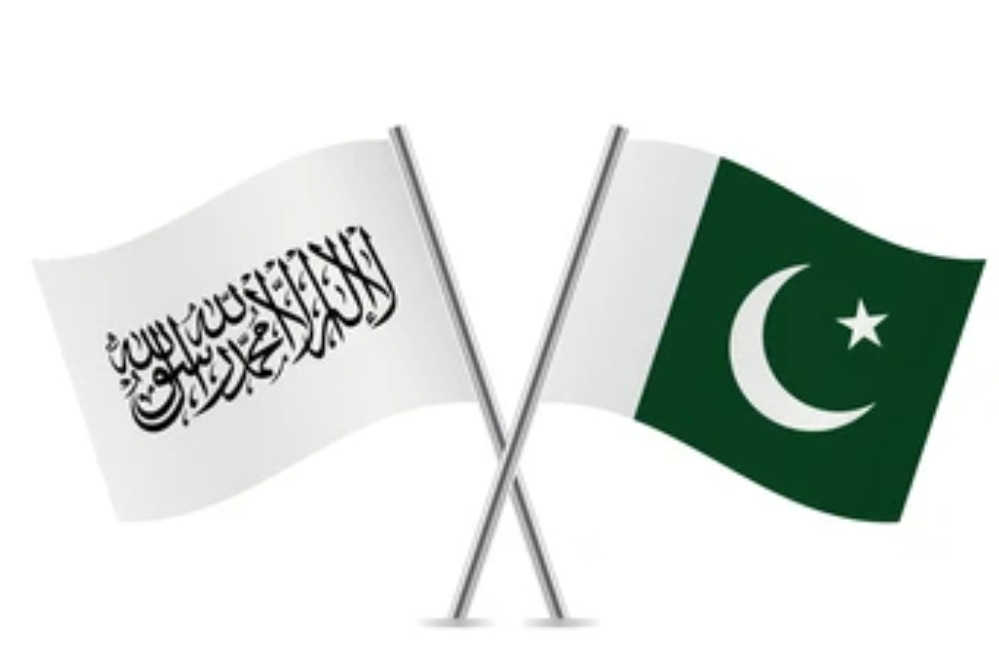
Pakistan urges Afghan Taliban to address perception as ‘ideological cousins of TTP’
 Ayaz Gul
VOA News
August 28, 2024
Islamabad — Pakistan urged Afghanistan’s Taliban leaders Wednesday to explain their relationship with a globally designated terrorist group waging cross-border bloodshed and address concerns about sweeping restrictions they have imposed on Afghan women.
The remarks by Islamabad’s special representative to Afghanistan, Asif Durrani, came as the militant group in question — Tehrik-i-Taliban Pakistan, or TTP — has intensified deadly attacks on Pakistani soil from its alleged sanctuaries on the Afghan side of the border.
The violence has claimed the lives of hundreds of security forces and civilians in recent months, with TTP formally claiming credit for most of them.
“The TTP-led terrorism is linked with the Afghanistan problem. Therefore, both countries will need to address the menace of TTP together,” Durrani told a seminar in the Pakistani capital.
The Taliban “will have to come clean about their image as ideological cousins of TTP. This is the minimum for a durable [bilateral] relationship that [they] can do,” he stressed.
The Pakistani envoy spoke just hours after the Taliban army chief, Qari Fasihuddin Fitrat, rejected previous allegations that TTP was based on and orchestrating attacks from Afghan soil.
“There is no evidence, nor anyone can prove, that TTP is present in Afghanistan,” Fitrat told a news conference in the Afghan capital, Kabul. “TTP has bases in Pakistan and controls some areas from which it launches attacks inside Pakistan,” Fitrat said without elaborating further.
TTP has publicly pledged allegiance to the Taliban leadership. The militant group sheltered Taliban commanders on Pakistani soil and provided recruits to support their insurgent attacks against U.S.-led international forces in Afghanistan for years until their withdrawal three years ago when the Taliban swept back to power.
Durrani highlighted on Wednesday that despite the mutual tensions resulting from TTP attacks, his government is assisting landlocked Afghanistan in conducting international trade through Pakistani land routes and seaports to help Kabul address national economic and humanitarian challenges.
The United Nations has, in a recent report, described TTP as “the largest terrorist group in Afghanistan.” It noted that Taliban authorities are supporting stepped-up TTP attacks against Pakistan, and the militants are being trained, as well as equipped, in al-Qaida-run terror training camps on the Afghan territory, charges Kabul rejected.
On Tuesday, the United States reiterated its worries about the growing threat of terrorism in Afghanistan.
“We know that we can’t turn a blind eye to the threats from organizations such as ISIS-K and that we must keep a relentless focus on counterterrorism,” Pentagon press secretary Major General Pat Ryder told reporters in Washington, referring to the Afghan affiliate of the Islamic State. “But there are many other terror groups that are resident right now in Afghanistan,” Ryder added without elaborating.
Curbs on Afghan women
Durrani on Wednesday praised the Taliban for establishing national security since their takeover but reiterated concerns about restrictions on Afghan women’s access to public life and supported international demands for their reversal.
“Many have acknowledged the positive aspects of the changed Afghanistan, including less corruption, a drastic reduction in poppy cultivation, and an improvement in the overall security situation,” Durrani said. “[However], there are concerns for girls’ education and women’s right to work, which no society, whether Islamic or otherwise, should allow to happen.”
Durrani also noted the Organization of Islamic Cooperation, comprising 57 Muslim-majority countries, had “unequivocally” called on the Taliban to lift the ban on girls’ education and their right to work.
De facto Afghan leaders have persistently denounced the U.N.-led global criticism of their policies, saying they are governing the country strictly in line with Islamic law, or Shariah, and local customs.
The Taliban have barred girls from attending school beyond the sixth grade and women from most public and private sector employment, as well as prohibiting them from making road trips without a male guardian.
Last week, the radical rulers enacted new regulations prohibiting women from speaking aloud or showing their faces in public at any time, drawing international outrage.
On Monday, Taliban chief spokesperson Zabihullah Mujahid lambasted the U.N. and Western critics of their governance, claiming that the objections of “non-Muslims” stemmed from their “lack of understanding” of Islam.
“We view this as disrespect to our Islamic Shariah,” he said.
Taliban Exploiting Global Fatigue on Afghanistan, Says NRF Leader

Massoud
Afghanistan International: The leader of the National Resistance Front (NRF) Ahmad Massoud has urged policymakers in Washington to heed the recommendations of the Hudson Institute, which has called for support for the NRF. Massoud stated that the Taliban are exploiting the world’s fatigue regarding Afghanistan to maintain their rule and continue suppressing the people, particularly women. Click here to read more (external link).
Tolo News in Dari – August 28, 2024
Taliban Ministry of Health says no reports in Afghanistan of monkey pox
 Ariana: The Ministry of Public Health has announced that no suspected or positive cases of monkey pox have been registered in Afghanistan. After receiving reports about two suspected cases of monkey pox in Kabul and Paktia, officials say that no suspected or positive cases of this disease have been registered in Afghanistan. Click here to read more (external link).
Other Health News
EU Aid To Afghanistan Continues To Flow Amid Taliban’s Restrictions On Women
 Radio Free Europe/Radio Liberty
August 27, 2024
Afghanistan is one of the largest recipients of humanitarian aid from the European Union, EU officials said on August 27, one day after saying it was appalled by a new decree issued by the Taliban-led government further restricting the lives of women.
The European Union this year has provided 125 million euros ($139 million) to Afghanistan for humanitarian-aid purposes, Balazs Ujvari, European Commission spokesman for budget, human resources, humanitarian aid, and crisis management, said at a European Commission news briefing in Brussels.
In addition to classic aid distribution, the EU has also organized 35 “air-bridge” flights carrying 1,600 tons of aid since 2021.
“This shows that in a broad variety of areas, we are deploying a variety of humanitarian and civil-protection tools as well to try and alleviate the ongoing difficulties in the country,” Ujvari said.
European Commission chief spokesman Eric Mamer added that when the EU distributes humanitarian aid, it works with partner organizations, not the government.
Nabila Massrali, spokeswoman for EU foreign policy chief Josep Borrell, said the EU reacted very quickly on August 26 to the Taliban’s so-called Law on the Propagation of Virtue and Prevention of Vice, but at the same time she defended keeping ties with the Taliban.
“When it comes to the engagement with the Taliban, we do maintain contact…to allow the dialogue for political priories of the EU and to ensure that the EU can provide support to the Afghan people, and this is very important,” she said at the briefing. “The EU engagement with the Taliban is not an acknowledgement of legitimacy.”
In addition to saying it was appalled by the August 26 decree, the EU statement called it a “serious blow undermining the rights of Afghan women and girls, which we cannot tolerate.”
The decree imposes further restrictive dress codes for women and says that voices of women must not be heard in public, “which effectively deprives Afghan women of their fundamental right to freedom of expression,” the EU statement said.
The European Union said the decree, issued on the third anniversary of a suicide bombing at Hamid Karzai International Airport that killed 13 U.S. soldiers and scores of Afghans during the chaotic U.S. withdrawal, also gives the Ministry for the Promotion of Virtue and the Prevention of Vice a mandate to enforce it.
“This, together with the restrictions imposed, punishable under Taliban law, violates legal obligations and treaties to which Afghanistan is a state party, including by undermining Afghan people’s right to due process,” the EU statement said.
It also noted that the decree creates another obstacle to normalized relations and recognition by the international community — goals that the Taliban publicly aspires to.
Copyright (c) 2024. RFE/RL, Inc. Reprinted with the permission of Radio Free Europe/Radio Liberty, 1201 Connecticut Ave NW, Ste 400, Washington DC 20036.
Female journalist silenced on air apparently in compliance with Taliban morality law
 Ayaz Gul
VOA News
August 27, 2024
ISLAMABAD — A Taliban-controlled state broadcaster in Afghanistan silenced a female journalist and her image during a live media event Tuesday, apparently in compliance with the radical rulers’ recently enacted morality law that bans women from speaking or showing their faces in public.
Officials of the de facto Taliban interior ministry organized a news conference in Kabul to share their annual performance before taking questions from around 10 journalists, including a woman.
The RTA broadcaster aired the voices and images of all male reporters without interruption. However, when the female journalist from the local Ariana news channel started asking a question, the broadcast abruptly went silent for the next minute or so until she finished, and the focus remained on Taliban officials instead.
The channel’s audio was unmuted when ministry representatives started answering her query and those asked by others subsequently until the event ended.
No official explanation was provided for interrupting the female reporter’s voice. VOA tried to contact RTA officials via the WhatsApp platform but did not receive a response as usual because the Taliban have banned the media outlet in Afghanistan and do not respond to its queries.
Tuesday’s muting of the female reporter’s voice has raised concerns it could mark the first public enforcement of the contentious morality law promulgated by the Taliban last Wednesday, sparking international outrage.
The so-called “Promotion of Virtue and the Prevention of Vice” decree forbids women from singing, reciting poetry, or speaking aloud in public and requires them to keep their faces and entire bodies always covered when outdoors in line with the Taliban’s interpretation of Islamic law, or Sharia.
The legal document argues that a woman’s voice is intimate and should not be heard publicly. They are also not allowed to look at men they are not related to by blood or marriage and vice versa, nor can taxi drivers transport a woman to any destination unless a male guardian accompanies her.
The 35-article law imposes severe restrictions on the personal freedom of Afghan men and women and empowers the Taliban Ministry of Vice and Virtue to enforce it.
Roza Otunbayeva, the head of the U.N. Assistance Mission in Afghanistan, or UNAMA, condemned the morality law on Sunday as a “distressing vision” of the country’s future.
“It extends the already intolerable restrictions on the rights of Afghan women and girls, with even the sound of a female voice outside the home apparently deemed a moral violation,” stated Otunbayeva.
She noted, “Moral inspectors have discretionary powers to threaten and detain anyone based on broad and sometimes vague lists of infractions” under the Taliban rule.
In a formal response on Monday, the Taliban expressed outrage at what they denounced as “uncalled for objections” by the UNAMA and Western governments to their vice and virtue laws.
“Non-Muslims expressing concerns over these laws or rejecting them should first educate themselves about Islamic laws and respect Islamic values,” asserted Zabihullah Mujahid, the spokesperson for the Taliban government, which is not recognized by any country.
“We consider it insulting to our Islamic Sharia (law) when they raise such objections without understanding it,” Mujahid stated.
The Taliban introduced the morality law against the backdrop of their wide-ranging restrictions on female members of Afghan society. Since returning to power three years ago, the radical de facto rulers have banned girls from attending school beyond the sixth grade and women from working in most fields as well as taking part in public activities at large.
“After decades of war and in the midst of a terrible humanitarian crisis, the Afghan people deserve much better than being threatened or jailed if they happen to be late for prayers, glance at a member of the opposite sex who is not a family member, or possess a photo of a loved one,” Otunbayeva said.
The morality law also prohibits the broadcasting and publication of images of living beings, as well as content believed to violate Sharia or insult Muslims under the Taliban’s interpretation of Islam.
Rosemary DiCarlo, the U.N. undersecretary-general for political and peacebuilding affairs, has warned that the morality decree “is unconscionable, and if maintained, the law can only impede Afghanistan’s return to the international fold.”
No country has recognized the Taliban as the legitimate government of Afghanistan, primarily over their harsh treatment of women.
Tolo News in Dari – August 27, 2024
Afghanistan’s Taliban bans MMA, citing violent nature concerns
 DPA: The Taliban government in Afghanistan has prohibited mixed martial arts (MMA), citing concerns over violence and the risk of death, an official told TOLOnews on Tuesday. Ahmadullah Wasiq, head of the Physical Education and Sports Department, said the ban, enforced by the country’s morality police, was due to the sport’s violent nature. Click here to read more (external link).