
Rankings joy for Afghanistan as Nabi crowned new No.1 all-rounder

Mohammad Nabi
Ariana: Afghanistan’s unbeaten start to the ICC Men’s T20 World Cup has seen one of their star performers rise to the top of the ICC Men’s T20I All-Rounder Rankings. The team has won both of their contests in the 20-over showcase thus far and a host of their players have been in scintillating touch with bat and ball. Veteran Mohammad Nabi is the big winner in the latest rankings update, with the 39-year-old rising to the No.1 spot on the list for all-rounders following his recent two-wicket haul against New Zealand in Guyana. Click here to read more (external link).
Unstable Healthcare System and Escalating Crisis: The Taliban Are an Obstacle to Health Services
 8am: The World Health Organization (WHO) has published a report stating that restrictions imposed by the Taliban have hindered thousands of women from accessing healthcare, education, and employment. According to the report, 24 mothers and 167 infants die daily from preventable diseases. The report indicates that 17.9 million people require health assistance, while 9.5 million have limited or no access to healthcare facilities. Afghanistan is one of the two countries in the world where polio is still present. The healthcare system in Afghanistan has faced a severe crisis under Taliban rule. Citizens’ access to healthcare services has drastically decreased, and the majority of people, due to increasing poverty and persistent unemployment, cannot visit healthcare centers, enduring physical ailments along with mental distress. Click here to read more (external link).
Other Health News
Taliban Clamps Down On Activities Of Rival Islamist Parties In Afghanistan
 By Abubakar Siddique
June 11, 2024
Radio Free Europe/Radio Liberty
The Taliban government has cracked down on rival Islamist parties in Afghanistan in what is seen as an effort to prevent any future opposition to its hard-line rule.
Since banning all political parties last year, the Taliban has targeted two of its major former rivals. It shut down two Kabul-based TV stations owned by the Hezb-e Islami and Jamiat-e Islami parties, respectively.
Now, the extremist group has cracked down on Harakat-e Islami Afghanistan, closing a TV station as well as a university and seminary accused of having links with the Shi’ite political party.
The Taliban’s clampdown on political parties is part of a wider assault on dissent. After seizing power in 2021, the militants have jailed dozens of journalists, activists, and academics.
‘Relentless Crackdown’
The Taliban’s Justice Ministry on June 8 ordered the closure of Tamadon TV due to its alleged affiliation with Harakat-e Islami Afghanistan. The ministry also alleged that the station was operating on “seized land.”
Tamadon TV, which covered news and current affairs as well as Shi’ite religious programming, has denied the claims.
The station was founded in 2006 by Ayatollah Asif Mohseni, a prominent Shi’ite cleric and leader of Harakat-e Islami Afghanistan who died in 2019.
Mohammad Jawad Mohseni, the director of Tamadon TV, rejected the Taliban’s claims about the broadcaster’s political affiliations. He said Mohseni had resigned as the leader of Harakat-e Islami in 2005, a year before establishing the station.
Global and Afghan media watchdogs have condemned the closure of Tamadon TV.
“The Taliban is expanding its relentless crackdown on Afghan media and suppressing any independent voices,” said a statement by the New York-based Committee to Protect Journalists, which called on the group to “immediately and unconditionally reverse its decision.”
In April, the Taliban shut down Noor TV and Barya TV for “violating Afghan and Islamic values and journalistic principles.”
Jamiat-e Islami owned Noor TV, while Hezb-e Islami ran Barya. The stations ran Islamic programs.
Harakat-e Islami Afghanistan, Jamiat-e Islami, and Hezb-e Islami were all factions of the mujahedin, the Islamist groups that battled the Taliban for control of Afghanistan in the 1990s. Prominent mujahedin figures received prominent roles in the new political order that emerged after the U.S.-led invasion in 2001 toppled the Taliban’s first regime.
‘Narrow-Minded Policies’
On the same day that it ordered the closure of Tamadon TV, the Taliban also announced that it was shutting down Khatam-al Nabyeen University and its madrasah, or Islamic seminary. The same allegations were made against the educational institutions.
“Political parties are abolished in the country,” Barakat Rasuli, a spokesman for the Taliban’s Justice Ministry, wrote on X. “Their media outlets do not have the right to operate.”
“The buildings [of all three] are built on usurped land,” Rasuli added. “This why we have stopped their activities and shut down their offices.”
The TV station, university, and seminary are all part of a sprawling complex in west Kabul, where members of the Shi’ite minority reside. Like Tamadon TV, the university and madrasah were established by Mohseni in 2006.
Mohseni was believed to have ties with neighboring Iran, where he lived for years during the Soviet occupation of Afghanistan in the 1980s. Tehran allegedly helped fund the Khatam-al Nabyeen University and seminary as part of its efforts to build influence in the country.
Afghanistan’s Shi’ite community have been increasingly marginalized under the rule of the Taliban, a Sunni militant group.
The Taliban has prevented members of the Shi’ite community, which makes up around 15 percent of the population, from publicly marking important religious festivals and restricted the teaching of Shi’ite jurisprudence in universities in Afghanistan.
Sami Yousafzai, a veteran Afghan journalist and commentator, said the militant group’s closure of Tamadon TV as well as Khatam-al Nabyeen University and seminary “shows the Taliban’s religious bias and its narrow-minded policies.”
“They are against anyone who doesn’t follow their ideology, [including] followers of Islamist groups such as Hezb-e Islami, Jamiat-e Islami, or Harakat-e Islami Afghanistan,” Yousafzai added.
Copyright (c) 2024. RFE/RL, Inc. Reprinted with the permission of Radio Free Europe/Radio Liberty, 1201 Connecticut Ave NW, Ste 400, Washington DC 20036.
UN ‘hopeful’ about Taliban’s presence at ‘Doha III’ meeting on Afghanistan
 Ayaz Gul
VOA News
June 11, 2024
ISLAMABAD — A United Nations diplomat has encouraged the Taliban to attend a conference on Afghanistan later this month, stating that it would help return much-needed global attention to the crisis-ridden country.
Malick Ceesay, the head of the Pakistan-based liaison office for the U.N. Assistance Mission in Afghanistan (UNAMA), told an unofficial dialogue between religious scholars from the two countries that the Ukraine war and Gaza hostilities had dramatically shifted the international attention from Afghanistan.
“And that’s a concern for the United Nations. We don’t want Afghanistan to be forgotten,” Ceesay said at the Tuesday meeting, hosted by the independent Center for Research and Security Studies in the Pakistani capital.
“We are hopeful that this time around, the Islamic Emirate will send its representatives (to Doha) to be able to engage with the international community in a constructive and effective manner,” the U.N. diplomat said, using the official title of the Taliban government in Kabul.
The two-day U.N. conference of special envoys on Afghanistan will commence in Doha, Qatar, on June 30. According to a U.N. spokesperson, it aims to increase international engagement with the Taliban and Afghanistan at large “in a more coherent, coordinated and structured manner.”
The meeting will be the third in the tiny Gulf nation’s capital since U.N. Secretary-General Antonio Guterres launched the process in May 2023. He did not invite the Taliban to the first session, and Afghanistan’s de facto rulers declined an invitation to attend the second this past February.
The Taliban have publicly stated their intention to send a delegation to the “Doha III” conference, saying they have shared their conditions with the U.N. and will make a formal announcement after reviewing its “final agenda.”
While they have not revealed their conditions, the Taliban had asked the U.N. in the run-up to the second Doha meeting that their delegates would be accepted as the sole official representatives of the country, meaning that Afghan civil society representatives, women’s rights activists, and members of opposition groups would not be present.
They also sought a meeting between their delegation and the U.N. at “a very senior level.” Guterres rejected the conditions as unacceptable. The international community has not recognized the Taliban government as Afghanistan’s legitimate rulers, and the country remains under U.N. sanctions.
Ceesay said Tuesday that the Taliban’s restrictions on women’s access to education and employment and a lack of inclusivity in the Taliban government continue to raise questions about the Afghan authorities’ legitimacy.
“These are all tied together. The Islamic Emirate leadership knows that this is the reason why the recognition is not coming,” he said.
The Muslim U.N. diplomat criticized the Taliban’s assertion that their treatment of women aligns with Islamic law.
“Islam never says that women should not go to school, and Islam never says that women should not go to work. Which (version of) Islam and which Quran says that? It’s not found in there,” he added.
Ceesay said that UNAMA is engaging with all Afghans to help them achieve a broad-based governance system that includes everybody.
“Islamic Emirate is doing a fairly notable job on that, but we want it to increase more so that every Afghan citizen will feel that they belong to the country and the government belongs to them, not just one-sided, 90% one ethnicity. That’s not fair,” he stated.
The conservative Taliban are ethnically Pashtun, the majority community in Afghanistan.
Ceesay said the Taliban have allowed Afghan females to work in some public offices related to passport, immigration, healthcare, and agriculture. But those concessions have been “overshadowed” due to bans on the remaining women’s access to employment and girls’ education beyond grade six, he added.
The reclusive Taliban supreme leader, Hibatullah Akhundzada, who governs the country through edicts based on his harsh interpretation of Islam, has dismissed international criticism and calls for reforming his policies.
In the run-up to the third Doha conference, pro-Taliban social media activists have posted audio of a recent speech by Akhundzada in which he vowed not to budge on his stance under foreign pressure, come what may.
“Who are you to meddle in our land, system, and policies? I am not here to take your orders nor will I take a single step with you or deal with you regarding the Sharia (Islamic law),” Akhudzada said.
Over 80 Afghans arrested for ‘illegally’ crossing into Pakistan
 Ariana: Pakistan security forces arrested 85 Afghan nationals in the border district of Chagai district for allegedly crossing into Pakistan illegally, officials said on Monday. The Afghan nationals were found on the Pakistani side near the border without legal travel documents, Dawn News reported. Reports indicated the Afghan nationals entered Pakistan illegally in order to cross into Iran. They had reportedly planned to then journey on from Iran. Click here to read more (external link).
Related
Tolo News in Dari – June 11, 2024
Former CENTCOM commander to VOA: President picked ‘worst’ choice in Afghanistan withdrawal

McKenzie (file photo)
VOA News
Carla Babb
June 11, 2024
President Joe Biden picked the “worst of all possible worlds” when deciding how to withdraw U.S. forces from Afghanistan, the former commander who oversaw the U.S. withdrawal there told VOA.
Retired General Frank McKenzie writes in a new book, “The Melting Point,” that he briefed President Biden in February 2021 on four military options on Afghanistan: one that would keep about 2,500 U.S. forces in the country and maintain eight bases; one that would reduce U.S. force numbers to 1,800 and drawdown to three bases; one that took out all U.S. forces and kept the embassy in place, and one that pulled out all American forces and the U.S. embassy.
Biden picked the third option, which attempted to keep the embassy, American citizens and at-risk Afghans in the country.
“I felt that was the worst of all possible worlds to actually pick that particular approach,” McKenzie told VOA in an interview on Monday.
In a speech explaining the decision, Biden said the U.S. could not continue the cycle of extending or expanding its military presence in hopes of better conditions for withdrawal.
“While we will not stay involved in Afghanistan militarily, our diplomatic and humanitarian work will continue. We’ll continue to support the government of Afghanistan. We will keep providing assistance to the Afghan National Defenses and Security Forces,” Biden said.
McKenzie also writes in his book that the Doha agreement, signed by then-President Donald Trump’s administration and the Taliban in 2020, was “one of the worst negotiating mistakes” by the United States. Speaking to VOA, he said the negotiations, orchestrated by then-U.S. ambassador Zalmay Khalilzad, committed the U.S. to an exit timeline while not requiring the Taliban to fulfill its agreed-upon conditions.
As Trump announced the agreement, he warned, “If bad things happen, we’ll go back with a force like no one’s ever seen.”
According to McKenzie, Presidents Biden and Trump “shared one common policy objective, to get out of Afghanistan without regard to consequences.”
McKenzie said Iran and Russia now have a “marriage of convenience” and raised concerns about what Russia may be giving Iran in return for Iranian drones and missiles to use in its was against Ukraine.
He said Ukrainians should be able to fire anywhere inside Russia that’s attacking Ukraine, “but with certain limits” on areas such as Russian nuclear capable sites.
“You can’t give them a sanctuary there,” he said.
This interview had been edited for brevity and clarity.
VOA: You have a lot of criticism for the Doha agreement, which the Trump administration and the Taliban signed in February 2020. Why do you think it was, as you say in your book, “The Melting Point,” one of the worst negotiating mistakes made by the United States?
Former CENTCOM Commander Gen. Frank McKenzie: I think because we signed on to an agreement where we committed to a timeline to leave. And that’s significant if you don’t condition that agreement, and we did not require the Taliban to fulfill the conditions that were imposed on them as part of that agreement. So the agreement potentially could have worked a little bit better had we not been quite so supine in the negotiating process that followed it. And so I think that really did a couple of things that gave new life to the Taliban, because they took it as a schedule that we were leaving. I think we, across two presidential administrations, took it as a schedule for when we were going to leave, and it deflated the Afghan government.
VOA: The former President of Afghanistan, Ashraf Ghani, he has called the primary negotiator for the Doha agreements for the United States U.S. Ambassador Zalmay Khalilzad, he’s called him “corrupt,” “incompetent” and full of secrecy. And in your book, you have some similar descriptions of Khalilzad. You used “secretive” one time, “compartmented,” “not sharing much within the US government.” Is it fair to say that you agree with Ghani here?
McKenzie: Well, to the extent that he was highly compartmented, kept his negotiations very secret … That’s observable truth from where I sit. The rest of it, I couldn’t comment on that.
VOA: Did you feel that he always had the US interests at the center of his negotiations?
McKenzie: Great question. I think, from the way it turned out, clearly, we were not served by the negotiating that he did.
VOA: An internal White House review of President Biden’s decision to withdrawal said that Biden’s decisions were, I’m quoting them, “severely constrained” by President Trump’s Doha agreement. But you and I have talked about this in several of our discussions. The Taliban was never abiding by the commitment. So to what extent does an agreement that the Taliban is not abiding by severely constrain the Biden administration’s decisions?
McKenzie: Let’s remember that the Biden administration chose to keep Ambassador Khalilzad on as the principal negotiator. That was a decision they could have revisited. They could have changed the negotiating team. They did not elect to do that. And I think that’s a very important thing to consider when you look at the trajectory of the Doha agreement. The fact of the matter was in January 2021, when the Biden team came into office, there were a number of parts of the agreement that the Taliban were not in compliance with, and we did not choose to force it to be in compliance with those agreements.
… I believe that we got into what happened in August of 2021 because two presidential administrations, as unlike as any two in modern American history, shared one common policy objective, to get out of Afghanistan without regard to consequences: President Trump, President Biden.
VOA: You outlined four options for President Biden on what to do with Afghanistan. Your first recommendation was to keep 2,500 US forces and some special operators inside Afghanistan, maintaining eight bases, including Bagram. Your second option was to reduce to 1,800 US forces, and you said that would allow you to have a tenuous hold on three bases, including Bagram. Option three was the complete drawdown, but keeping in the embassy. And then option four was a complete pullout with no diplomatic presence. Biden chose option three, and that is the one that you said offered the “highest risk to U.S. interests.” What made you say that?
McKenzie: Because we’re leaving under this plan, we’re going to withdraw basically the U.S. military, but we’re still going to leave a large embassy platform. We’re going to leave our citizens, and we’re going to leave the at-risk Afghans, tens of thousands …so the initiative will shift to the Taliban, and we would be dependent on their good judgment and on their good nature, which we know is in either case, not a good thing for the United States. So I felt that was the worst of all possible worlds to actually pick that particular approach.
VOA: And you have blamed both Presidents Trump and President Biden for what happened in Afghanistan. … But what’s interesting is that barring an unlikely third-party presidential candidate victory, one of those two men, either President Biden or President Trump, is going to be the next President of the United States. What concerns do you have with that?
McKenzie: Well, concerns probably wouldn’t be the appropriate word. The most important thing for the U.S. military and military four-star generals is to be completely apolitical. The US military needs to be prepared to answer the legal orders of the constitutionally authorized leaders of the country and to express an opinion beyond that is, I think, dangerous to the future of the republic … If you’re a four-star officer, you bear a unique burden. It’s different, really, than any other grade of officer because of the fact you serve at the very highest levels of the US military, at the nexus, really, where policy, military operations and, in fact, politics come together. So I think it is, it’s bad for the country to express an opinion about that, and I’m not going to do that.
VOA: Iran supports Hamas in the region, Hezbollah the Houthis. They also support Russia. … Where would Russia be in the fight against Ukraine without the support of Iranian drones and missiles?
McKenzie: So I think Iranian drones and missiles have been very helpful to Russia in their fight. They’re actually better than some forms of Russian equipment. They’ve allowed them to gain what we would call volume to their fires, and it’s very concerning. And what’s also concerning is, and I don’t have a good picture, frankly, what Russian technology is flowing back into Iran. But this is not, it’s not a freebie. These are two totalitarian nations, so any exchange of something is a quid pro quo. So we should be very concerned about what Russia may be injecting back into Iran…It’s a marriage of convenience and nothing more.
VOA: The counter-ISIS fight was largely successful because the U.S. and its partners were able to go in Syria, where the fight was. And experts say the fight in Afghanistan failed on many levels because the US was not able to go across the border into Pakistan. Now there’s a similar debate here in the Ukraine war concerning Russian forces firing into Ukraine from Russia. What are your thoughts on that? Should Ukrainians be able to fire anywhere inside Russia that’s attacking Ukraine
McKenzie: So yes, but with certain limits. So I think (limits are) not necessarily a geographic distance. I would not say, “Don’t fire further than 10 miles into Russia.” … I would argue that you need to be very careful not to attack Russian nuclear capable sites, Russian nuclear command and control facilities, things like that. Aside from that, I would say we should give Ukraine some flexibility in where they strike inside Russia, because, as you said before earlier, you can’t give them a sanctuary there. Russian command and control, conventional military control, Russian logistics and other formations are really free of danger there, and I think that has significantly hurt the Ukrainian ability to respond this latest offensive.
VOA: I want to switch to the war in Gaza. Is Israel’s battle against Hamas winnable?
McKenzie: So it’s winnable if they can fashion a way to a “day after” that makes sense. That doesn’t involve constant combat inside Gaza. And that’s going to require vision that may involve troops other than Israeli troops being in there. I think Arab troops would be perfect from being one of a number of different nations. It’s going to require significant investment, infrastructure, rebuilding, but provision of basic, basic services. But you got to ensure that Hamas is not part of that equation. I’m intensely sympathetic to the view, to the Israeli view, that you have to eliminate Hamas. At the same time. I think it’s a very high bar to say that you’re going to get rid of all of all of Hamas because it’s a revolutionary movement. There’s always going to kill 99 Hamas fighters. The 100th fighter is going to raise a bloody hand and declare the revolution. So I think that’s a problem that they set that they have to confront. They’ve done away with many of the combat formations of Hamas. There are still some left. I think they’ve been a little less successful at getting after senior Hamas leadership, because they’ve chosen to hide even when their fighters fight. And I’m sure they’re hidden deep underground, protected by Israeli hostages. And of course, the real hostages in Gaza, not just the Israeli hostages, but the population of Gaza itself, which Hamas has no interest in moving out of the line of fire.
Afghanistan’s Farooqi leads T20 World Cup pack so far with most wickets

Ariana: Afghanistan’s Fazalhaq Farooqi is currently the top wicket-taker in the T20 World Cup 2024. With nine scalps from two games, Farooqi is leading the pack. If Farooqi keeps on the same path, he will join fellow Afghanistan cricketer Mohammad Nabi as top wicket-taker at a T20 World Cup. Nabi scooped his accolade at the 2016 T20 World Cup. Afghanistan’s next match will be against Papua New Guinea (PNG) on Friday, June 14. The match starts at 5pm Kabul time and will be broadcast live on Ariana Television. Click here to read more (external link).
Other Afghan Sports News
Why Has Saif al-Adl Called Members of Al Qaeda to Afghanistan?
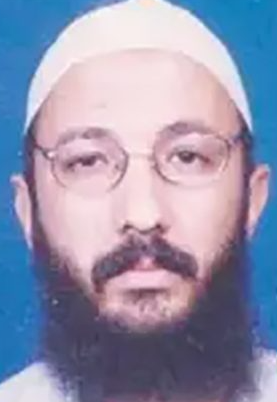
Saif al-Adl
8am: Firstly, this move marks one of the most significant actions by Al-Qaeda in recent years. Saif al-Adl’s call, implying a resurgence of Al-Qaeda, or at least an attempt at it, under the Taliban’s flag, does not seem to have happened without Taliban cooperation. Click here to read more (external link).
Related