
Bomb blast hits Pakistan polio team amid national immunization drive
 Ayaz Gul
VOA News
September 9, 2024
Islamabad — Authorities in northwestern Pakistan said Monday that a roadside bomb explosion injured at least 10 people, including anti-polio vaccinators and police personnel escorting them.
The bombing in the South Waziristan district near the border with Afghanistan targeted a convoy carrying polio workers and their guards on the opening day of a nationwide immunization campaign.
Area security and hospital officials reported that three health workers and six security personnel were among the victims. No group immediately claimed responsibility for the violence in a region where security forces are fighting militants linked to the outlawed Pakistani Taliban.
Last week, Pakistan reported its 17th wild poliovirus case of the year from Islamabad, saying it paralyzed a child and marked the first infection in 16 years in the national capital.
Pakistani health officials said in the lead-up to Monday’s polio campaign that it is designed to vaccinate more than 33 million children under five in 115 districts nationwide.
Muhammad Anwarul Haq, coordinator of the National Emergency Operations Center for Polio Eradication, stated that the immunization drive would primarily focus on districts where “the virus has been detected and the risk of continued transmission and spread is really high.”
Haq encouraged all parents and caregivers to ensure their children get vaccinated, lamenting that “parents have not always welcomed and opened their doors to the vaccinators when they visit their homes.”
Pakistan and Afghanistan, which reported nine paralytic polio cases so far in 2024, are the only two remaining polio-endemic countries globally. Polio immunization campaigns have long faced multiple challenges in both countries, such as security and vaccine boycotts, dealing setbacks to the goal of eradicating the virus from the world.
Closure of Afghan Embassies in Europe Signals Ties With Taliban, Says Iranian Diplomat
 Afghanistan International: Rasoul Mousavi, an Iranian diplomat, has commented on the closure of Afghanistan’s embassy in London, stating that the shutting down of Afghan embassies in Europe is a step towards closer relations between European governments and the Taliban. Mousavi predicted that these countries would eventually agree to allow consular services of the embassies to operate in coordination with the Taliban. Click here to read more (external link).
The Implications of Ahmad Massoud’s Withdrawal from His U.S. Trip

Massoud
8am: It is true that the National Resistance Front of Afghanistan lacks support from Moscow and Tehran and is aware of their weaknesses and limitations. However, if given a long-term choice, it would prefer them over the U.S., even though it understands that Washington could play an influential role in transitioning Afghanistan from Taliban rule to a democratic order. Therefore, it is possible that the National Resistance Front viewed the invitation for its leader to the U.S. as a kind of “political trap,” intended to distance him from Russia and Iran, especially given that there is no indication of a change in the West’s stance toward the Taliban. To ensure that McCaul’s request does not go unanswered and to dispel any notion that the National Resistance Front depends on Iran and Russia, a middle path has been chosen: sending a standard delegation to Washington. Click here to read more (external link).
Clashes Between Islamic Emirate-Pakistani Forces Leave 2 Dead, 11 Injured
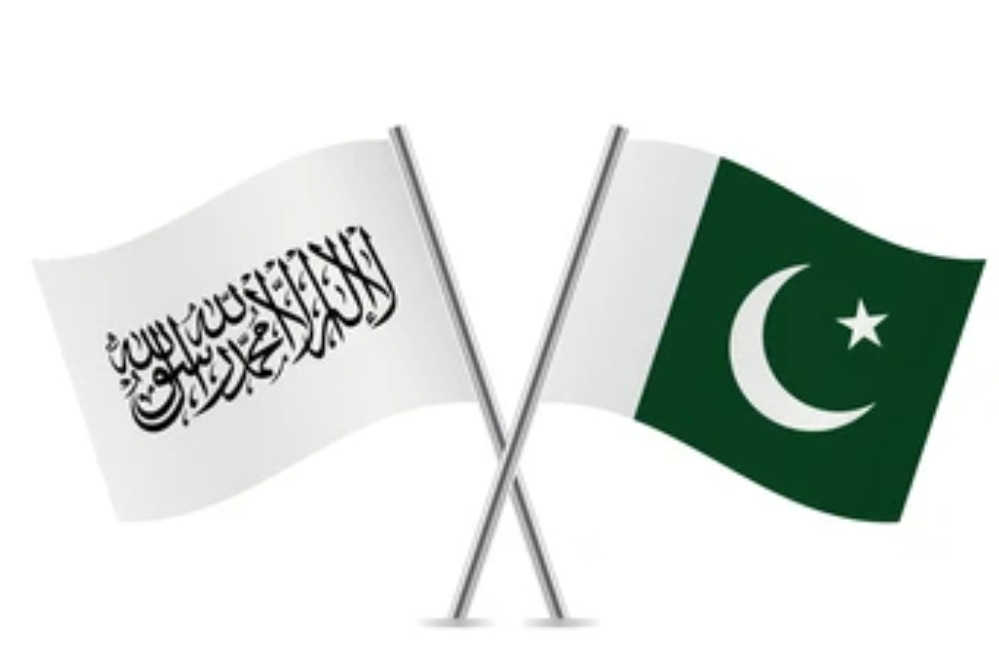 Tolo News: As a result of clashes between the forces of the Islamic Emirate and the Pakistani military, two people, including a woman, have been killed, and eleven others injured. Local residents reported that since Wednesday evening of last week, intermittent clashes between the Islamic Emirate forces and the Pakistani military have been ongoing in the Zazai Maidan district of Khost province. According to them, a large number of families along the Durand Line have migrated to nearby areas. Click here to read more (external link).
Wahed Nazhand secures first-round victory over Czech opponent

Khaama: Wahed Nazhand, an Afghan mixed martial artist based in Germany, defeated his opponent, Max Hendanagic from the Czech Republic, within the first round of their match. The fight occurred on Saturday night, September 7, under Germany’s “Octagon MMA” organization. Nizhand won by overcoming Hendanagic with a submission move early in the first round. Click here to read more (external link).
Other Afghan Sports News
Tolo News in Dari – September 8, 2024
23rd Anniversary of Ahmad Shah Massoud’s Death Marked

Ahmad Shah Massoud
Tolo News: The 18th of Sunbula marks the 23rd anniversary of the death of Ahmad Shah Massoud, a prominent figure in the fight against the Soviet Red Army invasion. Ahmad Shah Massoud, the son of Colonel Dost Mohammad Khan, was born on the 11th of Sunbula, 1332 of solar calendar (1953), in the Jangalak area of Panjshir province. After starting his education in Panjshir, he continued his studies in Herat and Kabul due to his father’s job relocation and eventually completed high school at Lycée Esteqlal in Kabul. Click here to read more (external link).
Afghanistan Embassy in London set to close
 Khaama: According to the report, the Afghanistan embassy in London will close. The British Foreign Office officially informed Zalmay Rasul, the former ambassador to London, of this decision. Reports indicate that Mr. Rasul was summoned to the British Foreign Office on Friday, September 6, and was asked to close the Afghanistan embassy within 20 days. Click here to read more (external link).
Kyrgyzstan follows regional trend, takes Taliban off terrorist list
By Masood Farivar
VOA News
September 7, 2024
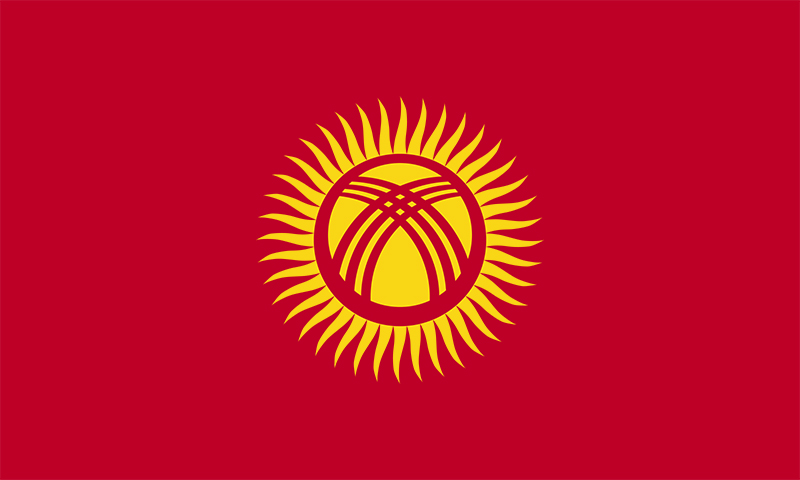
Washington — Shunned by the West for over three years, Afghanistan’s Taliban scored a diplomatic victory of sorts this week when the small Central Asian nation of Kyrgyzstan quietly removed the group from its list of banned terrorist organizations.
The move underscores warming ties between the Taliban, in power since August 2021, and the countries of Central Asia. While the United States has led an international campaign to deny the Taliban government legitimacy, over a dozen regional countries, led by China and Russia, have embraced the self-styled “Islamic Emirate of Afghanistan.”
“It fits with the broader trend of governments in the region and internationally warming up to the idea of having to work with the Taliban,” said Lucas Webber, a senior threat intelligence analyst at Tech Against Terrorism and a research fellow at the Soufan Center. “Generally, there is a recognition that the Taliban is not going anywhere, so you have to work with whoever is ruling Afghanistan for economic and security reasons.”
Taliban reaction
The government of Kyrgyzstan, once considered a close U.S. ally in the region, did not publicize its decision to delist the Taliban, but the Taliban’s Foreign Ministry quickly seized on it as the latest breakthrough in its regional diplomacy.
“Aligning with actions of other countries, the step taken by Kyrgyzstan signifies a growing political recognition of the Islamic Emirate of Afghanistan on both regional and international levels, and removes a barrier to strengthening bilateral relations between the Islamic Emirate of Afghanistan & other countries,” it said Thursday in a statement.
The Taliban, which first ruled Afghanistan from 1996 to 2001 before waging a 20-year insurgency, has appeared on various international terrorist lists over the years. While the U.S. has not officially labeled them a “foreign terrorist organization,” it considers members “specially designated global terrorists.”
Kyrgyzstan is the second Central Asian country to delist the Taliban in recent months. In December, Kazakhstan took the group off its own terrorist list as part of its growing economic engagement with the Taliban. In May, Russia said it, too, was considering such a move as it decides whether to recognize the Taliban’s government.
Although no country has extended official recognition to the Taliban, more than a dozen, including all six of Afghanistan’s neighbors, have allowed Taliban diplomats to take charge of Afghan embassies or consulates. Among them, three have accepted accredited Taliban envoys: China in January, followed by Kazakhstan and the United Arab Emirates last month.
In pursuing ties with the Taliban, Central Asian countries are taking their cues from Russia and China, both of which have deepened their engagement with Afghanistan’s de facto government in recent years.
“They’re pursuing practical policies, and they’re also given a kind of umbrella by two of the major great powers — Russia and China — who are working with the Taliban quite closely,” Webber said.
A ‘necessary evil’
In a report on the Taliban’s regional diplomacy, analysts at the International Crisis Group noted how various countries pursue disparate agendas.
Afghanistan neighbors such as Iran, Pakistan and Uzbekistan view dealing with the Taliban as a “necessary evil if they are to address core concerns,” the analysts wrote. Those concerns include extremist threats as well as trade. For Kyrgyzstan and Tajikistan, a planned project designed to carry surplus power to Afghanistan and Pakistan is a priority.
Regional powers China, India and Russia use engagement to contain “any spillover” from Afghanistan, the analysts said. Russia regards the Taliban as a bulwark against the Islamic State’s local branch. And while China has signed lucrative investment deals with Afghanistan, it, too, is motivated by fear of terrorism.
Countries farther afield, such as the UAE and Qatar, aim “to challenge the Taliban’s Islamic exceptionalism but [are] also spurred by the need to balance their own regional rivalries,” they wrote.
Strategic interests vs. human rights
Significantly, none of the countries that have established diplomatic ties with the Taliban were classified as “free” by Freedom House, the freedom and democracy advocacy group. All but two are labeled “not free,” according to a VOA review. Only Pakistan and Turkey are designated as “partly free.”
This suggests that the Taliban can ward off international isolation if enough countries prioritize strategic interests over human rights and democracy, according to experts.
While human rights haven’t always been a U.S. foreign policy priority, the Biden administration, along with its Western allies, have made Taliban recognition contingent on respect for human rights, women’s rights and an inclusive government.
“Given the issues related to the treatment of women and other human rights issues, it’s more difficult for liberal democratic governments to recognize and work with the Taliban than it is for less democratic governments or nondemocratic governments, where they can be more practical in terms of pursuing their national interests solely and then working with the Taliban on this basis,” Webber said.
The implications for Afghanistan’s future and U.S. diplomacy are immense. Increased political and economic engagement could embolden the Taliban to keep their harsh policies, such as their ban on girls’ education after sixth grade, experts say.
It could also force Washington to reassess its dual policy of engaging and isolating the Taliban. Since the Taliban takeover, U.S. and European diplomats have held ongoing talks with Taliban officials in Qatar, where they maintain their Afghanistan embassy operations.
Biden administration officials have also reportedly weighed working with the Taliban to combat the Afghan-based Islamic State Khorasan terror group, even while refusing to establish diplomatic ties.
“There is going to be pressure as more governments recognize that this kind of resistance to working more closely with the Taliban doesn’t hold up,” Webber said. “But it will be hard to do so publicly and officially, given the humanitarian violations and problems that we see with the Taliban government.”
The Biden administration defends its Afghanistan policy. Asked about the Taliban’s growing diplomatic footprint, a State Department spokesperson noted that no country has said that it recognizes the Taliban as the government of Afghanistan.
“The Taliban seek recognition as Afghanistan’s government,” the spokesperson said in a statement to VOA. “The United States and the international community have been clear with the Taliban that our ability to take meaningful steps toward normalization will be based on the Taliban’s own actions.”
These include respecting the rights of women and minorities, fulfilling anti-terror obligations and starting a political process for inclusive governance, the spokesperson said.