
 Khaama: A Pentagon spokesperson stated on Thursday that the U.S. has international partners in the fight against ISIS. However, Sabrina Singh emphasized that the U.S. does not view the Taliban as a partner in the fight against ISIS. Previously, NBC News reported, citing its sources, that due to the growing global threat posed by ISIS, Biden administration officials are considering expanding cooperation with the Taliban regime to help track down ISIS-Khorasan. The Taliban have had bloody confrontations with ISIS in recent years and claim that ISIS has been suppressed and no longer poses a threat to them or other countries. Despite these claims, Taliban officials continue to deny the presence of ISIS in Afghanistan, even as ISIS-K carries out attacks, particularly targeting the Hazara community in the country. Click here to read more (external link).
Tolo News in Dari – August 23, 2024
UN criticizes Pakistan’s mass eviction of Afghans lacking legal paperwork
 Ayaz Gul
VOA News
August 23, 2024
ISLAMABAD — A group of independent experts from the United Nations raised concerns Friday about Pakistan’s large-scale deportations of undocumented Afghan migrants and called for measures to minimize the dangers faced by vulnerable people among them.
The U.N. Committee on the Elimination of Racial Discrimination issued findings of its review of Pakistan at an online news conference in Geneva, saying it was “alarmed by the mass exodus” under the country’s Illegal Foreigners Repatriation Plan.
Michal Balcerzak, the chair of the committee, said that a staggering 700,000 people, including 101,000 between April and June, were deported or returned to Afghanistan as part of the plan.
Pakistani authorities launched the deportation campaign late last year, attributing a surge in nationwide militant attacks to “elements” residing among undocumented foreigners, primarily Afghans.
“The committee highlighted reports of harassment, forced evictions and the detention of 28,500 Afghans from September to December 2023, which have driven many to return to Afghanistan out of fear,” said Balcerzak.
He emphasized that Pakistan should assess “refoulement risks” and take measures to reduce dangers faced by vulnerable groups, such as the risk of unaccompanied children being trafficked or exploited.
VOA contacted but could not immediately receive a response from the Pakistani Foreign Ministry spokesperson regarding the U.N. findings.
Islamabad rejects criticism of its deportations of foreigners lacking proper paperwork, stating that the campaign is not aimed at a specific nationality and asserting that most of the Afghan returnees departed voluntarily. However, the returnees and Taliban authorities in Afghanistan have questioned those claims.
Balcerzak stated that the U.N. committee “expressed regret for the lack of a legislative and institutional framework in line with international law” and recommended that Pakistan ratify the 1951 Refugee Convention and its 1967 Optional Protocol.
According to the U.N. High Commissioner for Refugees, Pakistan is not a party to the global convention and has not enacted any national legislation to protect refugees nor has it established procedures to determine the refugee status of people seeking international protection within its territory.
Pakistan also hosts about 1.4 million official Afghan refugees fleeing years of war, persecution and economic hardship in poverty-stricken Afghanistan.
Moreover, nearly 900,000 Afghan citizenship card holders also live in the country. The migrant community received the identity documents several years ago after undergoing a registration process backed by the Pakistani and Afghan governments and financed by the International Organization for Migration.
Last month, Pakistan extended until June 2025 the stay of the 1.4 million Afghan refugees in the country legally.
Iran bans Afghan nationals in 10 South Khorasan counties
 Khaama: An official of the Islamic Republic announced that in South Khorasan province, Afghan residents are only permitted to reside in the Khusf and Birjand counties. Mohsen Safaei, the Director-General of Foreign Nationals and Immigrants at the South Khorasan Governorate, stated that Afghan residency is prohibited in the other ten counties of the province. In an interview with Mehr News Agency, published on Thursday, Safaei added that over 10,000 foreign nationals reside in South Khorasan. He mentioned that the majority of foreign residents in South Khorasan are Afghans. Click here to read more (external link).
Kazakhstan Recognises Taliban’s Diplomat as Chargé d’Affaires of Afghan Embassy
 Afghanistan International: Kazakhstan’s Ministry of Foreign Affairs announced on Wednesday, August 21, that it has officially recognised a Taliban diplomat as the Chargé d’Affaires of the Afghan Embassy in the country. The ministry stated that the appointment of Mohammad Rahman Rahmani is significant for the development of relations between the two nations. Last month, Turkmenistan, another key Central Asian country, also accepted a Taliban diplomat as the Chargé d’Affaires of the Afghan Embassy in Ashgabat. Russia and Central Asian countries have been at the forefront of expanding relations with the Taliban regime in the region. Click here to read more (external link).
Taliban Ridicules Women’s Oppression: An Insulting Perception of Women
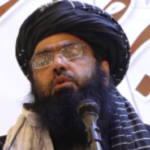
Kabir
8am: Over the past three years, the Taliban have barred girls and women in Afghanistan from attending schools beyond the sixth grade. The group has given various excuses for keeping schools and universities closed to females. Recently, however, the Taliban’s Deputy Prime Minister for Political Affairs [Abdul Kabir] responded sarcastically when asked about reopening girls’ schools, saying: “Which schools?!” This remark sparked outrage among citizens, who noted that the laughter added insult to the wounds of millions of girls still hoping for the reopening of schools and universities. Many believe the Taliban place no value on girls’ education and that educational institutions will never reopen for them under the group’s rule. Others have pointed out the Taliban’s astonishing indifference toward educating half of Afghanistan’s population. Click here to read more (external link).
Related
- Taliban enact law that silences Afghan women in public, and curbs their freedom
- Fear of Sexual Assault Won’t Hamper My Fight For Freedom, Says Afghan Rights Activist
- Three Years After the Fall of the Republic: Outcry Over Taliban’s Systematic Torture
- The Taliban publish vice laws that ban women’s voices and bare faces in public
Tolo News in Dari – August 22, 2024
UN urges immediate need for 18,000 midwives in Afghanistan
 Khaama: The United Nations Population Fund (UNFPA) has issued a warning regarding the high maternal mortality rate in Afghanistan, stating that the country urgently needs 18,000 midwives. The organization has warned that failing to address this urgent need in Afghanistan endangers many lives. Globally, UNFPA estimates that 900,000 skilled (trained) midwives are needed, with the immediate requirement for 18,000 midwives in Afghanistan being highlighted as “urgent.” Click here to read more (external link).
Other Health News
Taliban block UN human rights investigator from visiting Afghanistan

Zabihullah Mujahid
Ayaz Gul
VOA News
August 21, 2024
ISLAMABAD — Afghanistan’s de facto Taliban leaders have barred the United Nations-appointed special rapporteur on human rights, Richard Bennett, from entering the country for allegedly “spreading propaganda.”
Taliban spokesperson Zabihullah Mujahid disclosed the decision to Afghan broadcaster TOLO News late Tuesday. He accused the U.N. envoy of misrepresenting “the ground realities” in the country and providing “misleading” information to the global community.
Bennett reports to the U.N. Human Rights Council based in Geneva and has conducted several trips to Kabul to investigate the Afghan human rights situation since assuming duties in 2022 — a year after the radical Taliban returned to power.
“Mr. Bennett’s travel to Afghanistan has been prohibited because he was assigned to spread propaganda in Afghanistan. He is not someone we trust … He used to exaggerate minor issues and propagate them,” Mujahid stated.
Neither the U.N. Human Rights Council nor Bennett has immediately commented on the reported travel ban facing him.
The U.N. human rights rapporteur, in one of his recently published assessments, highlighted the Taliban’s sweeping curbs on Afghan women’s access to education, employment, and public life at large, demanding they be immediately reversed.
Bennett alleged that women and girls under Taliban rule “are being persecuted based on gender, calling it a crime against humanity. He went on to assert that the institutionalized, systematic, and widespread nature justifies it being framed as “gender apartheid.”
Mujahid dismissed the U.N. findings and subsequent statements by Bennett as propaganda, saying the Taliban respect women’s rights in line with their interpretation of Islamic law and Afghan customs.
The Agence France-Presse news agency quoted a diplomatic source as confirming the ban on the U.N. rapporteur and saying that Bennett “was informed of the decision that he would not be welcome to return to Afghanistan several months ago.”
“Even after repeatedly requesting Mr. Bennett to adhere to professionalism during work … it was decided that … his reports are based on prejudices and anecdotes detrimental to interests of Afghanistan and the Afghan people,” Taliban foreign ministry spokesman Abdul Qahar Balkhi told the Reuters news agency.
Taliban officials do not respond to VOA queries because they have imposed a ban on the media outlet.
De facto fundamentalist Afghan authorities have barred girls ages 12 and older from attending school and women from many public and private sector workplaces, including the U.N.
In addition, women are not allowed to undertake road trips beyond 78 kilometers without a male guardian, and they are barred from visiting parks, gyms, and public baths.
“The Taliban barring Bennett from entering the country is one of many signs that their crackdown on human rights, especially the rights of women and girls, is ongoing and continuing to deepen,” Heather Barr, the associate women’s rights director at Human Rights Watch, told VOA.
“The international community — and the U.N.—should respond to this provocation by the Taliban by committing to never discussing the future of Afghanistan without women on the agenda and at the table,” she said in her comments shared via email.
The Taliban attended a U.N.-organized meeting in Doha last month for the first time, where they interacted with envoys from more than two dozen countries on matters related to Afghanistan’s economic and humanitarian challenges.
The U.N. did not invite Afghan women or human rights representatives, however, citing the Taliban’s opposition, a move that drew strong criticism of the world body.
No country has officially recognized the Taliban as the legitimate government since they seized control of Afghanistan in 2021, mainly citing the harsh treatment of women and girls.
Many top Taliban leaders remain under international terrorism sanctions, and the Afghan banking sector is largely isolated from the rest of the world, with about $9 billion in central bank assets being frozen in the U.S. and European banks.
Another 9/11-Type Attack Possible, But From Pakistan Soil, Claims Taliban

Afghanistan International: The Taliban’s Foreign Ministry has rejected remarks made by Pakistani officials about the recurrence of another 9/11-type attack from Afghan soil. The Taliban said that these statements are not true and are an attempt to “confuse public opinion”. The ministry even lambasted Pakistan’s special envoy for Afghanistan Asif Durrani and stated that the threats voiced by Durrani are actually originating from Pakistani soil. Click here to read more (external link).