
 Afghanistan International: Sources in Takhar told Afghanistan International that the Taliban has instructed journalists in the province that they are no longer allowed to film and photograph. According to sources, this order was recently issued by the Taliban’s Department for the Promotion of Virtue in Takhar. Click here to read more (external link).
Taliban asserts new gains against Afghan-based IS offshoot amid skepticism

Zabihullah Mujahid
By Ayaz Gul
VOA News
September 30, 2024
Islamabad — The Taliban said Monday that their security forces had killed and captured several “key members” of a regional Islamic State affiliate for plotting recent terrorist attacks in Afghanistan, alleging that the suspects had crossed over from Pakistan.
Zabihullah Mujahid, the Taliban spokesperson, listed the claims and so-called successes against Islamic State-Khorasan, or IS-K, locally known as Daesh, in a formal statement without providing evidence to support them.
The assertions came after the country’s three immediate neighbors and Russia jointly urged the de facto Kabul government this past Friday to take “visible and verifiable actions” against transnational terrorist groups, including IS-K, on Afghan soil.
Mujahid said the IS-K operatives in question had been involved in several recent attacks in Afghanistan. They included a suicide bombing in the Afghan capital earlier this month and a May gun attack in the central city of Bamiyan, he added.
Both attacks resulted in the deaths of at least ten people, including three Spanish tourists, with IS-K claiming credit for them at the time.
The Taliban spokesperson said that IS-K insurgents had established “new operational bases and training camps” in the Pakistani border provinces of Baluchistan and Khyber Pakhtunkhwa after fleeing Afghan counterterrorism security operations.
“From these new bases, they continue to orchestrate attacks, both within Afghanistan and in other countries,” he claimed, noting that “some of the arrested individuals had recently returned to Afghanistan from the Daesh Khorasan training camp” in Balochistan.
Islamabad has not immediately responded to the Taliban’s allegations, which came two days after neighboring Pakistan, China, and Iran, along with Russia, at a meeting in New York this past Friday, urged the Taliban to eradicate bases of IS-K and other transnational terrorist groups in Afghanistan.
The ministerial meeting warned that these Afghan-based terrorist entities “continue to pose a serious threat to regional and global security.” According to a joint statement released after the huddle, the participants recognized the Taliban’s efforts in combating IS-K.
“They called on de facto authorities to take visible and verifiable actions in fulfilling the international obligations and commitments made by Afghanistan to fight terrorism, dismantle, and eliminate all terrorist groups equally and non-discriminatory and prevent the use of Afghan territory against its neighbors, the region, and beyond,” the statement stressed.
It identified the groups in question as IS-K, al-Qaida, Eastern Turkestan Islamic Movement, ETIM, which opposes China, anti-Iran Jaish ul-Adl, and the Tehrik-i-Taliban Pakistan, TTP, as well as the Baloch Liberation Army, BLA, both waging attacks on Pakistani security forces and civilians.
The United Nations, in a recent security assessment, also described TTP as “the largest terrorist group” in Afghanistan, with several thousand operatives, noting that IS-K activities in the country are also turning into a significant regional threat. It noted that the group had intensified cross-border attacks in Pakistan since the Taliban regained power three years ago and is being facilitated by the de facto Afghan rulers.
A new report issued Monday documented nearly 1,000 deaths of civilians and security forces in Pakistan during the first nine months of 2024. The Islamabad-based independent Center for Research and Security Studies stated that most of the fatalities resulted from attacks by TTP and BLA-led insurgents.
Pakistani authorities have consistently urged Kabul to extradite TTP leaders and militants to Islamabad for trial for instigating deadly violence in the country.
The Taliban has rejected Pakistani and U.N. allegations, saying they are not allowing any foreign groups, including TTP, to threaten other countries from Afghanistan.
The United States has designated TTP and BLA as global terrorist organizations.
Related
How the Taliban’s new ‘vice and virtue’ law erases women by justifying violence against them
 The Conversation: Since returning to power three years ago, the Taliban have been enforcing oppressive laws that violate people’s freedoms and human rights, especially those of women and girls. But a newly passed “vice and virtue” law goes further. It is among the most repressive and discriminatory measures ever enacted by the Islamist fundamentalist group. Punishments for those who protest the laws include beatings, detention, torture, rape and death. Women protesters have reported being beaten and tortured with electric shocks. The Taliban have reportedly raped girls and women in jail, including filming the gang rape of an Afghan woman activist jailed for protesting. Women, simultaneously, have no means of seeking justice. The Taliban have abolished the Afghanistan Independent Human Rights Commission. The commission investigated and reported about alleged extrajudicial killings, rape, torture, illegal detention and inhuman treatment and violence against women, among other rights violations. Click here to read more (external link).
Related
Tolo News in Dari – September 30, 2024
‘Treated Like Criminals’: Iran Intensifies Deportation Of Afghans
 RFE/RL’s Radio Azadi / Kian Sharifi
September 30, 2024
Every day, hundreds of Afghans, some holding their children, are deported from neighboring Iran.
Many of them crossed into Iran illegally to escape the brutal rule of the Taliban and the devastating humanitarian and economic crises gripping Afghanistan.
In the Afghan border town of Islam Qala, where the deportees are registered with the United Nations, many say they were mistreated by the Iranian authorities.
“They grab Afghan migrants and take them to camps,” Yaqub Mohammad told RFE/RL’s Radio Azadi, adding that they received little food and water. “They treated us like criminals.”
Gul Lalai, another recent deportee, told Radio Azadi that he was “humiliated and beaten up” at a police station in Iran before being expelled from the country.
Iran’s deportation of Afghans has intensified in recent months, according to Taliban officials who say as many as 3,000 Afghans are deported from Iran daily. Over half a million Afghans have been forcibly evicted from Iran so far this year, Taliban officials said.
Anti-Afghan Sentiment
The rate of deportation has increased as anti-Afghan sentiment soars in Iran, which witnessed a major influx of Afghan refugees and migrants following the Taliban’s forcible seizure of power in 2021.
Earlier this month, Iranian police chief Ahmad Reza Radan said the country planned to expel some 2 million Afghans by March 2025.
The announcement came soon after Iranian lawmakers drafted a bill that would reduce the total number of migrants, mostly Afghans, living in the Islamic republic by 10 percent every year.
The United Nations’ refugee agency, UNHCR, estimates that some 4 million Afghans reside in Iran, most of them undocumented migrants. Iranian media say there are up to 8 million Afghans in the country.
Iran’s military on September 23 said it had built a wall along more than 10 kilometers of its 900-kilometer eastern border with Afghanistan, the main entry point for refugees and migrants.
Reports have recently emerged of Afghans being banned from buying subsidized bread in the southern Kerman Province, home to a large Afghan community.
Rising Harassment, Abuse
Interior Minister Eskandar Momeni said earlier this month that the issue of illegal migrants was a “sensitive” topic and warned that the government’s policies should not fan anti-migrant sentiment.
His comments came amid a rise in attacks against Afghans in Iran.
In August, a video of an Afghan teenager being violently pinned to the ground by Iranian police sparked outrage.
Afghans in Iran have long faced discrimination and harassment. But they say the pressure on them is now growing.
“We have lots of problems here,” Omid Poya, an exiled Afghan journalist living in Iran, told Radio Azadi. “Afghans here are facing discrimination and persecution.”
Hudaya Sahibzada, an Afghan human rights activist, called on Iran to stop the deportation of Afghans, particularly those at risk of retribution from the Taliban.
“The forcible deportation of Afghan refugees from Iran has intensified,” she told Radio Azadi. “Among those deported have been journalists, former soldiers, and activists. Some of them have been killed.”
Copyright (c) 2024. RFE/RL, Inc. Reprinted with the permission of Radio Free Europe/Radio Liberty, 1201 Connecticut Ave NW, Ste 400, Washington DC 20036.
Public Health Ministry: 21% of Deaths in Country Are Due to Heart Diseases
 Tolo News: The Ministry of Public Health said that heart diseases are the cause of 21% of deaths in the country. During a meeting held to commemorate World Heart Day, the Deputy Minister of Public Health called on international organizations to cooperate in providing standard healthcare services, especially in the field of cardiology. Click here to read more (external link).
Other Health News
Dr. Najib: As Narrated by the Russians

Najibullah Ahmadzai
8am: Dr. Najib is among those politicians whose political record is surrounded by less ambiguity. He is one of the most exemplary figures who paid the price for his mistakes in his life. This may be the highest price a politician can pay for his misdeeds. Najib, the statesman who rose to power with full Soviet support and was ousted following the cessation of political and financial backing from the Soviet Union, is accused of horrific crimes against political prisoners during his tenure as head of the dreaded KhAD, power-seeking, tyranny, ethnic favoritism, and corruption. Najib is considered a failed politician who could not effectively manage Afghanistan during the critical and fateful period following the Soviet withdrawal. His last mistake said to be driven by ethnic bias, led to his tragic death. Despite this, some, both in the past and now, have tried to portray him as a patriotic, combative, and nationalist figure; an effort that, given his poor political record, has yet to cement a favorable and dominant narrative of Dr. Najib. These efforts to sanitize Najib’s image show that there is a revisionist trend in the historical narrative based on tribal values, a trend that has garnered considerable support due to the strong anti-Pakistan sentiment among Afghan citizens. Click here to read more (external link).
Displacement of Indigenous Lands to Kuchis: Taliban Rulings Reflect Ethnic and Linguistic Discrimination
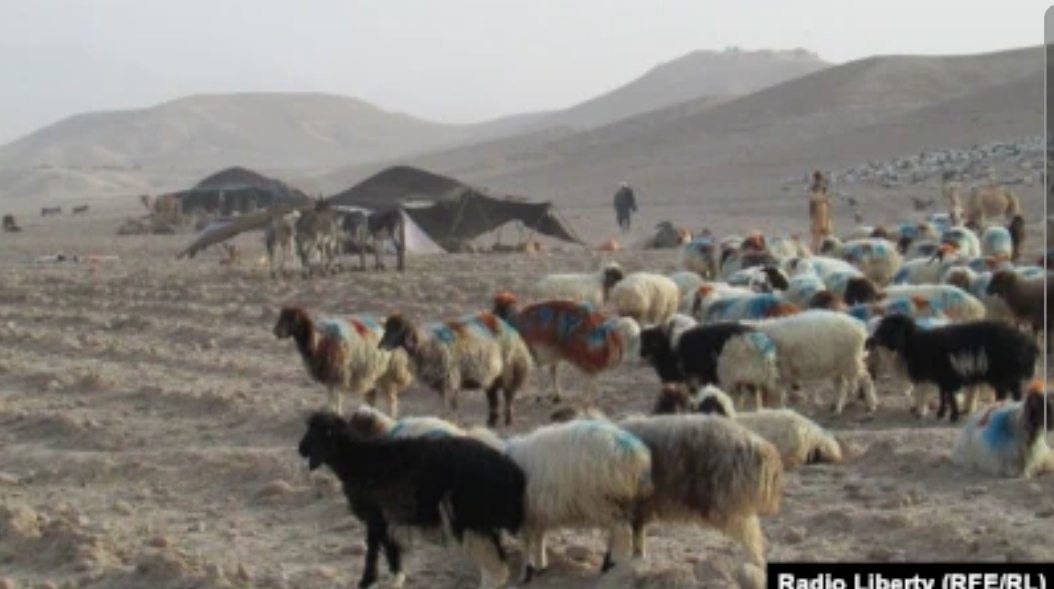
A Kuchi camp (file photo)
8am: Over the past three years, Taliban courts have consistently ruled in favor of the Kuchis in civil cases involving native Persian-speaking residents. In most instances, these courts not only transferred agricultural lands, homes, and properties but also ordered native Persian-speaking residents to pay millions of Afghanis in fines to the Kuchis. Click here to read more (external link).
Tolo News in Dari – September 29, 2024
Afghanistan to play three ODIs against Bangladesh in November
 Ariana: The three-match ODI series will begin on the 6th of November, with the 2nd and 3rd ODIs scheduled to be played on the 9th and 11th of November, respectively. The exact venue is yet to be finalized. Click here to read more (external link).