
Russia Builds 4G Network in Afghanistan as Ties With Taliban Deepen
 Moscow Times: A U.S.-sanctioned Russian telecom equipment developer installed 4G mobile network systems in Afghanistan last year to provide mobile services for up to 10 million people, the Vedomosti business newspaper reported Thursday. The work highlights Moscow’s deepening ties with the Taliban since the Islamist group returned to power in 2021 following the withdrawal of U.S. forces from Afghanistan. Click here to read more (external link).
Pro-Taliban Social Media Figure Rahim Sekandar Confirms He Is In Custody
 Afghanistan International: Rahim Sekandar, a prominent pro-Taliban figure on social media, has confirmed that he is currently being held by the group. In a post on X, formerly known as Twitter, he wrote: “I am imprisoned by the Taliban’s Reform Commission. A few days ago, I criticised the remarks of Mawlawi Saeedullah Saeed, but now I admit I was wrong and retract my statement.” Click here to read more (external link).
Life under Taliban rule
Taliban Broadens Crackdown With Detention Of Critical Religious Scholars

Taliban militants (file photo)
By Abubakar Siddique and RFE/RL’s Radio Azadi
June 5, 2025
The Taliban declared dissent unacceptable after returning to power nearly four years ago. Since then, it has detained, tortured, or forced into exile secular opponents, journalists, and human rights activists.
Now the country’s de facto leaders appear to be broadening their crackdown to include Islamic scholars and clerics for publicly criticizing the Taliban’s harsh rulings or merely supporting more moderate policies.
Abdul Qadir Qanat, a Muslim cleric in the Afghan capital, Kabul, is one of the most prominent figures detained by the Taliban.
“They tied his hands and sped him away in a vehicle along with his young son,” said a friend of Qanat who requested anonymity because he feared reprisals from the Taliban for speaking to RFE/RL’s Radio Azadi.
“So far, we don’t know why he was detained or what the charges against him are,” the friend, who is also a cleric, said of Qanat’s arrest in late May. “We are very worried about him because he has diabetes.”
Qanat is known for speaking his mind on television talk shows and public speeches.
Qanat and his friend Sirajuddin Nabil have been detained for criticizing the Taliban rule during a public gathering. In January, Qanat and another cleric, Mahmood Hassan, were arrested after they criticized the Taliban’s monopoly over power.
Bashir Ahmad Hanafi, a Muslim scholar who has consistently supported the Taliban in the southern province of Helmand, is another prominent figure among those detained by the Taliban’s intelligence service.
Hanafi’s friends say he was detained by the Taliban spy service soon after he criticized the Taliban’s ban on education for Afghan women and teenage girls last month.
Media reports suggest Hanafi has been sentenced to imprisonment for eight months and banned from traveling abroad for two years for “inciting public opinion against the current [political] system.”
Radio Azadi repeatedly approached the Taliban intelligence agency’s spokesman, Khalil Hamraz for comment, but he didn’t respond.
Safia Arefi, a human rights campaigner, told Radio Azadi that the Taliban has shown no tolerance for dissent or criticism.
“The Taliban’s treatment of the accused does not take into account any principles or law,” she said. “They have not even informed the families of the detainees.”
Obaidullah Baheer, a former fellow at the South Asia Center at the London School of Economics, said theocracies such as the Taliban “often conflate political decision-making with religious doctrine,” which leaves no margin for disagreement, dissent, or criticism.
He sees the Taliban’s crackdown on religious scholars as self-defeating.
“It’s a quick and sure way of alienating the local population and taking a hit on the popularity front,” he said.
Unlike its brutal regime in the 1990s, the current Taliban government has imposed censorship gradually. It suppressed dissent by targeting various segments of the Afghan society.
It initially faced criticism from the Afghan media and protest demonstrations by women, retirees, and farmers affected by its harsh policies.
It has wiped out independent Afghan media and severely restricted international press from accessing the country. It has tortured and detained hundreds of activists, academics, and journalists to promote a culture of self-censorship and fear.
“There is an understanding that there are consequences for crossing a line that is not very clearly defined,” Baheer said. “But anything that even converges on criticism is not tolerated and is then punished.”
Copyright (c) 2025. RFE/RL, Inc. Reprinted with the permission of Radio Free Europe/Radio Liberty, 1201 Connecticut Ave NW, Ste 400, Washington DC 20036.
Tolo News in Dari – June 5, 2025
Trump Revives Travel Ban, Barring Nationals From Iran, Afghanistan, And Elsewhere Entry To US As Of Next Week

Donald Trump
Radio Free Europe/Radio Liberty
June 5, 2025
US President Donald Trump on June 4 signed a proclamation resurrecting the travel ban from his first term, ordering a new ban on citizens of 12 countries, including Afghanistan and Iran, from entering the United States.
Trump said the travel ban is necessary to protect Americans from terrorist attacks such as a June 1 attack in Colorado in which authorities say a group of people demonstrating in support of Israeli hostages held by Hamas was attacked by an Egyptian national.
“The recent terror attack in Boulder, Colorado, has underscored the extreme dangers posed to our country by the entry of foreign nationals who are not properly vetted, as well as those who come here as temporary visitors and overstay their visas. We don’t want them,” Trump said in a video message.
The suspect in the Colorado attack, Mohammed Sabry Soliman, threw fire bombs and sprayed burning gasoline at the group, according to police. Fifteen people were injured. US Homeland Security officials said Soliman was in the country illegally after overstaying a tourist visa.
Trump compared the new travel ban to the “powerful travel restrictions” he imposed on a number of mainly Muslim countries in 2017 shortly after his first term began. He described that action as one of the most successful policies of his first term and a key part of preventing major foreign terrorism attacks on US soil, citing terrorism attacks that occurred in Europe in recent years.
“We will not let what happened in Europe happen in America,” Trump said. “We cannot have open migration from any country where we cannot safely and reliably vet and screen.”
In addition to Afghanistan and Iran, the countries on the new travel ban are Burma, Chad, Republic of Congo, Equatorial Guinea, Eritrea, Haiti, Libya, Somalia, Sudan, and Yemen. The ban takes effect at 12:01 a.m. Washington time on June 9.
Though the restriction does not effect travelers from Egypt, Trump said in “light of recent events” he ordered the secretary of state to update him on the review of the practices and procedures of Egypt “to confirm the adequacy of its current screening and vetting capabilities.”
In addition to the ban, there will be heightened restrictions on visitors from Burundi, Cuba, Laos, Sierra Leone, Togo, Turkmenistan, and Venezuela, the proclamation said.
Trump said he remains “committed to engaging with those countries willing to cooperate to improve information sharing and identity management procedures, and to address both terrorism-related and public safety risks.”
The travel ban issued during his first term banned citizens of seven predominantly Muslim countries — Iraq, Syria, Iran, Sudan, Libya, Somalia, and Yemen. It resulted in chaos and confusion at airports in those countries and at US airports as travelers were either barred from boarding their flights to the United States or detained once they arrived.
The travelers affected included students and faculty as well as professionals, tourists, and people visiting friends and loved ones.
Trump defended the ban on national security grounds, arguing it was not based on anti-Muslim bias. It was revised amid legal challenges until a version was upheld by the Supreme Court in 2018.
The new travel ban follows an executive order Trump issued in January requiring the departments of State and Homeland Security and the Director of National Intelligence to compile a report on “hostile attitudes” toward the United States. The executive order also asked for an assessment of whether entry from certain countries represented a national security risk.
With reporting by AP
Copyright (c) 2025. RFE/RL, Inc. Reprinted with the permission of Radio Free Europe/Radio Liberty, 1201 Connecticut Ave NW, Ste 400, Washington DC 20036.
Related
Afghanistan Futsal Premier League set to kick off amid high expectations and foreign talent
 Ariana: The highly anticipated fourth season of the Afghanistan Futsal Premier League is set to begin tomorrow, Friday June 6, and will feature a fresh wave of domestic and international energy. The opening day will see defending champions Sadaqat FC take on Noorzad FC in the first clash, followed by Perozi Panjshir against Arya Forj in the second encounter. Click here to read more (external link).
Plundering Afghanistan’s Mineral Wealth: Global Silence and Environmental Destruction
 8am: Afghanistan is a land rich in underground resources—an abundance that, in terms of value and diversity, could form the backbone of its national economy and lay the foundation for sustainable development. However, rather than being utilized through a development-oriented framework, these assets have increasingly been subject to systematic looting and unregulated extraction in recent decades. Following the collapse of the republic and the rise of the Taliban, who lack any semblance of legitimate governance, covert contracts with foreign companies, unbridled exploitation, and the distribution of lucrative mining concessions among Taliban commanders have entrenched a new form of predatory economy. In the absence of the rule of law and scientific oversight, these practices not only fail to serve the public interest but actively fuel war, corruption, and the empowerment of non-state actors. Since the Taliban’s return to power in 2021, and in the absence of a legitimate government, this destructive trend has escalated. Click here to read more (external link).
Related
Tolo News in Dari – June 4, 2025
Pakistani police raid Afghan refugee homes in Islamabad
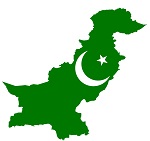 Khaama: Pakistani police raided Afghan refugee homes in Islamabad, sparking fear amid ongoing visa issues and mass deportations. Reports from Islamabad confirm that Pakistani police conducted a raid on Afghan refugee homes in the F-17 sector of the capital on Wednesday morning, June 4. Eyewitnesses said police broke into several houses, including those where no one was present at the time. Doors were damaged, and police reportedly searched every corner, including bathrooms and wardrobes. Click here to read more (external link).
Related