logo

Daily Updated Afghan News Service

  • Home
  • About
  • Opinion
  • Links to More News
  • Good Afghan News
  • Poll Results
  • Learn about Islam
  • Learn Dari (Afghan Persian/Farsi)

Recent Posts

  • “Forbidden for People, Permissible for Taliban”: Nimroz Baloch Decry Discrimination May 11, 2026
  • Frequent and Unjustified Power Cuts in Kabul; Residents Bear the Burden of Taliban Irresponsibility May 11, 2026
  • Clashes in Badakhshan leave at least four dead, sources say May 11, 2026
  • Taliban Order Cut To Residential Fibre-Optic Internet In Kabul, Say Sources May 11, 2026
  • Ancient Buddhist-Era Archaeological Site Discovered In Eastern Afghanistan May 11, 2026
  • Tolo News in Dari – May 11, 2026 May 11, 2026
  • Afghanistan wins six medals at Powerlifting Championship in Belarus May 11, 2026
  • Taliban sign $20 million gold mining deal in Kunduz May 10, 2026
  • Afghanistan’s exiled women cricketers urge ICC to recognize national team May 10, 2026
  • Tolo News in Dari – May 10, 2026 May 10, 2026

Categories

  • Afghan Children
  • Afghan Sports News
  • Afghan Women
  • Afghanistan Freedom Front
  • Al-Qaeda
  • Anti-Government Militants
  • Anti-Taliban Resistance
  • AOP Reports
  • Arab-Afghan Relations
  • Art and Culture
  • Australia-Afghanistan Relations
  • Book Review
  • Britain-Afghanistan Relations
  • Canada-Afghanistan Relations
  • Censorship
  • Central Asia
  • China-Afghanistan Relations
  • Civilian Injuries and Deaths
  • Corruption
  • Crime and Punishment
  • Drone warfare
  • Drugs
  • Economic News
  • Education
  • Elections News
  • Entertainment News
  • Environmental News
  • Ethnic Issues
  • EU-Afghanistan Relations
  • Everyday Life
  • France-Afghanistan Relations
  • Germany-Afghanistan Relations
  • Haqqani Network
  • Health News
  • Heroism
  • History
  • Human Rights
  • India-Afghanistan Relations
  • Interviews
  • Iran-Afghanistan Relations
  • ISIS/DAESH
  • Islamophobia News
  • Japan-Afghanistan Relations
  • Landmines
  • Media
  • Misc.
  • Muslims and Islam
  • NATO-Afghanistan
  • News in Dari (Persian/Farsi)
  • NRF – National Resistance Front
  • Opinion/Editorial
  • Other News
  • Pakistan-Afghanistan Relations
  • Peace Talks
  • Photos
  • Political News
  • Reconstruction and Development
  • Refugees and Migrants
  • Russia-Afghanistan Relations
  • Science and Technology
  • Security
  • Society
  • Tajikistan-Afghanistan Relations
  • Taliban
  • Traffic accidents
  • Travel
  • Turkey-Afghanistan Relations
  • UN-Afghanistan Relations
  • Uncategorized
  • US-Afghanistan Relations
  • Uzbekistan-Afghanistan Relations

Archives

Dari/Pashto Services

  • Bakhtar News Agency
  • BBC Pashto
  • BBC Persian
  • DW Dari
  • DW Pashto
  • VOA Dari
  • VOA Pashto

Taliban’s Military Capability Exaggerated: Dostum

11th September, 2020 · admin · 5 Comments

Abdul Rashid Dostum

Tolo News: Marshal Abdul Rashid Dostum on Friday said that he strongly supports the peace talks with the Taliban, but said that the Taliban are not as strong as some might think. “The Taliban are not as powerful as some think they are…the Taliban have hundreds of problems internally,” said Dostum. Click here to read more (external link).

Related
  • ANA Capable of Defending the Country, Says Khalid
Posted in Peace Talks, Security, Taliban | Tags: Dostum |

1TV Afghanistan Dari News – September 11, 2010

11th September, 2020 · admin

Posted in News in Dari (Persian/Farsi) |

Pompeo, Afghan Delegation Reach Qatar For Peace Talks

11th September, 2020 · admin

Mike Pompeo

Radio Free Europe/Radio Liberty
September 11, 2020

U.S. Secretary of State Mike Pompeo and an Afghan delegation on September 11 arrived in Qatar where negotiations between the Taliban and Afghanistan’s government are scheduled to begin the next day.

Pompeo said on his way to the Qatari capital, Doha, that upcoming Afghan peace talks are likely to be “contentious,” but they are the only way forward if Afghans are to find peace after decades of conflict.

The negotiations were laid out in a peace deal Washington brokered with the Taliban and signed in Doha on February 29 aimed at ending the war and bringing U.S. troops home, ending America’s longest conflict.

“It’s taken us longer than I wish that it had to get from February 29 to here, but we expect Saturday morning — for the first time in almost two decades — to have the Afghans sitting at the table together, prepared to have what will be contentious discussions about how to move their country forward to reduce violence and deliver what the Afghan people are demanding: a reconciled Afghanistan with a government that reflects a country that isn’t at war,” Pompeo said on the plane taking him to Doha.

“It’s their country to figure out how to move forward and make a better life for all Afghan people,” he said.

President Donald Trump made the withdrawal of U.S. troops from Afghanistan a promise before the 2016 presidential election. In the countdown to this November’s presidential poll, Washington has ramped up pressure to start intra-Afghan negotiations.

At a news conference on September 10, Trump called the talks “exciting” and said Washington expected to be down to 4,000 troops by November. Even though delays have plagued the start of negotiations, Washington began withdrawing some of its 13,000 troops after the February 29 deal was signed.

Pompeo warned of spoilers to peace, citing recent targeted killings in Afghanistan and the attempted assassination earlier this week of Afghan Vice President Amrullah Saleh.

“It’s very clear that the violence levels have to come down to acceptable levels,” he said.

U.S. peace envoy Zalmay Khalilzad told journalists on September 11 that the negotiations would be a “test for both sides.”

“This is a new phase in diplomacy for peace in Afghanistan. Now we are entering a process that is Afghan-owned and Afghan-led,” Khalilzad said, adding that Washington will continue to monitor and engage with both sides.

The Afghan delegation includes Abdullah Abdullah, who heads the High Council for National Reconciliation, the powerful umbrella group that will oversee the negotiation team headed by former intelligence chief Mohammed Masoom Stanikzai.

Abdullah’s appointment to head the council was part of a power-sharing deal with Afghan President Ashraf Ghani, ending months of squabbling over the results of a controversial presidential poll the year before.

The Taliban negotiating team is led by Abdul Hakim Ishaqzai, a hard-line cleric who spent years lying low in Pakistan’s southwestern city of Quetta, where the Afghan Taliban leadership has been based since the U.S.-led invasion in 2001 toppled the extremist group from power in neighboring Afghanistan.

With reporting by AP, Reuters, and AFP

Copyright (c) 2020. RFE/RL, Inc. Reprinted with the permission of Radio Free Europe/Radio Liberty, 1201 Connecticut Ave NW, Ste 400, Washington DC 20036.

Related

  • With Kabul Team in Doha, Abdullah ‘Optimistic’
Posted in Peace Talks, Security, Taliban, US-Afghanistan Relations | Tags: Dr. Abdullah |

Why Did The Taliban Appoint A Hard-Line Chief Negotiator For Intra-Afghan Talks?

11th September, 2020 · admin · 11 Comments

Abdul Hakim Ishaqzai, the Taliban’s new top negotiator, is reputed to be “a hard-liner dedicated to sustaining the jihad” until an Islamic emirate can be reestablished in Afghanistan.

By Frud Bezhan
Radio Free Europe/Radio Liberty
September 10, 2020

Abdul Hakim Ishaqzai spent years lying low in Pakistan’s southwestern city of Quetta, where the Afghan Taliban leadership has been based since the U.S.-led invasion in 2001 toppled the extremist group from power in neighboring Afghanistan.

A hard-line cleric, Ishaqzai until recently ran an Islamic madrasah, or seminary, in the Ishaqabad area of Quetta, from where he led the Taliban’s judiciary and headed a powerful council of Taliban clerics that issued religious edicts to justify the group’s brutal insurgency in Afghanistan.

But now Ishaqzai, who is in his 50s, has been propelled into the spotlight after he was appointed the Taliban’s chief negotiator for long-awaited peace talks in the Gulf state of Qatar with the internationally recognized government in Kabul.

The announcement about Ishaqzai on September 5 was part of a major shakeup in the Taliban’s 21-member negotiation team ahead of the start of direct peace talks in Qatar between the warring Afghan sides.

The militant group offered no explanation for the sudden changes.

Taliban sources say the negotiating team was modified to give it the power to make decisions on the spot.

Experts say the appointment of Ishaqzai, who is close to Taliban leader Haibatullah Akhunzada, could be an attempt by the core leadership to reassert its direct control over the upcoming negotiations in Qatar.

The Taliban’s political office in the Qatari capital, Doha, is led by Mullah Abdul Ghani Baradar, a co-founder of the Taliban who is considered a relative moderate.

The ultraconservative Ishaqzai replaces Sher Mohammad Abbas Stanekzai, who along with Baradar spearheaded negotiations with the United States over a landmark agreement signed in February that is aimed at negotiating an end to the 19-year war in Afghanistan.

Under the U.S.-Taliban agreement, international forces should withdraw from Afghanistan by May 2021 in exchange for counterterrorism guarantees from the Taliban, which pledged to negotiate a permanent cease-fire and power-sharing deal with the Afghan government.

The deal pledged up to 5,000 Taliban prisoners would be set free by the Afghan government ahead of the negotiations, in return for the freedom of 1,000 members of the security forces held by the militants. The last Taliban prisoners were released last week, except for half a dozen inmates who were later transferred to Qatar.

‘University Of Jihad’

Experts say Ishaqzai is widely respected among the Taliban for his religious credentials, ranking alongside Mullah Akhundzada as the most senior cleric in the militant group.

“This is important because the Taliban likes to assert religious justification for what they do,” said Michael Semple, an expert on the Taliban insurgency at Queen’s University in Belfast.

“Many of the senior commanders and leaders never actually qualified from their madrasahs and so are ‘unqualified,'” Semple added. “The presence of Ishaqzai adds weight to whatever the negotiating team cares to do.”

Ishaqzai graduated from and taught at the Darul Uloom Haqqania Islamic seminary in northwest Pakistan, which is known for preaching a fundamentalist brand of Islam and schooling a generation of fighters for the Afghan Taliban.

The so-called university of jihad counts some of the world’s most notorious terrorists among its alumni, including Taliban founder and spiritual leader Mullah Mohammad Omar — who died in 2013 in Pakistan — and Jalaluddin Haqqani, the late leader of the Pakistani-based Haqqani network that is allied with the Afghan Taliban.

Ishaqzai’s reputation among the Taliban is also enhanced by his birthplace. He hails from the Panjwai district in the southern Afghan province of Kandahar. The district is considered the spiritual home of the Taliban.

“This means that he represents the original leadership and core constituency of the Taliban — the clerics of the Pashtun tribes of the greater Kandahar region in Afghanistan,” said Semple.

The Taliban emerged in the mid-1990s following the end of the decade-long Soviet occupation of Afghanistan.

The predominantly ethnic Pashtun group first surfaced in ultraconservative Islamic seminaries in Pakistan, where millions of Afghans had fled as refugees.

The seminaries radicalized thousands of Afghans who joined the mujahedin, the U.S.-backed Islamist rebels who fought against the occupying Soviet forces.

The Taliban appeared in Kandahar in 1994, two years after the mujahedin seized power in the country. Infighting among mujahedin factions fueled a devastating civil war that killed around 100,000 people in Kabul alone.

The Taliban promised to restore security and enforced their ultraconservative brand of Islam. They captured Kabul in 1996 and two years later controlled some 90 percent of the country.

‘Complete Trust’

An Afghan intelligence official, who spoke on the condition of anonymity, said Mullah Akhundzada’s “complete trust in and closeness with” Ishaqzai was key to his appointment.

“The Taliban and the United States want to conclude negotiations before the U.S. election in November, and Ishaqzai is the one person who has the power to make decisions at the negotiating table,” the official said.

The official also said Ishaqzai’s appointment also “contains” the “serious tension” between political chief Mullah Baradar and Stanekzai, the former lead negotiator who has been demoted to deputy chief negotiator.

Both men remain members of the Taliban’s 21-member negotiating team.

Mullah Baradar served as the Taliban’s second-in-command under Mullah Omar and coordinated the group’s military operations in southern Afghanistan before his arrest in the Pakistani city of Karachi in 2010.

Some believe he was arrested by Pakistan, the group’s main sponsor, because he was facilitating secret talks between Kabul and the Taliban leadership.

Baradar has long supported peace talks without Pakistani interference.

But Stanekzai is “considered Pakistan’s man,” according to Antonio Giustozzi, a Taliban expert with the Royal United Services Institute in London.

Islamabad has long been accused of harboring and aiding the Taliban in Afghanistan.

Pakistan’s ties to the Taliban date back to the 1990s, when it provided arms, training, and intelligence to the militants. Islamabad was one of only three countries to recognize the Taliban regime as the government of Afghanistan. After the regime’s fall in 2001, many Taliban leaders took refuge inside Pakistan.

Observers say Pakistan sees the Taliban as an insurance policy for reaching its longstanding strategic goals in Afghanistan — installing a pro-Pakistan government in Kabul and limiting the influence of its archrival India, which has close ties to Kabul.

Mixed Signals

Ishaqzai has earned a reputation as a hard-liner and has been dedicated to restoring the group’s Islamic emirate, the official name of the Taliban regime that ruled Afghanistan from 1996 to 2001.

And experts say his appointment gives contradictory signals.

The presence of such a senior figure signals that the negotiation team has “real weight” and the Taliban is taking talks seriously, said Semple.

To those inside the Taliban who worry that the negotiating team might settle for a compromise deal, the appointment of a hard-liner signals “reassurance,” he said.

“However, those who believe that the Taliban might be persuaded to agree [to] a compromise will argue that the presence of such a senior figure makes it easier for the negotiating team to sell whatever they agree [to] to the rest of the group,” said Semple.

Copyright (c) 2020. RFE/RL, Inc. Reprinted with the permission of Radio Free Europe/Radio Liberty, 1201 Connecticut Ave NW, Ste 400, Washington DC 20036.
Posted in History, Pakistan-Afghanistan Relations, Peace Talks, Security, Taliban, US-Afghanistan Relations | Tags: Mawlawi Abdul Hakim, Mullah Abdul Ghani Baradar, Pakistan takeover of Afghanistan via Taliban, Sher Mohammad Abbas Stanakzai, Taliban - Pakistani asset |

1TV Afghanistan Dari News – September 10, 2020

10th September, 2020 · admin

Posted in News in Dari (Persian/Farsi) |

Amrullah Saleh: Why is he on Afghanistan’s hit list?

10th September, 2020 · admin

TRT World: The Taliban denies any involvement in targeting Saleh, but experts think the latest attack was aimed at ‘poisoning’ the upcoming intra-Afghan talks. Saleh, the 46-year-old former intelligence chief, has fought with different enemies ranging from the communist Soviet Union occupiers, to the Taliban and Al Qaeda. In the past decade, he has shown an unwavering stance against the Taliban. Click here to read more (external link).

Related

Posted in Opinion/Editorial, Peace Talks, Political News, Security, Taliban | Tags: Amrullah Saleh, Assassination |

Taliban ‘Stalling for Time’ Before Peace Talks: Afghan Govt

10th September, 2020 · admin

Sediq Sediqqi

Tolo News: The Afghan government on Thursday accused the Taliban of stalling for time in the peace talks, referring to the group’s recent claim that 100 Taliban prisoners held by the Afghan government–and on the Taliban’s list–have yet to be released. “The Taliban are stalling for time, reshuffling their peace negotiating team at the last minute indicates that they are still not prepared for the talks,” said Sediq Sediqqi, a spokesman for President Ashraf Ghani. Click here to read more (external link).

Related

  • Defense Ministry calls out Taliban on increased number of roadside bombs
Posted in Peace Talks, Security, Taliban |

Afghan Transgender Woman Describes Abuse in Conservative Culture

10th September, 2020 · admin

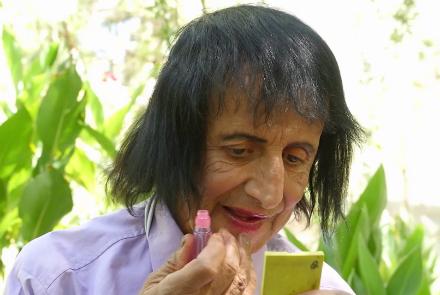
Tolo News: Laila, a transgender woman who lives in the city of Herat in western Afghanistan, says she faces many hardships in the conservative and male-dominated society, including physical abuse that has left her nearly blind in one eye.  Laila is her name, but Abdul Saboor is the name given her at birth. She is 64 years old. Click here to read more (external link).

Posted in Human Rights, Society | Tags: Transgender |

Afghanistan: 28 New Coronavirus Cases Reported

10th September, 2020 · admin

Tolo News: The Ministry of Public Health on Thursday reported 28 new cases of the coronavirus out of 343 samples tested over the last 24 hours.  The number of total cases is now 38,572, the total reported deaths is 1,420, and the total recoveries is 31,129.  Click here to read more (external link).

Posted in Health News | Tags: Coronavirus (COVID-19) in Afghanistan |

US Demands Afghan Soccer Official Be Brought to Justice for Sexual Abuse

10th September, 2020 · admin · 3 Comments

Karim

By Ayaz Gul
VOA News
September 10, 2020

ISLAMABAD, PAKISTAN – The United States is pressing authorities in Afghanistan to bring to justice an influential former head of the South Asian country’s soccer federation who is on the run from criminal charges of sexually assaulting multiple female players.

Washington’s acting U.S. Ambassador to Kabul Ross Willson tweeted Thursday that victims of Keramuddin Karim, the accused person in question, were “entitled to see justice done through a fair trial.”

Karim was serving as the president of Afghanistan Football Federation (AFF) before being investigated and found guilty of the allegations in June 2019 by the sport’s global governing body, FIFA. The organization banned Karim for life from all football-related activities at national and international level and fined him about $1 million, which he still owes to FIFA.

The verdict prompted the Afghan attorney general’s office to issue an arrest warrant for Karim after indicting him on multiple counts of rape, sexual assault, and harassment of female players. But Afghan authorities have since failed to detain and put the strongman on trial.

Two weeks ago, on August 23, Afghan security forces conducted a raid to capture Karim in his native Panjshir province, which he once governed, but local officials and his armed supporters helped him to again evade the arrest.

The botched raid came just weeks after Afghan President Ashraf Ghani in a nationally televised speech called on the residents of Panjshir to “enforce the rule of law” and “expel” Karim from the province.

At least five members of the Afghan female team accuse Karim of repeated sexual abuse from 2013 to 2018 while in office. The victims alleged that the AFF president had threatened them with ruin if they did not comply when he sexually assaulted them in a locked room in his office.

“Women who rebuffed his advances were labeled “lesbians” and expelled from the team, according to eight former players who experienced such treatment. Those who went public faced intimidation,” the U.S. State Department noted in its human rights report for 2019.

Critics say Kabul’s inability to hold the former soccer official accountable underscores long-running concerns that Afghan warlords and influential officials, known for committing abuses, remain powerful and operate outside the law.

“Widespread disregard for the rule of law and official impunity for those responsible for human rights abuses were serious, continuing problems. The government did not prosecute consistently or effectively abuses by officials, including security forces,” said the U.S. annual report.

The controversy surrounding the former Afghan football official comes ahead of U.S.-backed direct peace talks between an Afghan government-appointed team and representatives of the Islamist Taliban insurgency to negotiate an end to the nearly two-decade long war.

Posted in Afghan Sports News, Afghan Women, Crime and Punishment, US-Afghanistan Relations | Tags: Afghanistan's Football Federation (AFF), Keramuudin Karim, Panjshir, Sexual Abuse |
Previous Posts
Next Posts

Subscribe to the Afghanistan Online YouTube Channel

---

---

---

Get Yours!

Peace be with you

Afghan Dresses

© Afghan Online Press
  • About
  • Links To More News
  • Opinion
  • Poll