logo

Daily Updated Afghan News Service

  • Home
  • About
  • Opinion
  • Links to More News
  • Good Afghan News
  • Poll Results
  • Learn about Islam
  • Learn Dari (Afghan Persian/Farsi)

Recent Posts

  • “Forbidden for People, Permissible for Taliban”: Nimroz Baloch Decry Discrimination May 11, 2026
  • Frequent and Unjustified Power Cuts in Kabul; Residents Bear the Burden of Taliban Irresponsibility May 11, 2026
  • Clashes in Badakhshan leave at least four dead, sources say May 11, 2026
  • Taliban Order Cut To Residential Fibre-Optic Internet In Kabul, Say Sources May 11, 2026
  • Ancient Buddhist-Era Archaeological Site Discovered In Eastern Afghanistan May 11, 2026
  • Tolo News in Dari – May 11, 2026 May 11, 2026
  • Afghanistan wins six medals at Powerlifting Championship in Belarus May 11, 2026
  • Taliban sign $20 million gold mining deal in Kunduz May 10, 2026
  • Afghanistan’s exiled women cricketers urge ICC to recognize national team May 10, 2026
  • Tolo News in Dari – May 10, 2026 May 10, 2026

Categories

  • Afghan Children
  • Afghan Sports News
  • Afghan Women
  • Afghanistan Freedom Front
  • Al-Qaeda
  • Anti-Government Militants
  • Anti-Taliban Resistance
  • AOP Reports
  • Arab-Afghan Relations
  • Art and Culture
  • Australia-Afghanistan Relations
  • Book Review
  • Britain-Afghanistan Relations
  • Canada-Afghanistan Relations
  • Censorship
  • Central Asia
  • China-Afghanistan Relations
  • Civilian Injuries and Deaths
  • Corruption
  • Crime and Punishment
  • Drone warfare
  • Drugs
  • Economic News
  • Education
  • Elections News
  • Entertainment News
  • Environmental News
  • Ethnic Issues
  • EU-Afghanistan Relations
  • Everyday Life
  • France-Afghanistan Relations
  • Germany-Afghanistan Relations
  • Haqqani Network
  • Health News
  • Heroism
  • History
  • Human Rights
  • India-Afghanistan Relations
  • Interviews
  • Iran-Afghanistan Relations
  • ISIS/DAESH
  • Islamophobia News
  • Japan-Afghanistan Relations
  • Landmines
  • Media
  • Misc.
  • Muslims and Islam
  • NATO-Afghanistan
  • News in Dari (Persian/Farsi)
  • NRF – National Resistance Front
  • Opinion/Editorial
  • Other News
  • Pakistan-Afghanistan Relations
  • Peace Talks
  • Photos
  • Political News
  • Reconstruction and Development
  • Refugees and Migrants
  • Russia-Afghanistan Relations
  • Science and Technology
  • Security
  • Society
  • Tajikistan-Afghanistan Relations
  • Taliban
  • Traffic accidents
  • Travel
  • Turkey-Afghanistan Relations
  • UN-Afghanistan Relations
  • Uncategorized
  • US-Afghanistan Relations
  • Uzbekistan-Afghanistan Relations

Archives

Dari/Pashto Services

  • Bakhtar News Agency
  • BBC Pashto
  • BBC Persian
  • DW Dari
  • DW Pashto
  • VOA Dari
  • VOA Pashto

Dozens killed in fighting in Afghanistan as peace talks continue

17th September, 2020 · admin · 3 Comments

Al Jazeera: Fighting between Afghan forces and the Taliban left dozens dead in a restive eastern province as negotiators from both sides pushed ahead with peace talks in Qatar. Overnight clashes erupted in three districts of Nangarhar province when Taliban fighters attacked several checkpoints of Afghan forces and pro-government fighters, Ataullah Khogyani, spokesman for the Nangarhar governor told the AFP news agency on Thursday. Click here to read more (external link).

More Security News

  • 23 soldiers, 29 militants killed in clashes in Afghanistan: officials
  • Key Taliban Commander Killed in Afghan Forces Operation
  • Taliban Accused of Extortion on Major Highways
Posted in Security, Taliban | Tags: Ashraf Ghani Government |

The fate of women’s rights in Afghanistan

17th September, 2020 · admin

Brookings: As the United States reduces its military presence in Afghanistan while the Taliban remain strong on the battlefield, and while peace negotiations between the Afghan government and the Taliban have commenced, a massive question mark hangs over the fate of Afghan women and their rights. Click here to read more (external link).

Posted in Afghan Women, Peace Talks, Taliban |

1TV Afghanistan Dari News – September 17, 2020

17th September, 2020 · admin

Posted in News in Dari (Persian/Farsi) |

Kabul Eagles Win Shpageeza Championship

17th September, 2020 · admin

Tolo News: The Shpageeza T20 cricket league ended on Wednesday with the championship going to the Kabul Eagles, who beat Mis Aynak by nine runs at the Kabul International Cricket Stadium. Kabul Eagles have won the title for the second time in a row. The seventh edition of Shpageeza was held from September 6 to 16 at Kabul Cricket Stadium. Click here to read more (external link).

Other Cricket News

  • ‘I was a big fan’: Rashid Khan names India and Pakistan cricketers he grew up idolising
Posted in Afghan Sports News | Tags: Cricket, Rashid Khan, Shpageeza Cricket League |

COVID-19 Latest: 17 of 265 Cases Test Positive in Afghanistan

17th September, 2020 · admin

Tolo News: The Ministry of Public Health on Thursday reported 17 new cases of the coronavirus out of 265 samples tested over the last 24 hours.  The number of total cases is now 38,872, the total reported deaths is 1,436, and the total number of recoveries is 32,505.  Click here to read more (external link).

Posted in Health News | Tags: Coronavirus (COVID-19) in Afghanistan |

Taliban’s Expanding ‘Financial Power’ Could Make It ‘Impervious’ To Pressure, Confidential NATO Report Warns

17th September, 2020 · admin · 17 Comments

Taliban militants (file photo)

By Frud Bezhan
Radio Free Europe/Radio Liberty
September 16, 2020

The Taliban’s burgeoning financial might could make the militant group immune to pressure from the international community as it negotiates a role in postwar Afghanistan, according to a confidential report commissioned by NATO and obtained by RFE/RL.

The Taliban “has achieved, or is close to achieving, financial and military independence,” a scenario that could allow the Sunni extremist group to renege on key commitments it has made under a U.S.-brokered peace plan aimed at ending the 19-year war, the report warns.

“That financial independence enables the Afghan Taliban to self-fund its insurgency without the need for support from governments or citizens of other countries,” says the report, based on interviews with senior Taliban operatives, Afghan officials, and foreign experts.

“It also, arguably, provides insurance for the Taliban’s continued relationship with other listed terrorist groups, including [Al-Qaeda].”

The Taliban has expanded its financial power in recent years through increased profits from the illicit drug trade, illegal mining, and exports, the report says, estimating that the group earned a staggering $1.6 billion in its last financial year (ending in March 2020).

The Taliban’s growing monetary prowess has been overseen by Mullah Mohammad Yaqoob, the new and ambitious military chief who has taken over the group’s financing. The young Yaqoob, the son of the late Taliban spiritual leader Mullah Mohammad Omar, is also seeking to take over the leadership of the extremist group, the report says.

Mullah Yaqoob’s “aim is to achieve independence for the Afghan Taliban, that is, to exploit earning potential in regions under his military control to enable him to operate without the need of outside financial, political, or military support,” the report says.

The report, written by researcher and journalist Lynne O’Donnell, cautions that the Taliban’s growing financial power could “put it beyond pressure to comply with obligations to cut ties with [Al-Qaeda] and other terrorist groups.”

“Unless global action is taken, the Taliban will remain a hugely wealthy organization, with a self-sustaining funding stream and outside support from regional countries,” it warns.

“Its role as a destabilizing force, not only in South Asia but globally, will only be enhanced by the withdrawal of the United States from the Afghan theater, and its expected return to the power equation in Kabul.”

Although Mullah Yaqoob is believed by experts to support a peace deal, it is unclear what impact a leadership change atop the Taliban could have for the peace process.

The report was completed before the start of formal peace talks between the Taliban and the Afghan government that began in the Gulf state of Qatar on September 12.

The long-awaited negotiations are part of a landmark deal signed between the United States and the Taliban in February.

Under the agreement, international forces will withdraw from Afghanistan by May 2021 in exchange for counterterrorism guarantees from the Taliban, which pledged to negotiate a permanent cease-fire and power-sharing deal with the Afghan government.

Expanding Sources Of Cash

Mullah Yaqoob was virtually unknown until 2015, when the Taliban acknowledged the death of his father, Mullah Omar, who had died more than two years earlier in Pakistan.

Since then, the ambitious Mullah Yaqoob has soared through the Taliban’s ranks. He has consolidated power since his failed bid to succeed his father that year, first becoming deputy leader before more recently being handed the powerful post of military chief.

Significantly, Mullah Yaqoob has managed to secure control of most of the Taliban’s vast financial network, establishing a financial commission in 2016 to maximize revenues and prop up his bid for leadership of the group.

Under Mullah Yaqoob’s leadership, the Taliban has “purposefully moved into regions of Afghanistan with exploitable mineral resources and have been able to build their finances, by their own admission, beyond their expectations,” the report says.

The key has been “refining taxation methods and building export markets through relationships with wholesale and export businesses of an extensive range of products, from coal and salt to precious stones including rubies and emeralds.”

Since Mullah Yaqoob took control of the Taliban’s finances, the militant group has expanded its revenues from under $1 billion to $1.6 billion, according to the author’s interviews with three senior Taliban members based in Pakistan’s southwestern city of Quetta who are said to be intimately connected to the group’s financial commission.

A breakdown of revenues under Mullah Yaqoob’s control, provided by the Taliban members, shows that the militant group during the last financial year earned some $464 million from mining, $416 million from drugs, $240 million from foreign countries and individuals, another $240 million from exports, $160 million from taxes, and $80 million from real estate.

The Taliban’s stated revenues of $1.6 billion corresponds with figures provided by the United Nations Security Council’s Sanctions Committee, which in May said the group’s earnings “range from $300 million to upwards of $1.5 billion per annum.”

The key to rising revenues has been profits from mining, growing from $35 million in 2016 to $464 million in 2020, according to one of the Taliban members interviewed, who added that China and the United Arab Emirates were the biggest buyers of the raw materials.

The illicit opium trade also remained a major source of revenue for the Taliban. Around 90 percent of the world’s heroin comes from the Helmand River valley, a Taliban stronghold in southern Afghanistan.

The Taliban taxes poppy farmers and is also involved in the trafficking of narcotics to neighboring countries, from where they end up in Europe and North America.

“Yaqoob’s efforts to control and expand the organization’s finances mean that these plans can, according to officials close to him, be bankrolled to the tune of almost $2 billion a year,” says the report.

External Support

Despite a billion-dollar business empire, the key to the Taliban’s insurgency has been external support.

The confidential NATO report says Mullah Yaqoob is attempting to end that dependency through financial self-sufficiency.

“The Taliban has developed its financing arrangements in order to become an independent political and military entity,” says the report.

Pakistan, the Taliban’s main sponsor, has long been accused of sheltering and aiding the militants.

Pakistan’s ties to the Taliban date back to the 1990s, when it provided arms, training, and intelligence to the militants. Islamabad was one of only three countries to recognize the Taliban regime as the government of Afghanistan.

After the regime’s fall in 2001, many Taliban leaders took refuge inside Pakistan.

Observers say Pakistan sees the Taliban as an insurance policy for reaching its long-standing strategic goals in Afghanistan — installing a pro-Pakistan government in Kabul and limiting the influence of its archrival India, which has close ties to Kabul.

Neighboring Iran has confirmed it has contacts with the Taliban but insists that they are for ensuring the safety of Iranian citizens in Afghanistan and encouraging peace talks.

But U.S. officials have accused Tehran of providing various support to the Taliban, an allegation it denies.

In a report released in November 2019, the U.S. Defense Intelligence Agency (DIA) said Iran provides financial, political, training, and material support to the Taliban.

Russia said it has established contacts with the Taliban in recent years because of the common threat posed by the Islamic State (IS) militant group in Afghanistan. But the United States has accused Russia of arming the Taliban, which it denies.

In the past two years, Moscow has hosted two international conferences on the Afghan peace process, inviting Taliban leaders and Afghan opposition members.

In July, U.S. media reported that a Russian military intelligence unit had offered secret bounties to the Taliban if it killed U.S. or NATO-member troops in Afghanistan. Moscow and the Taliban have denied the reports, which were based on unconfirmed U.S. intelligence assessments.

Meanwhile, the Taliban receives significant funds from Pakistan, Iran, and several Gulf countries, including Saudi Arabia, the United Arab Emirates, and Qatar.

A UN Security Council report from May 2018 said the “Gulf region also remains important to the Taliban as a location where drug revenue can be laundered” through a “network of individuals, companies, mosques and madrasas, [and] various charitable foundations.”

Foreign funding provides a significant proportion of the Taliban’s revenue and could be “as much as $500 million a year,” the BBC reported in 2018. It cited a 2008 “classified CIA report” as saying the Taliban received $106 million from foreign sources, “in particular from the Gulf States.”

‘Generational Transition’

Expanding the Taliban’s financial power is also part of an attempt by Mullah Yaqoob to shore up his bid to become the Taliban’s supreme leader.

Mullah Yaqoob has “deftly and opportunistically used the illness of senior Taliban leaders with COVID-19 to expand his control over the organization,” says the report.

Taliban leader Haibatullah Akhunzada and Sirajuddin Haqqani, the deputy leader of the Taliban and the head of the Haqqani network — a powerful Taliban faction that is a U.S.-designated terrorist organization — have contracted the coronavirus, according to reports.

Taliban officials denied a report by Foreign Policy magazine, citing unnamed Taliban officials, that Mullah Akhundzada contracted COVID-19 and possibly died while receiving treatment abroad.

Mullah Yaqoob “now holds both financial and military power, and as long as he is able to consolidate this hold ahead of an expected series of shuras, or consultative meetings, later in 2020, he is likely to be formally confirmed as the Taliban’s supreme leader,” the report says.

The prestige of being Mullah Omar’s eldest son has also elevated his standing among the Taliban’s field commanders and its rank and file.

But Mullah Yaqoob’s attempts to become leader could provoke a power struggle, the report says, likely spilling into violence and diverting “attention from the peace process with the Kabul administration.”

Experts describe Mullah Yaqoob as part of a relatively moderate camp that favors a negotiated end to the war.

He is backed by Mullah Abdul Ghani Baradar, a co-founder of the Taliban and a former deputy to Mullah Omar. Baradar, who spent years in a Pakistani prison, is the Taliban’s political chief and was the head negotiator in talks with the United States that produced the agreement.

But the report warns that the rise of Mullah Yaqoob “signals a generational transition from the ‘old guard’ of Mullah Omar to a more opportunistic and, perhaps, brutal, cohort.”

Terrorist Partners

The Taliban’s financial self-reliance would ensure the “Taliban is impervious to [outside] pressure,” warns the report, adding that the militants could back out of commitments it has made under the U.S.-driven peace plan.

That includes a pledge, under the U.S.-Taliban deal, to stop terrorist groups, including Al-Qaeda, from using Afghanistan as a safe haven to plot attacks.

But a Pentagon report in July said Al-Qaeda maintains “close ties” to the Taliban, adding that the terrorist network “routinely supports and works with low-level Taliban members in its efforts to undermine the Afghan government, and maintains an enduring interest in attacking U.S. forces and Western targets in the region.”

A UN report released in June said Al-Qaeda and the Taliban “remain close, based on friendship, a history of shared struggle, ideological sympathy, and intermarriage.”

The report added that the Taliban “regularly consulted” with Al-Qaeda during negotiations with the United States and “offered guarantees that it would honor their historical ties.”

The confidential NATO report also says the Taliban has entered negotiations with the Afghan government in “partnership with their traditional allies in other organizations formally recognized as terrorist groups by the United Nations and the United States, including Al-Qaeda.”

“The Taliban have, by their words and actions, made it clear that they have no intention of renouncing their alliance with [Al-Qaeda] or other jihadist organizations,” the report adds.

“As a result, Afghanistan is likely to once again become an ungoverned space, similar to that which prevailed until the [Al-Qaeda] attacks on the United States on September 11, 2001.”

To prevent Afghanistan from becoming an “ungoverned space for violent jihadism to threaten the region and the rest of the world,” the report says NATO must first act to “stop the Taliban’s wealth-generating activities.”

It also calls on the transatlantic alliance not to delist all Taliban figures and their associates from UN sanctions lists, to extend sanctions to include businesses and individuals that facilitate Taliban financing, and support a worldwide embargo on illicit Afghan products.

Copyright (c) 2020. RFE/RL, Inc. Reprinted with the permission of Radio Free Europe/Radio Liberty, 1201 Connecticut Ave NW, Ste 400, Washington DC 20036.
Posted in Al-Qaeda, Drugs, Economic News, Haqqani Network, NATO-Afghanistan, Pakistan-Afghanistan Relations, Peace Talks, Security, Taliban, US-Afghanistan Relations | Tags: Hibatullah Akhundzada, Illegal Mining, Mullah Mohammad Yaqoob, Mullah Omar, Pakistan takeover of Afghanistan via Taliban, Taliban - Pakistani asset |

Pompeo Downplays Terrorist Threat in Afghanistan to Justify Speedy Withdrawal

16th September, 2020 · admin · 1 Comment

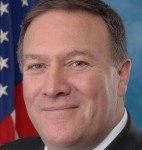
Mike Pompeo

Michael Hughes: Secretary of State Mike Pompeo during a speech at a virtual think tank event in Washington suggested that the U.S. accomplished its chief objective in Afghanistan because it has decimated al-Qaeda. Pompeo, who certainly has a clear motive for painting a rosy picture, misleads by suggesting al-Qaeda’s strength is reducible to the number of fighters it has inside Afghanistan. Not to mention the fact he mischaracterizes the threat overall by narrowly defining it – because the problem is much bigger than a single jihadi group. Click here to read more.

Related

  • Pompeo: ‘Difficult’ Afghan Peace to Help Reduce US Cost of War
  • War Still Takes Afghan Lives Despite Doha Talks
Posted in Al-Qaeda, Opinion/Editorial, Peace Talks, Security, Taliban, US-Afghanistan Relations |

Six Afghan refugees suspected of having set fire to Moria camp

16th September, 2020 · admin

Ariana: Six young Afghan men including two minors were expected to face a prosecutor on Greece’s Lesvos island Wednesday on suspicion of setting fires to the Moria refugee camp last week. The fire destroyed what was Europe’s largest migrant camp, leaving close to 13,000 people without shelter. Click here to read more (external link).

Posted in Crime and Punishment, Refugees and Migrants |

1TV Afghanistan Dari News – September 16, 2020

16th September, 2020 · admin

Posted in News in Dari (Persian/Farsi) |

Shpageeza Cricket League Final: Kabul vs. Mis Ainak

16th September, 2020 · admin

Tolo News: Kabul Eagles will play against the Mis Ainak Knights in the final match of Shpageeza Cricket League on Wednesday. The Shpageeza matches started on September 6 and will run to September 16th. The tournament has six teams – Amo Sharks, Band-e Amir Dragons, Boost Defenders, Kabul Eagles, Mis Ainak Knights and Spin Ghar Tigers. The Mis Ainak Knights won the tournament last year. Click here to read more (external link).

Posted in Afghan Sports News | Tags: Cricket, Shpageeza Cricket League |
Previous Posts
Next Posts

Subscribe to the Afghanistan Online YouTube Channel

---

---

---

Get Yours!

Peace be with you

Afghan Dresses

© Afghan Online Press
  • About
  • Links To More News
  • Opinion
  • Poll