
 Xinhua: Afghanistan’s Public Health Ministry has registered 22 new COVID-19 positive cases over the past 24 hours in the country, a news letter of the ministry released here on Tuesday said. According to the news letter, one patient died over the period, bringing the number of COVID-19 related deaths to 1,445 since the outbreak of the virus in February in Afghanistan. Click here to read more (external link).
Tolo News in Dari – September 22, 2020
Young Afghan women, men perform whirling Sufi dance together
 AP: A group of young Afghans – both women and men – is coming together in the country’s war-torn capital to practice a mystical Sufi Islamic dance (Sema). Click here to read more (external link).
India has joined Afghan peace process at the right time, should engage Taliban directly: Hamid Karzai

Hamid Karzai
The Hindu: India should engage with the Taliban and fully support the peace process, says former Afghanistan President Hamid Karzai. In an interview to The Hindu, Mr. Karzai, who remains involved in the process, spoke of his hopes from the Intra Afghan negotiations that began in Doha this month, and the future of Afghanistan as the US plans to pull out troops. Click here to read more (external link).
A Better Way to End America’s ‘Endless Wars’

Donald Trump
Bloomberg (Editorial): Trump would clearly prefer to get troop levels to zero. That’s the wrong goal. The U.S. still has important interests in the region, including preventing terrorist attacks, keeping oil supplies flowing and limiting Iran’s sway beyond its borders. Click here to read more (external link).
Afghanistan’s ‘cricket is proof that dreams come true’: ACB director
 Ariana: The Director of Cricket at Afghanistan Cricket Board (ACB), Raees Ahmadzai said on Tuesday that with hard work and determination “dreams do come true” and that Afghanistan’s cricket is proof of this. Representing the ACB at a virtual meeting of the Asian Cricket Council, attended by both full-members and some associate members, Ahmadzai provided details on the country’s achievements and on its challenges. Click here to read more (external link).
‘Pakistan targeting Indians working in Afghanistan’: Govt to Parliament
 Hindustan Times: Pakistan has been targeting Indian professionals working in Afghanistan in a variety of ways, and several Indians working on development projects have been attacked and kidnapped over the past 12 years, the government informed Parliament on Monday. Since September last year, Pakistan has also attempted to designate four Indian nationals, who had previously worked in Afghanistan, as terrorists under the UN Security Council Resolution 1267, minister of state for external affairs V Muraleedharan said in a written reply to a question in the Lok Sabha. Click here to read more (external link).
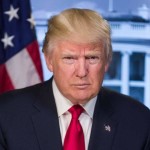
In Reelection Bid, Trump Pushes Afghan Troop Withdrawal To Meet Campaign Promise
 By Todd Prince
Radio Free Europe/Radio Liberty
September 21, 2020
As negotiators for the U.S.-backed Afghan government and the Taliban militants hold historic peace talks in Qatar, few are expecting a deal to be easy or even successful.
The two sides — who have been at war for nearly two decades and continue to kill each other even during the Doha negotiations — are far apart on key issues like women’s rights and the implementation of Shari’a law as they seek to reach a power-sharing agreement and permanent cease-fire.
But those difficulties are not preventing President Donald Trump from pushing for the removal of more U.S. troops from Afghanistan by the November 3 election as he seeks to end the United States’ longest war.
With just weeks to go in a tight reelection bid against Democratic candidate Joe Biden, Trump is seeking to score points by fulfilling — though not entirely — a campaign promise to bring U.S. troops home from the “endless wars” in Afghanistan and Iraq.
Some military officials, members of Congress, and analysts have expressed concern that a quick withdrawal of U.S. soldiers could lead to the collapse of the Afghan government and hand control of the South Asian country back to the Taliban that U.S.-led forces overthrew in 2001.
“We’re going down to 4,000 [troops], we’re negotiating right now,” Trump said in an interview with Axios on July 28 that was aired on August 3. He added that the total number of troops would be between 4,000 and 5,000 by Election Day.
The president had reportedly told aides last year he wanted all troops out by Election Day and the Pentagon even prepared such an option.
The Trump administration made concessions in order to strike an often vaguely worded political deal with the Taliban in February that paved the road for the current peace talks between the militants and the Afghan government. That agreement included a reduction in the number of U.S. troops to 8,500 by summer and full withdrawal by May 2021 if the Taliban keeps its part of the bargain.
Part of the deal for the Taliban that would trigger additional U.S. troop departures includes counterterrorism guarantees such as preventing terrorist groups from using Afghan territory for attacks.
“There is very little faith that this American administration is following and implementing the February deal for any reasons other than domestic political concerns,” Andrew Watkins, a senior analyst for Afghanistan at the International Crisis Group, told RFE/RL.
During his 2016 presidential run, Trump repeatedly criticized previous U.S. administrations for getting the country involved in expensive, far-off wars. That campaign message still appears to suit many U.S. voters in 2020, where thousands of votes could be decisive in determining the winner in several key states where the presidential race is expected to be particularly close.
A poll of 2,000 U.S. adults conducted by the libertarian Charles Koch Institute in late July indicated that three-quarters of Americans support bringing troops home from Afghanistan.
But Trump hasn’t done that yet, making his proposed cut by November 3 necessary for him to say he kept his campaign promise to reduce troops in Afghanistan. The United States currently has about as many troops in the country — 8,500 — as it did when Trump took office in January 2017.
However, some analysts have downplayed the importance that the withdrawal of U.S. troops has with voters. “There is no intensity around this issue. You don’t see million-person marches on the Mall [in Washington] over this,” said Michael O’Hanlon, a senior fellow at the Brookings Institution, during an online discussion about Afghanistan hosted by the Washington-based think tank in August.
O’Hanlon is among those who have cautioned Washington against rushing to withdraw all U.S. troops from the country, saying it would endanger the Afghan government.
U.S.-Taliban Agreement
Trump initially moved in the opposite direction after taking office, sending some 4,000 troops to Afghanistan to step up the fight against the Taliban in 2017. His administration raised aerial bombings to record levels against the militants — who currently control about half the country’s territory — to try to bring them to the negotiating table.
Unlike his predecessor, Barack Obama, Trump agreed to hold direct negotiations with the Taliban in an effort to secure the peace talks. Led by Zalmay Khalilzad — the Afghan-born U.S. envoy to the South Asian country — a deal was reached with the militant group in February after 18 months of turbulent negotiations.
Under the deal, the United States agreed to withdraw its roughly 12,000 troops in several phases by May 2021 if the Taliban did “not allow any of its members, other individuals or groups, including [Al-Qaeda], to use the soil of Afghanistan to threaten” U.S. troops and its allies. The Taliban must also hold talks with the Afghan government on a power-sharing agreement.
An exchange of captured Taliban fighters and Afghan security forces was also part of the deal and its completion was contingent upon the start of the peace talks.
With U.S. forces trimmed to 8,500 and the prisoner swap completed, the intra-Afghan talks began on September 12.
Though the Trump administration might be pushing for progress on the peace talks before the U.S. election, it will be an uphill battle due to the sharp differences between the two parties, analysts say. “This is not a particularly promising peace negotiation,” Andrew Cordesman, an expert at the Center for Strategic and International Studies who was a consultant on Afghanistan to the Pentagon and the State Department, told RFE/RL. “I think it is very clear that this president simply wants out.”
“Afghanistan — unless you believe it seriously presents more of a threat [with] terrorists than many other countries that have similar movements — is of no strategic importance to the U.S. at all,” Cordesman added.
U.S. Invasion
Washington launched the war in Afghanistan after Al-Qaeda, under the protection of the Taliban, carried out terrorist attacks in the United States on September 11, 2001, that killed more than 3,000 people. The United States went into Afghanistan and overthrew the Taliban, an Islamic fundamentalist group known for its human rights abuses, and has since helped lead an effort to establish a secure, democratic country.
But that endeavor has been plagued by widespread corruption, political infighting, severely flawed elections, and nonstop attacks by Taliban militants and other Islamist groups, keeping U.S. troops bogged down in the country for 19 years — the longest war in U.S. history.
Washington has poured more than $2 trillion into the war in Afghanistan and lost more than 2,300 soldiers in nearly two decades of fighting. Trump has railed against U.S. involvement in the country long before he announced his intention to run for office. “When will we stop wasting our money on rebuilding Afghanistan? We must rebuild our country first,” he said in an October 2011 tweet.
Trump’s February deal with the Taliban, a step toward ending the war, has angered many in Kabul who see it as a betrayal, the International Crisis Group’s Watkins said. Now some advisers near President Ashraf Ghani are hoping a Biden victory in November would delay the implementation of the deal, he added.
But Biden’s past comments on Afghanistan don’t necessarily support the optimism around such an action.
Biden Policy
Unlike many foreign-policy issues confronting the United States — such as Iran’s nuclear program, U.S.-Chinese trade, and Russian relations — Biden and Trump largely agree on the policy to stop the “endless wars” and withdraw U.S. troops.
During the Obama administration, Biden strongly argued against an increase in U.S. troop deployment to Afghanistan that eventually led to about 100,000 soldiers being there in the early 2010s. He still has strong feelings against having too many “boots on the ground” in the country.
“The first thing I would do as president of the United States is to make sure that we brought all combat troops home and entered into a negotiation with the Taliban, but I would leave behind special forces in small numbers to deal with a potential threat,” he said in a Democratic primary debate in December 2019.
He has repeated that view several times, saying in February that a special-forces contingent was needed “to make it impossible” for terrorist groups like Al-Qaeda “to reestablish a foothold there.”
During a September 10 interview with the U.S. military news site Stars and Stripes, Biden put the number of special-forces troops he would keep stationed in Afghanistan at about 1,500 to 2,000.
But Jarrett Blanc, a senior fellow at the Carnegie Endowment for International Peace and former deputy special representative for Afghanistan and Pakistan in the Obama administration, cautioned against overstating the policy similarities between Trump and Biden.
Blanc said the next president will have to make an assessment by May 2021 — when the agreement calls for the last U.S. troops to leave Afghanistan — about whether the Taliban has fulfilled its part of the deal and U.S. security interests are protected. “You can probably expect that a President Trump or a President Biden will go about making that determination in a pretty different way,” he told RFE/RL.
Blanc said the withdrawal of troops could also have consequences for continued U.S. funding of Afghanistan. Foreign funding accounts for a large portion of the Kabul government’s budget. “Those are going to be politically challenging appropriations, to be blunt,” Blanc said about U.S. budget discussions on Afghanistan. “It is a truism that the money follows the troops.”
Blanc said the view of the next administration will be an important voice in those budgetary discussions and, while he believes Biden would support them, it is harder to predict what Trump would decide.
Copyright (c) 2020. RFE/RL, Inc. Reprinted with the permission of Radio Free Europe/Radio Liberty, 1201 Connecticut Ave NW, Ste 400, Washington DC 20036.
1TV Afghanistan Dari News – September 21, 2020
Malala Urges ‘No Compromise’ On Girls’ Education In Afghan Peace Talks

Malala Yousafzai
Radio Free Europe/Radio Liberty
September 21, 2020
Nobel Peace Prize laureate Malala Yousafzai says that “there should be no compromise” on the right to education for Afghan girls in ongoing peace negotiations between the government and Taliban militants.
In an exclusive interview with RFE/RL’s Radio Mashaal on September 21, Yousafzai said that “peace is precious” for the Afghan people after suffering through four decades of war, losing their family members, homes, and livelihoods.
Malala, who was awarded the 2014 Nobel Peace Prize for her campaign supporting the education of girls, stressed that women’s freedoms and human rights should not be undermined in any peace process.
“We all hope that peace comes to this world so that our people have their own normal life. But it is very necessary that [the government and the Taliban] have to listen to the voices of civil society and women and there should be no compromise on girls’ education and human rights because peace can’t be restored without human rights,” said Malala, who was shot in the head by a Pakistani Taliban gunman when she was on her way to school in the Swat Valley.
Women’s rights is one of the thorniest issues in the long-delayed, U.S.-brokered peace talks that began in Doha on September 12.
During its brief administration in Afghanistan, the Taliban banned women from going to school and working outside their homes, while also brutally enforcing a strict dress code.
Many Afghan activists fear that women’s rights could be a casualty of peace negotiations despite recent pledges by Taliban officials that they will respect women’s rights under Islamic law.
Millions of Afghan girls have gone to school and women enjoy the right to work and participate in politics since the collapse of the Taliban regime in 2001.