
Afghanistan: 14 of 285 Cases Test Positive for COVID-19
 Tolo News: The Ministry of Public Health on Wednesday reported 14 new positive cases of COVID-19 out of 285 samples tested in the last 24 hours. The cumulative number of total cases is now 39,268, the number of total reported deaths is 1,458, and the total number of recoveries is 32,789. Click here to read more (external link).
Afghan Team Told to Be Flexible in Negotiating With Taliban

A. Abdullah
By Ayesha Tanzeem
VOA News
September 29, 2020
ISLAMABAD – Afghanistan’s senior leadership has told its team in Doha to be flexible in negotiating with the Taliban in order to seize the opportunity to end the country’s conflict, according to Abdullah Abdullah, the chairman of the High Council for National Reconciliation.
“We’ve asked our own delegation, President (Ashraf) Ghani and myself, to be patient, to be ready to make compromise, and not to miss any other opportunity, not to lose any opportunity, or waste time,” he said during his address at the Institute of Strategic Studies Islamabad, a foreign policy research group.
Abdullah, who is in Pakistan on a three-day visit to discuss the peace process and bilateral relations, seemed hopeful about the future.
“I’m visiting Pakistan at a time when a new future, indeed a peaceful future, is on the horizon,” he told the audience.
The visit reflects a shift in bilateral relations between the two countries that have been rocky for several years. Both sides have accused each other of harboring groups that carry out attacks on each other’s soil.
Both Afghanistan and the United States have long said that the Taliban leadership lives in Pakistan and demanded the South Asian country pressure them to come to the negotiating table.
As talks with the Taliban progressed, first with the United States, culminating in a deal signed on February 29 of this year, and then between the Taliban and other Afghans, relations between Afghanistan and Pakistan also improved.
Abdullah thanked Pakistan for facilitating the talks and said Prime Minster Imran Khan’s call last Friday to Ghani calling for a “significant reduction in violence leading to a comprehensive cease-fire” was important in creating the kind of environment that will help the “spirit of negotiations back in Doha.”
Pakistani Foreign Minister Shah Mahmood Qureshi said his country had gone through a paradigm shift and now wanted to be “friends, not masters” of Afghanistan.
“My message is, we do not have favorites (in this conflict),” Qureshi said, addressing the Afghan delegation and the Afghan public. He said Pakistan wanted to “respect your sovereignty, your independence and your territorial integrity.”
Both Qureshi and Abdullah highlighted the untapped potential in terms of regional trade and development that could be mutually beneficial if Afghanistan had peace and friendly relations with Pakistan.
Abdullah also gave a glimpse of the kind of future he wanted at the conclusion of negotiations with the Taliban:
“A sovereign, independent, democratic country, with people with diverse ideas, maintaining their ideas and competing for, and contesting for the implementation of their ideas but only peacefully, and without using violence.”
Abdullah, however, said his country had changed and it was not the same Afghanistan of the 1990s when the Taliban ruled.
Today’s Afghanistan, he said, was a “young, diverse, connected nation, eager to freely decide its own future form of government corresponding to its unity and diversity.”
Ahead of Peace Talks, Taliban Detail Position on Women’s Rights, Press Freedom, Civilian Casualties
1TV Afghanistan Dari News – September 29, 2020
Afghanistan: 15 of 279 Cases Test Positive for COVID-19
Tolo News: The Ministry of Public Health on Tuesday reported 15 new positive cases of COVID-19 out of 279 samples tested in the last 24 hours. The cumulative number of total cases is now 39,254, the number of total reported deaths is 1,458, and the total number of recoveries is 32,746. Click here to read more (external link).
Kabul-Kunduz Flights Resumed After 10 Years
 Tolo News: Kunduz officials said Tuesday that civilian flights between Kabul and Kunduz have resumed after ten years. According to the local officials, there will be two flights a week from Kabul to Kunduz and vice versa. Kunduz Airport was rebuilt around a year and a half ago, but a number of residents of Kunduz province say that a number of facilities at the airport are incomplete and there are problems. Click here to read more (external link).
At Least 14 Civilians Killed By Roadside Bomb In Central Afghanistan
 Radio Free Europe/Radio Liberty
September 29, 2020
Afghan officials say a roadside bomb has killed at least 14 civilians in the central province of Daikundi, as violence continues across the country despite ongoing peace talks between Taliban militants and the Afghan government in Qatar.
The provincial governor’s spokesman, Nasrullah Ghori, told RFE/RL that seven women, five children, and two men died when their vehicle was hit by the explosion on September 29.
Three other passengers were wounded in the blast, he said.
No group has claimed responsibility for the blast, but Interior Ministry spokesman Tareq Arian blamed the Taliban.
The roadside bomb blast comes as Taliban and Afghan government negotiators are meeting in the Qatari capital, Doha, to try to find a way to put an end to 19 years of war in the country.
The Taliban has refused a nationwide cease-fire despite the ongoing peace talks, which kicked off on September 12.
The UN Assistance Mission in Afghanistan has documented more than 1,280 Afghan civilian deaths during the first half of 2020 — mainly as a result of fighting between Afghan government forces and Taliban militants.
Copyright (c) 2020. RFE/RL, Inc. Reprinted with the permission of Radio Free Europe/Radio Liberty, 1201 Connecticut Ave NW, Ste 400, Washington DC 20036.
Beijing Cautiously Ramps Up Belt-And-Road Dreams In Pakistan, Afghanistan
 By Reid Standish
September 28, 2020
Radio Free Europe/Radio Liberty
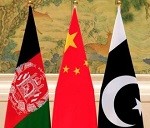
China is cautiously increasing its role in South Asia by rejuvenating economic interests in Pakistan and forging closer ties to Afghanistan with peace talks between Afghan officials and the Taliban under way.
The enhanced footprint for Beijing in the region comes amid a flurry of activity this summer centered around breathing new life into the China-Pakistan Economic Corridor (CPEC), an estimated $62 billion bundle of projects that forms the cornerstone of China’s sweeping Belt and Road Initiative (BRI), which aims to build infrastructure, expand trade links, and deepen ties across Eurasia and Africa.
“The Chinese want to do business, they don’t want to be fighting wars,” Ayesha Siddiqa, a research associate at London’s School of Oriental and African Studies, told RFE/RL. “They want to control the region financially and benefit from that.”
But while China’s renewed push in the region shows the parties’ willingness to move forward, Beijing faces tremendous obstacles as it tries to navigate the notoriously troubled political situations in Afghanistan and Pakistan.
The problems include the uncertain peace talks between the Afghan government and the Taliban in Doha and a series of corruption scandals within CPEC.
Meanwhile, Chinese BRI projects increasingly find themselves to be the target of Baluch and Sindhi separatist groups in Pakistan.
“This is China’s neighborhood, it isn’t some far-off area. So, there is a strong interest for Beijing to be involved,” Rafaello Pantucci, a senior associate fellow at London’s Royal United Services Institute, told RFE/RL. “But this region has long-standing issues and there is a reason why international donors aren’t there. China now finds itself increasingly embroiled in these difficulties.”
A Busy Summer
The CPEC forms the backbone of China’s presence in Pakistan and the recent spate of new deals marks a new phase in its development after years of delays and implementation problems that slowed down the pace of the initiative.
In June and July, Beijing inked $11 billion worth of deals with Islamabad, agreeing to finance two hydropower projects in the Pakistan-administered Kashmir region and an upgrade for the country’s railways — the most expensive Chinese project to date in Pakistan.
Beijing has also made moves to extend the CPEC to Afghanistan, with experts saying China is looking to stabilize the country and improve its political and economic links to the country as U.S. troops look to leave Afghanistan, potentially by May 2021.
In August, China began pushing Pakistan to open key border crossings with Afghanistan to allow bilateral and transit trade that remain closed due to security concerns and Kabul recently signed a $2.2 billion contract to help export Afghan pine nuts to global markets.
The daily Financial Times also reported this month that Beijing has proposed “sizeable investments in energy and infrastructure projects” and offered to build a road network for the Taliban in hopes of ensuring a peaceful transition if there is a withdrawal of U.S. forces from Afghanistan.
Kick-Starting The Restart
While Pakistani Prime Minister Imran Khan’s government worries about the long-term implications of becoming dependent on China, proponents hope the CPEC will give Pakistan the infrastructure boost needed to kick-start its economy at a time when Islamabad is struggling to attract international investors.
In addition to a growing array of projects, the CPEC will grant Beijing access to the Gwadar port in southern Pakistan, which is close to the Strait of Hormuz — the world’s most vital route for shipping oil.
But the Chinese-financed project has also become embroiled in Pakistan’s own tense domestic politics, with the country’s influential military and civilian government jostling for control of the lucrative initiative.
The Pakistani military has so far managed to wrestle greater control through the creation of the CPEC Authority last year, a government body authorized to oversee BRI projects in Pakistan. Under a proposed law put forward this month by supporters of the army, the government would cede further ground to the military, granting it wide-ranging autonomy to implement the CPEC with limited oversight.
According to Siddiqa, an expert on the Pakistani military, Beijing prefers to partner with the army as they are seen as more reliable and can guarantee the timely completion of projects that elected officials have failed to deliver.
Moreover, Siddiqa says military control helps ease concerns within the Pakistani elite that strategic territory could be given to China under the guise of CPEC. “Contracts with China by the previous government were drawn up in a very nontransparent way and it made the military nervous,” she said. “It’s not just about what kind of a share the military will get, it’s about how much is being conceded to Beijing.”
Navigating Pushback
But while the CPEC has new momentum and Beijing is looking to extend it to Afghanistan, the project faces new obstacles from various forces inside Pakistan.
In August, a report was published alleging that Asim Saleem Bajwa, the retired general who heads the CPEC Authority and also serves as special assistant to Khan, used his influential position to help his family amass huge wealth.
The report led to a backlash on social media and calls for his resignation along with a further investigation. Bajwa offered his resignation as special assistant to the prime minister — which was later rejected by Khan — and has stayed on as chairman of the CPEC Authority.
There are several other developments inside Pakistan that could greatly slow down China’s ambitions in the country.
The Tehrik-e Taliban, Pakistan’s leading Taliban group, which operates out of Afghanistan, has announced the reunification of various splintered factions, leading some analysts to believe that Pakistan’s internal security problems could threaten BRI projects.
Similarly, Baluch and Sindhi separatist groups in Pakistan announced an alliance in July aimed at attacking CPEC and Chinese interests in the country.
That development is likely to increase the security costs for BRI projects in Pakistan.
Baluch insurgents claiming to be aided by Sindhi separatists attacked Pakistan’s stock exchange in June and, in 2018, three gunmen tried to enter the Chinese Consulate in Karachi before being killed in a shoot-out. The attack was later claimed by the Balochistan Liberation Army, a separatist group.
“Sindh and Balochistan are equally affected by the ‘expansionist’ and ‘oppressive’ resolve of China,” said a statement from the Baloch Raji Ajoi Sangar, a merger of several Baluch separatist groups, and the Sindudesh Revolutionary Army, another separatist organization. “Through [CPEC], China aims to subjugate Sindh and Balochistan and occupy the coasts and resources from Badin to Gwadar.”
“Increasingly, China risks becoming a target in the region,” Abdul Basit, an expert on South Asian insurgent groups at Nanyang Technological University in Singapore, told RFE/RL. “But China has the support of the Pakistani military and its own channels in the region, so these types of threats are unlikely to stop Beijing from [pursuing] its goals.”
Copyright (c) 2020. RFE/RL, Inc. Reprinted with the permission of Radio Free Europe/Radio Liberty, 1201 Connecticut Ave NW, Ste 400, Washington DC 20036.
Up in the sky: An Afghan migrant in Germany realizes his dreams of becoming a pilot
Becoming a pilot was one of his big dreams: Ali Noori was born in Afghanistan and grew up in Iran; during childhood he had to work to support his family. After he fled to Germany, he successfully studied for his glider license and says he has found his freedom.