
 Tolo News: The Ministry of Public Health on Tuesday reported 113 new positive cases of COVID-19 out of 576 samples tested in the last 24 hours. According to the Public Health Ministry’s data, the cumulative number of total cases is now 41,145, the number of total reported deaths is 1,529, and the total number of recoveries is 34,237. Click here to read more (external link).
UN Documents 30% Drop in Afghan Civilian Casualties
 Ayaz Gul
VOA News
October 27, 2020
ISLAMABAD – The United Nations says the conflict in Afghanistan has killed and injured nearly 6,000 civilians during the first nine months of 2020, representing a 30% decline compared to the same period last year.
The report compiled by the U.N. Assistance Mission in Afghanistan (UNAMA) comes as direct peace negotiations between Afghanistan’s warring parties have been underway in Qatar since September 12, though without any progress.
Just hours after the world body released its findings Tuesday, a bomb went off in Kabul, the Afghan capital, killing at least three civilians and injuring 10 others.
UNAMA has documented 2,117 civilian deaths and 3,822 injures from January 1 to September 30, saying the war-ravaged country remains among the deadliest places in the world to be a civilian.
Child casualties during the reported period amounted to 31% of all civilian casualties, and women casualties 13%.
“While the number of civilian casualties documented is the lowest in the first nine months of any year since 2012, the harm done to civilians remains inordinate and shocking,” the report said.
UNAMA noted the outgoing month is outside of the scope of the report, but intensified battlefield attacks, a suicide bombing and an Afghan government airstrike together have killed and injured more than 400 civilians since October 1.
The report lamented that the ongoing Afghan peace process has failed to slow the number of civilian casualties.
“The peace talks will need some time to help deliver peace. But all parties can immediately prioritize discussions and take urgent, and frankly overdue, additional steps to stem the terrible harm to civilians,” said Deborah Lyons, the mission’s chief in Kabul.
The U.N. report blamed the Taliban insurgency and other anti-government forces for causing 58% of the civilian casualties. The Taliban were responsible for 45 percent of the total casualties. It noted, however, that the overall number of civilian casualties attributed to the Taliban dropped by 32%.
Taliban spokesman Zabiullah Mujahid rejected as propaganda the U.N. findings, saying they were founded on baseless reports shared with the world body by Afghan security and intelligence institutions.
UNAMA said pro-Afghan government forces were responsible for 28% of the harm inflicted on civilians in the first nine months and documented its concerns about the 70% increase in civilian casualties caused by Afghan Airforce airstrikes.
There was no immediate response from the Kabul government to the report.
“Our interviews with victims and their families reveal the near complete failure of parties to the conflict to acknowledge harm caused, nor even to make contact with them following an incident,” said Fiona Frazer, UNAMA’s Human Rights chief.
The report finds that in the period under review there were fewer civilian casualties attributed to the ISIL-Khorasan Province, the Afghan branch of Islamic State terror group, due to a decrease in the number of attacks.
The U.N. mission noted that harm caused to civilians by U.S.-led international forces “all but ceased in the reporting period,” attributing it to the landmark peace-building agreement the United States signed with the Taliban in February.
The U.S.-Taliban deal has bound the insurgents not to attack foreign forces committed to stage a “conditions-based” complete withdrawal from Afghanistan by May 2021. In return American forces have significantly scaled back military operations, including airstrikes, against the Taliban.
The pact requires the insurgents to negotiate a permanent cease-fire with rival Afghan groups and a political arrangement to govern the post-war country.
But both U.S. and Taliban officials have lately accused each other of violating the terms of the agreement and lingering disputes have slowed, if not stalled, the peace talks between the Taliban and representatives of the Kabul government being hosted by Doha, the Qatari capital.
Three Dead, Several Wounded In Attack On Afghan Police Base
 By Radio Free Afghanistan
October 27, 2020
A car bomb attack on an Afghan police base and an ongoing gun battle have killed three people and wounded dozens in a city bordering Pakistan, officials said October 27.
The complex attack in Khost, the capital of the eastern province of Khost, was launched early in the morning.
Habib Shah Ansari, provincial health director in Khost said that so far three bodies and at least 33 wounded, both military and civilian, had been brought to a hospital.
The car bomb was detonated at the gate of a special police force’s base in Khost city, a security source said.
A group of attackers then attempted to enter the base compound resulting in a gun battle with security forces, Afghanistan’s Interior Ministry spokesman Tariq Arian told reporters.
Four attackers have been killed while two more were still fighting, Arian said.
Khost provincial health official Gul Mohammad said women and children were among the wounded.
No group has so far claimed the attack on the base.
The attack comes as the Afghan government continues to fight Taliban militants even as peace talks in Qatar between the two sides take place.
It also comes as the United Nations released a report showing a decrease in civilian casualties in the country compared to last year.
In its third-quarter report, the United Nations Assistance Mission In Afghanistan (UNAMA) said there has been a 30 percent decrease in civilian casualties compared with the same period last year.
While noting that “the conflict in Afghanistan remains one of the deadliest in the world for civilians,” UNAMA said the first nine months of this year caused the lowest number of civilian victims — 5,939 — since 2012.
The number included 2,117 people killed and 3,822 wounded.
The report said that in the time span from September 12 — the start of the negotiations between the government and the Taliban in Qatar — to September 30, there was no reduction in civilian casualties caused by parties involved in the talks in comparison with the previous weeks.
UNAMA said more than four out of every 10 civilian casualties were children or women, and that insurgents remain responsible for the majority of civilian casualties.
Afghan security forces were responsible for almost a quarter of all civilian casualties — a similar percentage to that recorded in the first nine months of 2019.
The developments came amid a surge in violence. Afghanistan claimed on October 25 that it had killed a top Al-Qaeda militant on an FBI most-wanted list during an operation in the country’s east.
The reported death of Husam Abd al-Rauf, also known by the nom de guerre Abu Muhsin al-Masri, follows weeks of violence, including a suicide bombing by the Islamic State militant group on October 24 at an educational center near Kabul that killed 24 people.
With reporting by AFP and AP
Copyright (c) 2020. RFE/RL, Inc. Reprinted with the permission of Radio Free Europe/Radio Liberty, 1201 Connecticut Ave NW, Ste 400, Washington DC 20036.
Taliban Reemerges In Former Pakistani Stronghold
 Daud Khattak
Radio Free Europe/Radio Liberty
October 27, 2020
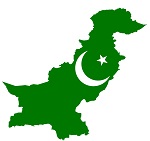
Years ago, Pakistan declared victory against the Taliban after large-scale military operations in a northwestern mountainous region.
But the Tehrik-e Taliban Pakistan (TTP), the formal name of the Pakistani Taliban’s umbrella organization, is now back in parts of Malakand Division, an administrative region of Khyber Pakhtunkhwa Province, where thousands were killed and millions displaced during years of Taliban control and military operations.
In parts of Lower Dir, one of the nine Malakand districts, residents guard their houses as bands of armed men patrol at night.
“Their faces are covered. They appear in groups of six to eight men,” said a resident of Lal Kala village in the Maidan area of Lower Dir who requested anonymity because he feared reprisals. “Some villagers say they are thieves and robbers, while others say they are Taliban fighters.”
He told Radio Mashaal that the bombing of a cell phone tower in Maidan earlier this month terrified residents. “We heard a loud bang late at night, but nobody dared go out,” he said. “In the morning, we discovered that a cell phone company’s [transmission] tower had been blown up.”
While the incident and the Taliban’s creeping reemergence have not made headlines in the Pakistani media, locals are alarmed. Lower Dir is the sixth of Khyber Pakhtunkhwa’s 35 districts where the TTP has marked its return with the intimidation of locals, targeted killings, and attacks on security forces over the past two years. The group returned to the nearby district of Buner last year, and in the neighboring Bajaur and Mohmand districts the Taliban has forced local businesses to pay protection money.
Lower Dir served as the bastion for Maulana Sufi Muhammad, the late hard-line cleric who founded Tehrik-e Nifaz-e Shariat-e Muhammadi (TNSM or the Movement for the Implementation of Shari’a), an armed uprising to demand the imposition of Islamic Shari’a law in the early 1990s. His fiery speeches inspired thousands to cross into Afghanistan as a U.S.-led international military alliance toppled the Taliban regime.
Nearly 15 years ago, his son-in-law Mullah Fazlullah led a Taliban rebellion in neighboring Swat district, where he ruled tyrannically before a 2009 military operation forced him into Afghanistan. Fazlullah was eventually killed in a U.S. drone strike in the eastern Afghan province of Kunar, which borders Lower Dir, in 2018.
The TTP Returns
On October 1, unidentified assailants shot dead a schoolteacher in Galgut village. Waqas Khan, a resident, told Gandhara that 30-year-old Saeedullah was driving the car of local Pakistan Peoples Party (PPP) leader Attaullah Khan when he came under attack. Waqas and other residents maintain the politician had been the real target.
Businessmen and politicians have started to flee Lower Dir because of Taliban threats. Abdullah Shah, an elected local representative of the ruling Pakistan Tehrik-e-Insaaf (PTI) party, reportedly received a threatening letter a month ago that prompted him to move to the provincial capital, Peshawar, some 200 kilometers away.
Requesting anonymity, several locals confirmed to Radio Mashaal that armed men had dropped a letter at Shah’s gas station in Lower Dir’s Markhanri area in September. They said the letter asked him to appear for “negotiations” with the Taliban.
“Weeks after the letters, unidentified people fired rockets at his house,” one local told Radio Mashaal. The police also found an unexploded roadside bomb near his village.
Radio Mashaal attempted to reach Shah for comment but was not successful because his landline and mobile phone numbers were not working.
Shah Khalid, a college lecturer in Lower Dir, told Radio Mashaal that he has received death threats from the Taliban in recent weeks.
“They warned me to stop campaigning against the Taliban, otherwise I will be targeted,” he said, adding he reported the harassment to the police. “I said if they [the police] fail to take action, they cannot blame us for the Taliban’s return.”
Jabir Khan, a student and rights activist in Lower Dir, accused officials of keeping mum in response to Taliban threats even when two policemen guarding a polio team were killed in Lal Kala in December.
In a similar incident, armed motorcyclists killed a public prosecutor, Muhammad Saeed, in the Chakdara Khas area of Lower Dir in October 2019 and escaped.
Khan says police are not taking such attacks seriously enough. “Instead of taking action, the police are using megaphones to warn locals against allowing militants in their houses,” he told Radio Mashaal.
Widespread Disappointment
Disappointment with the police is widespread in Lower Dir. In a Facebook video, Haji Fazal Wahab, a local political leader, complained about the government’s apathy in protecting them from the resurgent militants. He questioned how the Taliban could return to Dir when the government boasts of ending militancy in the region by improving security on the country’s western border with Afghanistan.
“We don’t know how these armed men manage to enter from Afghanistan despite all the security measures, including fencing at the border,” Wahab told an October 11 gathering attended by senior police and administration officials in Dir. “How can the terrorists get here when there are check posts everywhere? The people here will stand behind you if you stand with us.”
In recent years, Islamabad spent hundreds of millions of dollars to fence the rugged Durand Line border, more than 2,500 kilometers long, between Pakistan and Afghanistan. Islamabad says fencing is required to stop militants moving across the border.
Ijaz Khan, a deputy inspector general of police in Malakand Division, told Gandhara that police have prepared a plan to stop the “miscreants” from disturbing the peace. Repeating a standard government line, he alleged that Afghanistan and Pakistan’s neighboring archrival India is behind the Pakistani Taliban’s revival.
For two decades, Islamabad has blamed New Delhi and Kabul for bankrolling and sheltering separatist and Islamist militants with the intent to destabilize Pakistan. New Delhi and Kabul, however, accuse Islamabad of supporting the Afghan Taliban and a host of other Islamist militant groups.
Lawmaker Malik Shafiullah, a leader of the ruling PTI, acknowledged the militants have resurfaced in Lower Dir and are behind some recent attacks. “The government will try to restore security because it is a fundamental right of our people,” he said. “The police are working against the militants 24/7 and are determined to cleanse this region of their presence.”
In Lower Dir, however, the Taliban makes its presence felt with every passing day. Letters signed by commander Hafeezullah, alias Kochwan, heighten the atmosphere of fear. “Anyone found cooperating with the government will face the consequences,” warned one of the handwritten night letters obtained by Radio Mashaal. Another letter termed the Pakistani government apostate and called on it to surrender to the Taliban.
Hundreds of kilometers south, South Waziristan and North Waziristan remain the districts of Khyber Pakhtunkhwa most affected by the Taliban’s return. This year, dozens of soldiers and civilians have been killed in suicide bombing and targeted assassinations. The Taliban either claimed credit for these attacks or was blamed by the government for the spike in violence.
Radio Mashaal correspondent Israr Alam Mohmand contributed reporting to this story from Prague.
Copyright (c) 2020. RFE/RL, Inc. Reprinted with the permission of Radio Free Europe/Radio Liberty, 1201 Connecticut Ave NW, Ste 400, Washington DC 20036.
1TV Afghanistan Dari News – October 27, 2020
Afghan Athletes Bring Home 11 Medals from Russia

Tolo News: Afghan athletes got 11 medals, including two gold, two silver and seven bronze medals, from International Jujitsu Tournament of the St. Petersburg Open 2020 organized by Russian Jiujitsu Federation on October 23-25. From Afghanistan, 13 athletes attended the event where 280 athletes participated from Central Asian and some European countries. Click here to read more (external link).
95 New Cases of COVID-19, 5 Deaths Reported in Afghanistan
Tolo News: The Ministry of Public Health on Tuesday reported 95 new positive cases of COVID-19 out of 489 samples tested in the last 24 hours. According to the Public Health Ministry, the cumulative total is now 41,032, the number of total reported deaths is 1,523, and the total number of recoveries is 34,217. Click here to read more (external link).
US Officials Say Dead al-Qaida Leader Not Group’s Number 2

Abu Muhsin al-Masri
By Jeff Seldin
VOA News
October 26, 2020
WASHINGTON – The United States is confirming the death of a high-ranking al-Qaida official in Afghanistan – only it appears the dead terrorist is not the group’s second-in-command, as has been reported.
A U.S. official, speaking on the condition of anonymity, confirmed the death of al-Qaida’s Abu Muhsin al-Masri, saying U.S. forces provided support during the Afghan-led operation in the country’s Ghazni province.
Later Monday, the White House offered praise for the Afghan operation, calling the successful raid against al-Masri “welcome news.”
Afghanistan’s National Directorate of Security (NDS) first announced al-Masri’s death in a Tweet late Saturday.
In subsequent tweets, the NDS and Afghan officials described al-Masri as the number two official with the al-Qaida affiliate, al-Qaida in the Indian Subcontinent (AQIS).
The NDS also said al-Masri was close to al-Qaida leader Ayman al-Zawahiri, and that he had been living in Afghanistan under Taliban protection.
In response to the tweets from Afghanistan’s NDS, U.S. National Counterterrorism Center Director Christopher Miller told the Reuters News Agency the killing of al-Masri “is a major setback” for al-Qaida.
He also said al-Masri’s loss “highlights the diminishing effectiveness of the terrorist organization.”
But multiple U.S. and international counterterrorism officials tell VOA, that while still significant, al-Masri’s death is not the blow that has been depicted in some accounts.
Specifically, they say reports that indicate al-Masri was second in line to Zawahiri are wrong, confusing him with another al-Qaida official who sometimes uses the al-Masri alias.
They say the al-Masri killed in Afghanistan’s Ghazni province is Abu Muhsin al-Masri, also known as Husam Abd al-Ra’uf, a senior leader who most recently had been assigned to work with the Taliban on operational cooperation and the coordination of safe havens for al-Qaida fighters.
These officials say al-Qaida’s number two official, and possible successor to al-Zawahiri, is another al-Masri, Abu Muhammad al-Masri, also known as Abdullah Ahmed Abdullah.
While both men have been on the FBI’s Most Wanted list, the State Department is offering up to a $10 million reward for information that brings Abu Muhammad al-Masri to justice.
In a series of tweets Sunday, Afghan President Ashraf Ghani praised Afghan forces for the raid that killed Abu Muhsin al-Masri.
But Ghani warned the operation shows “terrorism still remains a huge threat to Afghanistan, the region and the world and that Taliban has not cut off their ties with other terrorist networks including Al-Qaida yet.”
Some United Nations counterterror officials have warned the U.S. is underestimating al-Qaida’s strength in Afghanistan.
A U.N. report issued this past July warned the group “is covertly active in 12 Afghan provinces,” adding it likely commands 400 to 600 fighters.”
The report said AQIS is believed to have up to another 200 fighters at its disposal, many providing support to the Taliban.
Afghan Climbers Overcome Limits, Scale Highest Peak
 Nilly Kohzad
October 26, 2020
Radio Free Europe/Radio Liberty
Aliakbar Sakhi is used to climbing the high peaks on the outskirts of his native northern Baghlan Province. His family are farmers, and being around mountains makes him feel right at home.
“Afghanistan is the best playground for mountaineering because more than 75 percent of its territory consists of mountain ranges,” Sakhi told RFE/RL Gandhara. He is the founder of HikeVentures, a nonprofit organization that supports and organizes hiking and mountaineering expeditions across Afghanistan and which has about 200 members — a large percentage of whom are women.
“I wanted to encourage the youth, both girls and boys, to take up mountaineering,” he said. But aside from Sakhi’s personal passion for scaling the peaks and leading missions, he says he has a larger purpose in mind: to create an alternative livelihood for the residents of remote and often-neglected villages and districts through local and foreign tourism.
When the group travels to remote areas, he says, they spend time with the locals and introduce them to what they do. As a way to support rural communities, the climbers rent horses and donkeys from villagers, stay in local accommodation, and buy food and other resources from residents.
The most recent expedition cost $25,000, which Sakhi raised by contributions from team members. “All of it went to the local people,” Sakhi said. “They don’t have access to much, so we try to find a way to be beneficial to them.”
He hopes to show that Afghans can organize anything, even with limited resources. “We have proved that a mixed-gender mountaineering and hiking group, the first in the country’s history, can execute sports events independently,” he told RFE/RL Gandhara. “We are a nonprofit run by Afghans, for Afghans, and we want to share the real face of Afghanistan with them.”
Afghanistan’s unique geography nestled between South Asia, West Asia, and Central Asia, along with its being home to some of the highest mountain ranges in the world, gives it an advantage for outdoor enthusiasts. From green plateaus to snowy ridges, the country’s natural beauty rivals that of European Alps and Nepal.
Afghanistan shares its mountain ranges with neighboring Pakistan and Tajikistan, where mountaineering is an established sport attracting professional and amateur expeditions from around the world. But unlike its neighbors or European countries, Afghanistan is riddled with conflict, and the Kabul government has given little priority to supporting the infrastructure for sports.
Jawed Amiri, a businessman in Kabul, is a devotee of mountaineering and other outdoor sports. He says that lacking government support, Afghan climbers must take matters of safety into their own hands.
“When planning a mission, we first reach out to demining companies in the area to make sure the mountains are free of land mines and are safe to hike,” he said. “We then contact local government officials and local police, so they know what we’re planning. They let us know whether the area houses any insurgents, since they often hide out in the mountains.”
Following decades of conflict, Afghanistan is one of the most heavily mined countries, where the bulk of landmines come from remnants of the Russian occupation between 1979 and 1989. While significant demining progress has been made in urban areas, remote passes and mountain trails are still risky.
But despite all the work that goes into safety clearances, Amiri says each trip is a worthwhile experience. For him, mountaineering is not just a hobby but a way to learn your strengths, overcome your fears, and challenge yourself.
“Mountaineering humbles you like nothing else,” he said. “You learn life lessons such as respecting other ideas, teamwork, working under pressure, and so much more. No academic class or professional work can teach life lessons like that.”
Amiri says there are few options for hobbies among Afghan youth. They often struggle with the likes of unemployment and poverty, leading many to gravitate toward drugs or other harmful activities.
“Most of our climbers are students or workers who are passionate about this in their free time. Nowadays, both men and women count mountaineering as their latest hobby,” he said.
Amiri says Afghanistan’s spectacular landscape has an unrivaled allure. “Afghanistan has many green and luscious regions such as Salang, Panjshir, and Bamyan, and many Afghans are using this opportunity not only to explore these stunning places themselves but also to spread the word for the world to see.”
Mountains have always played an influential role in Afghanistan, both in terms of geography and as a symbol for all aspects of life, including climate, water sources, trade routes, and tourism. But few Afghans have dared to tackle the mountains head-on as a form of leisure.
In August, HikeVentures made national history when a team of nine members successfully climbed Mount Noshaq in the Hindu Kush Mountains.
The highest peak in Afghanistan, Mount Noshaq, in the northeastern province of Badakhshan, has an elevation of about 7,492 meters (24,580 feet). Few mountaineers have dared to climb the rugged range because of its extreme remoteness, logistical difficulty, and decades of conflict in the region, all of which have kept the mountain virtually untouched. The jagged peaks were first climbed by a Japanese expedition in 1960, followed by a Polish expedition in 1973, but later became difficult to access during the Taliban regime, leaving it untrodden for years.
This year, HikeVentures decided it was time for an all-Afghan team to conquer Mount Noshaq, all while coronavirus was still at a surge.
One of the Afghan team members on that successful mission was Khyber Khan, a filmmaker and new mountaineer. He started the sport because of his love for nature and his desire to explore his home country.
“I have only been hiking for about eight or nine months. The first time I tried it, I liked it. The second and third time, I liked it even more, and my bravery increased. It’s hard to explain, but you become braver and braver when you continue. You forget about the risks and dangers,” Khan told RFE/RL Gandhara.
He says climbing Mount Noshaq was scary at times, as the team lacked oxygen and other resources. “We went with an Afghan mentality, to conquer the peak, but from a foreigner’s perspective it was a deadly mission. Our style is very different,” Khan said.
The historic mission included women as well, including Fatima Sultani, 18, the youngest member in the group who made headlines for her bravery in a highly patriarchal society.
She says she’s ready to take on the taboos that come with practicing sports in Afghanistan as a woman. “When I got into sports, I knew I would face some problems. For example, maybe the Taliban will hinder sports for women. Still, I’m ready to face the challenge,” Fatima said.
For the team at HikeVentures and others who mountaineer in Afghanistan, the sport is an escape from the war around them and an opportunity to highlight the best natural beauty that the country has to offer.
Copyright (c) 2020. RFE/RL, Inc. Reprinted with the permission of Radio Free Europe/Radio Liberty, 1201 Connecticut Ave NW, Ste 400, Washington DC 20036.
1TV Afghanistan Dari News – October 26, 2020