logo

Daily Updated Afghan News Service

  • Home
  • About
  • Opinion
  • Links to More News
  • Good Afghan News
  • Poll Results
  • Learn about Islam
  • Learn Dari (Afghan Persian/Farsi)

Recent Posts

  • Afghan women told to ‘go home’ after de facto ban on male doctors treating them November 12, 2026
  • Could Pakistan Become a Secret Transit Hub for Trump’s Afghan Deportations? November 12, 2026
  • Rising Insecurity: Two Women Killed in Faryab November 12, 2026
  • Tolo News in Dari – November 12, 2026 November 12, 2026
  • Afghanistan falls just short of Bronze at Dakar 2026 Youth Olympic Games November 12, 2026
  • Heavy Bride Prices and Costly Weddings Push Young People to Migrate in Pursuit of Marriage November 11, 2026
  • Six People Executed For Alleged Taliban Spying, Says Afghanistan United Front November 11, 2026
  • Historic first for Rahmat Shah after ICC rankings update November 11, 2026
  • Tolo News in Dari – November 11, 2026 November 11, 2026
  • Years Late, Just In Time? Turkmenistan’s TAPI Gas Pipeline Nears Afghan City November 10, 2026

Categories

  • Afghan Children
  • Afghan Sports News
  • Afghan Women
  • Afghanistan Freedom Front
  • Afghanistan United Front
  • Al-Qaeda
  • Anti-Government Militants
  • Anti-Taliban Resistance
  • AOP Reports
  • Arab-Afghan Relations
  • Art and Culture
  • Australia-Afghanistan Relations
  • Book Review
  • Britain-Afghanistan Relations
  • Canada-Afghanistan Relations
  • Censorship
  • Central Asia
  • China-Afghanistan Relations
  • Civilian Injuries and Deaths
  • Corruption
  • Crime and Punishment
  • Drone warfare
  • Drugs
  • Economic News
  • Education
  • Elections News
  • Entertainment News
  • Environmental News
  • Ethnic Issues
  • EU-Afghanistan Relations
  • Everyday Life
  • France-Afghanistan Relations
  • Germany-Afghanistan Relations
  • Haqqani Network
  • Health News
  • Heroism
  • History
  • Human Rights
  • India-Afghanistan Relations
  • Interviews
  • Iran-Afghanistan Relations
  • ISIS/DAESH
  • Islamophobia News
  • Japan-Afghanistan Relations
  • Landmines
  • Media
  • Misc.
  • Muslims and Islam
  • NATO-Afghanistan
  • News in Dari (Persian/Farsi)
  • NRF – National Resistance Front
  • Opinion/Editorial
  • Other News
  • Pakistan-Afghanistan Relations
  • Peace Talks
  • Photos
  • Political News
  • Reconstruction and Development
  • Refugees and Migrants
  • Russia-Afghanistan Relations
  • Science and Technology
  • Security
  • Society
  • Tajikistan-Afghanistan Relations
  • Taliban
  • Traffic accidents
  • Travel
  • Turkey-Afghanistan Relations
  • UN-Afghanistan Relations
  • Uncategorized
  • US-Afghanistan Relations
  • Uzbekistan-Afghanistan Relations

Archives

Dari/Pashto Services

  • Bakhtar News Agency
  • BBC Pashto
  • BBC Persian
  • DW Dari
  • DW Pashto
  • VOA Dari
  • VOA Pashto

Afghanistan Sees Resurgence Of Warlords, In Familiar Echo Of Civil War

22nd April, 2021 · admin

Alipoor (also known as Commander Shamsheer)

Frud Bezhan
Mustafa Sarwar
Radio Free Europe/Radio Liberty
April 22, 2021

Afghanistan’s powerful former warlords are remobilizing their old militias in anticipation of what many expect to be a bloody new chapter in a decades-old conflict.

Armed groups loyal to regional and local strongmen have rearmed and reappeared in the country’s northern, western, and central regions in recent months. The former militias have vowed to defend against a possible Taliban takeover, although they have clashed with government forces in some areas.

The resurgence of the warlords comes amid waning confidence in the weak Afghan government and beleaguered Afghan security forces ahead of the complete withdrawal of foreign forces from Afghanistan by September.

There are fears that the return of the private militias — many organized along ethnic lines — could further undermine support for the Afghan government and drag Afghanistan back into the chaos of the 1990s.

During its brutal civil war from 1992 to 1996, Afghanistan descended into lawlessness as warlords and the Taliban carved up the country into fiefdoms. Rival ethnic militias fought pitched battles for control of Kabul, killing some 100,000 people and leaving the capital in tatters.

Ali Adili, a researcher at the Afghanistan Analysts Network, an independent think tank in Kabul, says the international military presence kept in check many of the country’s former strongmen, who received high-ranking roles within the government in a nod to national unity after the U.S.-led invasion in 2001.

But he says that could change after foreign troops leave.

“The possibility that these power brokers might fall back to unpredictable behavior cannot be ruled out,” says Adili. “Especially if the international military withdrawal is accompanied by international political disengagement from Afghanistan.”

Public Show Of Force

Many Afghans fear the U.S. and NATO pullout will kill the sputtering peace process between the Afghan government and the Taliban, emboldening that militant group to retake the country by force.

Observers say Afghanistan’s 300,000-strong national army and police force — deprived of crucial U.S. air support, intelligence, and logistics — would struggle to fend off any Taliban onslaught.

Such a scenario could lead to the collapse of the Western-backed Afghan government and ignite a new civil war.

To assuage those fears, former warlords have vowed to protect their communities.

But many of these same notorious figures have been implicated in gross human rights abuses over the decades.

In a public show of force, Ismail Khan, one of Afghanistan’s most prominent former warlords, paraded hundreds of his militiamen at a rally in the western city of Herat on April 18.

Armed with assault rifles, the  militiamen chanted, “Allahu Akbar,” or “God is great,” as Khan vowed to “defend the people of Herat.”

“We hope for a real peace,” Khan says, calling on the Taliban to negotiate an end to the war. “But if there isn’t one, people shouldn’t worry. We will defend their honor and dignity. We won’t let anyone trample on them.”

Khan, an ethnic Tajik, claimed hundreds of “armed mujahedin” had been deployed in all districts of Herat Province, of which Herat city is the capital. The Taliban, a predominately Pashtun group, controls large swaths of the countryside around the city.

Many of the country’s former warlords, including Khan, are ex-commanders of the mujahedin, the Western-backed Islamist groups that fought the Soviet Army in Afghanistan in the 1980s and later the Taliban.

Khan warned the government, which he described as “incompetent,” that there would be a “reaction” if it tried to disarm the “mujahedin,” employing a term loaded with symbolism by the role that such Islamic fighters’ played in the Soviet-Afghan War especially.

‘Fight Against Injustice’

Khan’s comments came just days after Zulfiqar Omid, a Hazara activist and politician, on April 13 announced the creation of a “resistance front” in the province of Daikundi, in central Afghanistan.

In a Facebook post, Omid said the militia had been formed to “fight against injustice and discrimination” and provide security in Daikundi, a relatively peace province that has been recently hit by militant attacks. The fighters are led by Mohammad Ali Sadaqat, a mujahedin-era commander.

In photos accompanying his post, Omid is seen walking through a column of militiamen brandishing AK-47 Kalashnikov rifles.

In an interview with RFE/RL, Omid says he supports peace efforts with the Taliban. But he says it is unclear what a postwar Afghanistan will look like under the current peace process.

“Our people don’t feel safe,” Omid says in reference to the Shi’ite Hazara minority. “They are worried. Over the past 20 years, we have been the target of terrorists.”

Dasht-e Barchi, a predominately Hazara neighborhood in Kabul, has been the scene of a string of gruesome attacks by the Taliban and Islamic State (IS) militants who have killed hundreds in recent years.

Soldiers, police officers, and even armed, plainclothes civilians — paid and trained by the government — patrol the neighborhood. There have been growing calls for the community, where suspicion of the government is rife and anger is widespread, to take its security into its own hands.

Outside of the capital, militants have kidnapped and executed Hazara civilians and stormed Hazara areas in attacks that have forced thousands to flee their homes.

During their oppressive rule throughout the late ’90s, the Taliban terrorized the Hazara, wrestling control of Hazara regions in Afghanistan through a campaign of targeted killings and what rights groups have suggested amounted to ethnic cleansing.

Commander Sword

In the nearby province of Maidan Wardak, a Hazara militia led by Abdul Ghani Alipur, a local warlord, has been engaged in deadly clashes with government forces for months.

In January, the militia fought government forces over control of Behsud district, one of Alipur’s strongholds. When the government appointed a new police chief in the district, the decision triggered protests during which troops fired on demonstrators, killing 11.

In March, an Afghan military helicopter was downed in the area, killing nine security personnel. The government blamed Alipur’s militia and launched a manhunt for him, although he has yet to be apprehended.

The government has accused Alipur’s 300-strong militia of conducting criminal activities, including extortion, in the guise of fighting the Taliban. Alipur, known as Commander Sword, has said he is simply protecting Hazaras from the Taliban.

Despite the accusations against him, Alipur has enjoyed the support of powerful Hazara leaders and remains popular with the community, which has been embittered by what many see as government inaction in the face of deadly militant attacks against the minority group.

“For several years now, we have been witnessing the killing of our loved ones by the Taliban,” says Sharifa Ahmadi. She says her husband, a civil rights activist, was stopped and shot dead by the Taliban in September 2018 along a highway in the Jalrez district of Maidan Wardak.

“Alipur is someone who fights against terrorists and defends his people,” says the widowed 27-year-old. “Why does the government not support him and sends troops to arrest him?”

Ex-Militant Leader

Gulbuddin Hekmatyar, one of Afghanistan’s most notorious ex-warlords and a former militant leader, has staged several rallies in Kabul in recent months.

Hundreds of his supporters have taken to the streets of the capital to demand the resignation of the government and the establishment of a transitional authority to oversee the peace process.

Hekmatyar’s armed supporters have also rallied in the provinces. Hundreds of men toting rifles and hoisting flags protested in the northeastern province of Badakhshan on April 13.

Hekmatyar’s party claimed that in the absence of government forces his armed fighters were able to secure the province’s Baharak district from the Taliban.

Hekmatyar’s Hezb-e Islami militant group signed a controversial peace deal with the government in 2016. The 72-year-old, a Pashtun, has since taken over the leadership of the Hezb-e Islami political party.

The reappearance of Hekmatyar’s armed supporters has fueled fear that the radical Islamist could violently lash out if his interests are harmed in the peace process.

Adili of the Afghanistan Analysts Network says there are several reasons why ethnic militias are rearming and reappearing.

“Certain communities will rely on these figures for protection in a scenario in which the peace process falls apart and the state apparatus breaks down,” he says.

“Ethnic communities also want to maximize their leverage — either in negotiations over a peace settlement or on the battlefield if the Taliban attempts a military takeover of the country.”

DDR Program

There is a precedent for rearming militias in Afghanistan, where the government has used them to fend off the Taliban.

With support from the Afghan Interior Ministry, U.S. forces trained and armed the Afghan Local Police (ALP), an 18,000-strong force of pro-government village militias spread across the country.

Earlier in the war, the United States spent millions on a Disarmament, Demobilization, and Reintegration (DDR) program for the country’s former warlords. But a decade later, Washington changed course and rearmed many of the same militias.

The government-sponsored militias were intended to provide security in remote villages across rural Afghanistan where the Taliban-led insurgency were strongest. The force proved successful in some areas but were accused of human rights abuses in other areas.

In theory, these local militias were meant to come under the command of the existing Afghan national security forces hierarchy. But in reality, their allegiances lay with local warlords.

Funding for the ALP ended in September 2020. Parts of the force are expected to be disbanded. The majority are planned to be incorporated into the Afghan police force and national army.

Even if the ALP is disbanded, the government is still bankrolling local militias out of growing desperation to curb a resurgent Taliban.

Observers say the biggest concern about pro-government militias is the strain they could impose on the institutional coherence of the Afghan security forces. That strain, observers say, could lead to the crumbling of the government forces along factional, tribal, and ethnic lines.

That was the case in the early 1990s, when such a fragmentation precipitated the fall of the communist Afghan government and led to civil war.

The rise of ethnic militias fueled regional proxy warfare, with neighboring countries arming and funding various groups in Afghanistan.

Rahmatullah Amiri, a Kabul-based political analyst, says progovernment militias can stop the Taliban from making gains in the short-term. But he says the same militias will become a liability for the government in the future.

“There are many spoilers who will take advantage of militias,” he says. “It will lead to enormous human right abuses as we have already experienced in the past. The government’s legitimacy will be further called into question.”

Copyright (c) 2021. RFE/RL, Inc. Reprinted with the permission of Radio Free Europe/Radio Liberty, 1201 Connecticut Ave NW, Ste 400, Washington DC 20036
Posted in Civilian Injuries and Deaths, Ethnic Issues, History, Human Rights, Political News, Security, Taliban | Tags: Alipoor, Ashraf Ghani Government, Ashraf Ghani Government Security Failure, Hazaras, Hekmatyar, Ismail Khan, Mujahedin, Pashtuns, Tajiks |

Taliban Negotiators in Pakistan to Consult Leadership: Source

22nd April, 2021 · admin

Tolo News: The Taliban’s chief negotiator Mawlavi Abdul Hakim traveled to Pakistan from Doha to consult and seek guidance from Taliban leadership and find out whether the delay in the withdrawal of US forces will lead to a halt in the talks and Istanbul conference, or if there are other ways to proceed, sources close to the group said on Thursday. Referring to the trip, Afghanistan’s First Vice President Amrullah Saleh said that the Taliban’s delegation visited Pakistan to seek guidance from the Pakistan’s intelligence agencies. “Whenver there is a stalemate in the talks in Qatar, they (Taliban) say that we are going to consult our elders, in reality, ‘elders’ means that ‘we are going to seek suggestions from the ISI and the {Pakistani} army,’” said Saleh. Click here to read more (external link).
Posted in Pakistan-Afghanistan Relations, Peace Talks, Security, Taliban | Tags: Pakistan takeover of Afghanistan via Taliban, Taliban - Pakistani asset |

1TV Afghanistan Dari News – April 22, 2021

22nd April, 2021 · admin

Posted in News in Dari (Persian/Farsi) |

Ghani: Pakistan’s value will decline after foreign forces exit Afghanistan

22nd April, 2021 · admin

Ashraf Ghani

1TV: Afghan President Ashraf Ghani said on Thursday that the withdrawal of foreign troops from his country will lead to a major decline in the value of Pakistan. Addressing a gathering during his visit to Kandahar province, the president said that Pakistan’s future depends on Afghanistan. He said that Pakistan could access the entire Central Asia if it chooses friendship with Afghanistan. Click here to read more (external link).

Related

  • Nothing will happen after foreign troop’s withdraw: Ghani
  • MoD demands US and NATO hand over military equipment during withdrawal
Posted in Other News |

196 New Cases of COVID-19 Reported in Afghanistan

22nd April, 2021 · admin

Tolo News: The Ministry of Public Health on Thursday reported 196 new positive cases of COVID-19 out of 1,781 samples tested in the last 24 hours. The ministry reported that the cumulative total of known COVID-19 cases is 58,542, the total number of reported deaths is 2,565, and the total number of recoveries is 52,348. Click here to read more (external link).

Posted in Health News | Tags: Coronavirus (COVID-19) in Afghanistan |

U.S. Withdrawal From Afghanistan Could Bring Iran Opportunities, Threats

21st April, 2021 · admin

By Golnaz Esfandiari
Radio Free Europe/Radio Liberty
April 21, 2021

The announced withdrawal of U.S. forces from Afghanistan will grant Iran one of its biggest wishes and lead to the departure of all foreign forces, which Tehran has long blamed for insecurity in the region.

Analysts say the pullout of U.S.-led NATO forces from Afghanistan could potentially give Iran more room to maneuver within its war-torn neighbor, with which its shares cultural and religious ties.

But if Afghanistan spirals into chaos — as some Afghans fear — then Iran could be faced with the problems created by a humanitarian and security spillover as it did during the Afghan civil war, when Tehran was faced with an influx of refugees and, later, a hostile Taliban government.

“I think for the Iranians, I’d say, ‘Be careful what you wish for, you just might get it,'” says Colin Clarke, director of research and policy at the Soufan Group. “In other words, while Iran has been beating the drum for a U.S. withdrawal for years, there are potential second-order effects that Tehran might struggle with.”

U.S. President Joe Biden on April 14 announced that the remaining 2,500 U.S. troops in Afghanistan will be leaving by September 11. NATO said it will follow Washington’s timetable and pull its remaining 7,000 non-U.S. soldiers out of Afghanistan by the same date.

Andrew Watkins, a senior Afghanistan analyst with the International Crisis Group, says the departure of U.S. and NATO forces will certainly leave something of a power vacuum, giving Tehran more space to seek influence both with Afghan officials and other power brokers in the country, including the Taliban.

But he adds that “it is unclear how much Iran’s essentially defensive, border-oriented interests in Afghanistan would expand, if at all.”

“Throughout the U.S.-led intervention in Afghanistan, Iran has sought to gain influence among local actors and stymie U.S. interests, but via a low-risk, low-reward approach,” says Watkins, who notes that “Iran generally exercises more restraint on its eastern border than it often has westward looking to the [Persian Gulf and the Levant].”

Fear Of A Vacuum

Speaking on April 16, Iranian Foreign Minister Mohammad Javad Zarif described the “responsible” departure of U.S. forces as a “positive move,” saying the “presence of foreign forces has never contributed to peace and stability in our region and [their] removal will lead to at least less grounds for violence.”

But Zarif also warned against a “vacuum” forming that the militant Taliban could try to fill. “That is a recipe for a new war in Afghanistan and we in the region cannot tolerate, with 3 million Afghan refugees in Iran, we cannot bear more burden,” he said in on online discussion with Afghan and Indian officials. He added that Iran and other countries in the region need “a stable Afghanistan, a peaceful Afghanistan.”

Analysts say that in the case of increased violence in Afghanistan, Tehran could work with regional allies to ensure stability, fortify its borders, as well as deploy its proxy forces, which have played a key role in promoting Iran’s interests in the region.

Tamim Asey, executive chairman of the Institute of War and Peace Studies in Kabul, says Tehran’s actions going forward will depend on its level of threat perception from Afghanistan, adding that Iran could work with regional powers that have similar interests in order to prevent the Taliban from returning to power.

“In fact, Iran could revive the axis of Iran, Russia, and India to support a second national resistance against the Taliban if Afghanistan plunges into a civil war,” Asey, a former Afghan deputy defense minister, told RFE/RL.

The Daesh Threat

The Soufan Group’s Clarke says Tehran could also secure its porous border with Afghanistan with more troops if the security situation worsens. “If a U.S. withdrawal leads to an immediate return to civil war in Afghanistan, as some have predicted, Iran is going to move quickly to fortify its border and ensure that spillover violence is mitigated,” he told RFE/RL.

In his April 16 comments, Zarif warned about the presence in Afghanistan of the extremist Islamic State (IS) group, also known as Daesh, which has claimed responsibility for a number of deadly attacks.

“Now we see the role of Daesh; we don’t know who’s supporting Daesh in Afghanistan but of course we have some circumstantial evidence about the people behind the transfer of Daesh from Iraq and Syria to Afghanistan,” Zarif said.

He added that “Daesh is a threat to Afghanistan, to Iran, to Pakistan, to everybody — so we have a common threat.”

Clarke says one byproduct of a U.S. withdrawal could be an uptick in IS plots and attacks targeting “Iran and or Iranian assets in Afghanistan.”

“The Islamic State’s Afghan branch has repeatedly attacked sectarian targets and, if it hopes to rebound from a string of recent setbacks, it’ll likely resort to its playbook,” he says.

In that case, Clarke suggests Tehran could deploy the Fatemiyoun Brigade, which has fought in Syria. The militia — whose members are reportedly recruited and trained by the Islamic Revolutionary Guards Corps — is comprised mainly of men from Afghanistan’s Shi’ite minority. Between 2,500 to 3,500 Fatemiyoun fighters are believed to have returned to Afghanistan.

In a December 2020 interview with Tolo TV, Zarif suggested the Fatemiyoun fighters could help Kabul’s fight against IS. “They are the best forces with a military background in the fight against Daesh. The Afghan government, if willing, can regroup them,” Zarif said in remarks that were criticized.

Watkins believes all sides in Afghanistan are likely to oppose the deployment of the Fatemiyoun Brigade. “Both Taliban and the Afghan state, and many other stakeholders, would see them as foreign proxies and threats to their authority. Not to mention, the brigade is made up of Hazaras, an ethnic minority that widely feels under siege around the country, and in need of community defense [not aggressive expansion],” he says.

Biden has said Washington will ask other regional states to “do more” to support Afghanistan.

Copyright (c) 2021. RFE/RL, Inc. Reprinted with the permission of Radio Free Europe/Radio Liberty, 1201 Connecticut Ave NW, Ste 400, Washington DC 20036
Posted in Iran-Afghanistan Relations, ISIS/DAESH, Security, Taliban, US-Afghanistan Relations |

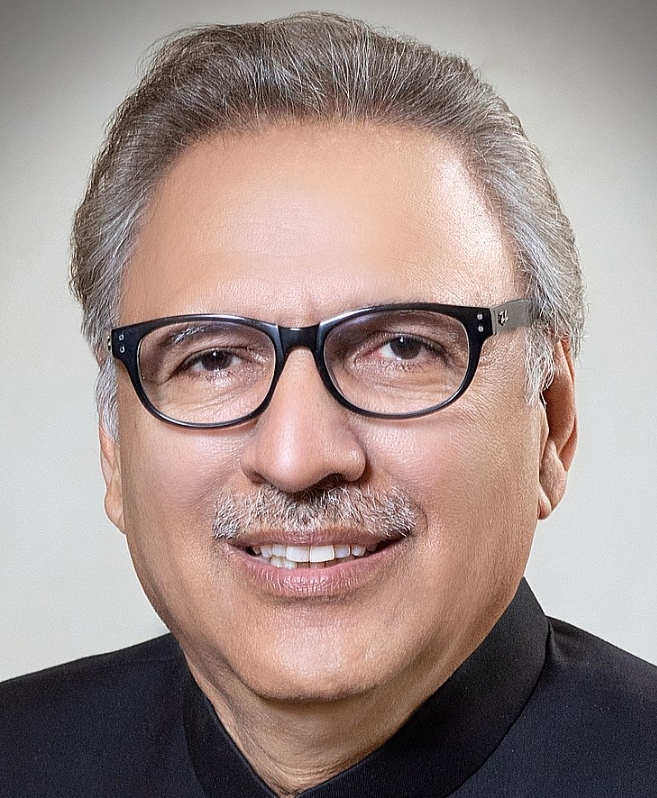
Pakistan’s President Says His Country Does Not Want to Become Base of US Counterterror

21st April, 2021 · admin

Alvi

Ayesha Tanzeem
VOA News
April 21, 2021

ISLAMABAD – Pakistan’s President Arif Alvi sat down with VOA’s Ayesha Tanzeem this week for an exclusive interview to discuss the impact on the region of the United States withdrawing its forces from Afghanistan, how Pakistan sees its future relationship with its western neighbor, and whether putting forward a resolution in parliament to expel the French ambassador from the country, over French support for publication of caricatures of Islam’s Prophet Muhammad, is dangerous.

The answers have been edited for clarity and brevity.

Q: How do you see the impact on the region and on Pakistan of the United States withdrawing forces from Afghanistan?

A: It’s a very important announcement. The region has been looking forward to some settlement, and the Doha talks came to a culmination with an agreement on the withdrawal of U.S. forces. I think that’s the right direction to go.

The withdrawal also relates to the fact that there should be an agreement between the Taliban and the government of Afghanistan on what is going to happen in the future. Pakistan wants stability on its borders because any instability, or any insurrection of any sort, is going to hurt us, it has always done so. Therefore, we are looking forward to a stable and peaceful Afghanistan.

Q: But the intra-Afghan negotiations are not going too well.

A: That is important. Therefore, the efforts of the governments of the United States, Pakistan, China, Russia, and Iran are all important in trying to stabilize and encourage an agreement between the government of Afghanistan and the Taliban.

Q: Pakistan has the key influence since the leadership of the Taliban live here. Why isn’t Pakistan using that influence in this situation?

A: Pakistan is using its influence.

Q: President Biden mentioned Pakistan “especially” as a regional country that needs to do more for Afghanistan. What is he asking Pakistan to do?

A: I’m not aware of what the U.S. specifically wants Pakistan to do. Pakistan’s effort toward peace does not depend on the U.S. asking Pakistan. Our efforts are indigenous in their nature and in their motivation. We want peace in Afghanistan. We all have to do more, including the Afghan and the U.S.

Q: President Biden also mentioned the U.S. reorganizing its counterterrorism capabilities in the region to be able to hit the target from “over the horizon.” He is obviously talking about drone strikes and airstrikes. Pakistan at one time used to provide the U.S. bases to operate from. Has the U.S. asked for something similar?

A: I’m not aware, and I don’t think Pakistan will be in a position to offer that.

Q: Has the U.S. asked for any additional intelligence presence? Or a larger footprint post-withdrawal?

A: I’m not aware of that. We should be careful that Pakistan doesn’t become a base for U.S. actions in Afghanistan. Pakistan wants to play a peaceful role.

Q: What role does Pakistan want to play in Afghanistan?

A: Pakistan wants to help rebuild Afghanistan. Pakistan is in the best position to do so. We harbored 3.5 million refugees. Pakistan can play a big role in actual physical construction, in providing know-how, and in lifting the education and health sectors.

Q: What if intra-Afghan negotiations fail?

A: Pakistan would not like the talks to fail. We think there is a good chance of success, although we believe India has played a negative role. It has never accepted the Doha talks. It has never encouraged the Doha talks. We suspect that role will continue.

Q: Your foreign minister recently said in a joint press conference with the Russian foreign minister that Russia can help India play a positive role in Afghanistan. How can Russia do that?

A: Whoever is in discussion with India can encourage India to not remain negative.

Q: What about Iran? How do you see its role? Is Pakistan coordinating with Iran on Afghanistan?

A: Pakistan has always had good relations with Iran. During the COVID crisis, Afghan refugees were returning from Iran to both Afghanistan and Pakistan. There were consultations between the three on that. The role of Iran will always remain, especially as the Shi’ite in Afghanistan look to Iran in a broader context.

Q: Pakistan is doing backdoor negotiations with India. The UAE ambassador said he is facilitating.

A: He mentioned the fact that there may have been some consultations to arrive at a cease-fire on our borders.

Q: Under pressure from an Islamist party, the government is presenting a resolution in parliament to expel the French ambassador to Pakistan (in retaliation for France defending the right to publish caricatures of Islam’s Prophet Muhammad).

A: I think that the international ramifications of the issue are because of Islamophobia. I think we suffer from things that are said abroad and done abroad. Anything you say questioning the Holocaust is illegal in Europe. We want the same treatment. We have to reflect what our people think. Our people are very hurt.

Q: So, if the parliament approves this resolution, Pakistan will throw out the French ambassador?

A: I’m not making any comment on that because the debate will be going on, and let the parliament either approve or disapprove the resolution.

Q: Isn’t it a very dangerous thing to do, given Pakistan’s history of violence over perceived blasphemy? Any parliamentarian who opposes the motion puts his or her life at risk. And if the motion is approved, Pakistan risks its relations with the world.

A: I think the parliament is free. I think the parliamentarians are bold. I don’t think they will be risking their lives in discussing something that is essential to us.

Posted in Pakistan-Afghanistan Relations, Peace Talks, Security, Taliban, US-Afghanistan Relations | Tags: Pakistan takeover of Afghanistan via Taliban, Taliban - Pakistani asset |

US will not reoccupy Afghanistan: top US general

21st April, 2021 · admin

McKenzie (file photo)

1TV: The United States will not re-enter to reoccupy Afghanistan under any conceivable circumstances, head of US Central Command Kenneth Frank McKenzie said on Tuesday. “We will use a variety of means to monitor al-Qaida and [the Islamic State] in Afghanistan. The intelligence will decline … but we will be able to continue to look into Afghanistan. Click here to read more (external link).

Related

  • Taliban spreadsheet records perceived US violations
Posted in Al-Qaeda, ISIS/DAESH, Peace Talks, Security, Taliban, US-Afghanistan Relations |

1TV Afghanistan Dari News – April 21, 2021

21st April, 2021 · admin

Posted in News in Dari (Persian/Farsi) |

Reports: Germany Looks To Move Up Afghanistan Troop Withdrawal To July 4

21st April, 2021 · admin

Radio Free Europe/Radio Liberty
April 21, 2021

Media reports say Germany is looking at a plan to bring forward the date for withdrawing its troops from Afghanistan to July 4.

The German news agency dpa and France’s AFP quoted a Defense Ministry spokesman on April 21 as saying lawmakers were informed of the plan, and that consultations with NATO are under way.

“The current thinking … is to shorten the withdrawal period. A withdrawal date of July 4 is being considered,” a ministry spokesman told AFP, stressing that the final decision would be made by NATO.

U.S. President Joe Biden last week announced the withdrawal of U.S. troops from Afghanistan by September 11, four months later than the May 1 deadline agreed by the previous U.S. administration with Taliban insurgents.

German Defense Minister Annegret Kramp-Karrenbauer had previously set mid-August as the deadline for her country’s removal of troops from the war-torn country.

Under the Doha accord, all foreign forces were to leave Afghanistan by May 1 in exchange for security guarantees from the militant group such as severing ties with Al-Qaeda and refusing to harbor any foreign terrorists.

The Taliban also pledged to negotiate a cease-fire and a power-sharing deal with Kabul.

Earlier on April 21, Turkey said that an international peace conference on Afghanistan previously scheduled for later this week had been postponed until after the Muslim holy month of Ramadan over issues regarding the preparations.

Reuters, however, quoted three sources as saying that the gathering was postponed over the Taliban’s refusal to participate in the event.

Afghan officials and Taliban representatives have not commented on the matter.

Based on reporting by dpa and AFP

Copyright (c) 2021. RFE/RL, Inc. Reprinted with the permission of Radio Free Europe/Radio Liberty, 1201 Connecticut Ave NW, Ste 400, Washington DC 20036
Posted in Germany-Afghanistan Relations, Peace Talks, Security, Taliban, US-Afghanistan Relations |
Previous Posts
Next Posts

Subscribe to the Afghanistan Online YouTube Channel

---

---

---

Get Yours!

Peace be with you

Afghan Dresses

© Afghan Online Press
  • About
  • Links To More News
  • Opinion
  • Poll