
 Ariana: Afghanistan’s one-off Test against Australia will be held at Hobart’s Blundstone Arena in Australia from November 27 to December 1, the Afghan Cricket Board confirmed Wednesday. It will be Afghanistan’s first match against the hosts in the longest format. Click here to read more (external link).
China Offers to Host Afghan Peace Talks

Ayaz Gul
VOA News
May 18, 2021
ISLAMABAD – China has renewed diplomatic efforts to help facilitate a negotiated end to the conflict in Afghanistan, saying it is ready to hold peace negotiations between warring Afghans.
Foreign Minister Wang Yi discussed peace prospects in phone conversations with his Afghan counterpart, Mohammad Haneef Atmar and National Security Advisor Hamdullah Mohib, said officials in both countries.
Beijing is increasingly worried the withdrawal of U.S. and NATO troops from Afghanistan will descend the turmoil-hit neighbor into chaos and a sanctuary for Islamist militants.
“China is ready to facilitate internal negotiations among various parties in Afghanistan, including creating necessary conditions for negotiations in China,” the Chinese Foreign Ministry quoted Wang as telling Mohib.
U.S. President Joe Biden announced last month it was time to end the “forever war” in Afghanistan and directed the remaining around 2,500 American soldiers to leave the country by September 11, starting on May 1.
NATO allies are also pulling their roughly 7,000 troops from the country in line with Biden’s decision.
The military drawdown has seen increased fighting between Afghan government forces and Taliban insurgents despite international calls for both warring parties to reduce the violence and negotiate a power-sharing deal to end the country’s long war.
Beijing maintains close contacts with both the Taliban and the Afghan government.
The Afghan adversaries opened direct peace talks in Qatar last September, an outcome of Washington’s troop withdrawal deal with the Taliban signed in February 2020.
But the so-called intra-Afghan peace dialogue has mostly been deadlocked and U.S. efforts to push the two sides to accelerate the process have not succeeded.
In recent days, Wang has increasingly criticized Washington for what he described as the “hasty” U.S. troop pullout, claiming the move has undermined the Afghan peace process and “negatively affected regional stability.”
The chief Chinese diplomat repeated his criticism while speaking to Mohib on Monday, and emphasized the need for moving the peace process forward to “promote a smooth transition” in Afghanistan.
“Although the U.S. unilateral withdrawal of troops at a crucial stage of the Afghan domestic reconciliation process has brought uncertainty to the evolution of the situation in Afghanistan, peace is the trend of the times,” Wang said.
The Chinese foreign minister in his conversation with Afghan counterpart Atmar urged all parties to the conflict to create a “favorable environment” for jumpstarting the peace talks.
“China hopes that Afghanistan’s future leadership will pursue a moderate Muslim policy, promote a foreign policy of peace, maintain friendship with neighboring countries, and firmly combat all forms of terrorism,” Wang said.
The Chinese offer of hosting Afghan peace talks, analysts say, appears to be an attempt to position China for a more active political role in the region after the exit of the U.S.-led Western troops from Afghanistan.
“Afghanistan resolutely fights all forms of terrorism, including the East Turkestan Islamic Movement, and is ready to further deepen counterterrorism and security cooperation with China,” the Chinese statement quoted Mohib as assuring Wang.
An Afghan government statement issued in Kabul said Mohib and Wang “identified terrorism as a common threat that both sides should fight.”
It quoted the Afghan national security advisor as telling the Chinese interlocutor that “all levers of influence” should be used to “induce (the) Taliban” to engage “earnestly” in peace talks.
The ETIM has been outlawed by China as a terrorist group. The Islamist outfit claims it is fighting for the rights of minority Uyghur Muslims in Xinjiang. Chinese officials insist sustained crackdowns on ETIM operatives in the province have “effectively” tackled the security challenge.
The United States, however, accuses China of committing serious human rights abuses against ethnic Muslims in Xinjiang in the name of fighting terrorism.
In a coordinated effort this past March, several Western countries, including the U.S., U.K., Canada and the European Union imposed sanctions on Chinese officials connected to the abuses.
China has detained Uyghurs at camps in Xinjiang, where detainees are allegedly subjected to torture, forced labor and sexual abuse, charges Beijing rejects as Western propaganda.
Tolo News in Dari – May 18, 2021
Prayer ceremony for Taliban faction’s deputy held at Herat Grand Mosque
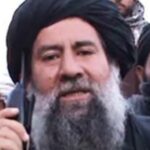
Niazi
Ariana: A prayer ceremony for Mullah Abdul Manan Niazi, the deputy head of the Taliban splinter group in the western part of the country, was held on Monday at Herat’s Grand Mosque. “If someone is who fights against the government is being killed, we let their families or relatives to burry,” Herat governor Abdul Wahid Qatali said. During the two days of the funeral and mourning ceremony, dozens of his armed supporters and white flags were visible in Herat city – a move that sparked concern among the locals. Click here to read more (external link).
Afghanistan: 303 New Cases of COVID-19, 11 Deaths Reported
 Tolo News: The Ministry of Public Health on Tuesday reported 303 new positive cases of COVID-19 out of 1,809 samples tested in the last 24 hours. The ministry reported that the cumulative total of known COVID-19 cases is 64,122, the total number of reported deaths is 2,762, and the total number of recoveries is 55,118. Click here to read more (external link).
HRW To Donors: Don’t Punish Afghan Women For Government’s Abuses
 Radio Free Europe/Radio Liberty
May 17, 2021
Human Rights Watch (HRW) has warned that a bill introduced in the U.S. Senate last week could potentially lead to cuts in funding for essential services for Afghan women and girls.
The bipartisan Protect Women’s and Girls’ Rights in Afghanistan Act would require the U.S. secretary of state to report twice yearly to Congress on the rights of women and girls in Afghanistan.
The proposed legislation would continue U.S. support to “preserve the rights” of Afghan women, but warns that the United States will “refuse to provide economic aid to an Afghan government” that violates these rights.
The bill comes amid the ongoing withdrawal of U.S. and international forces from Afghanistan by September 11.
It also follows a November 2020 joint statement by the United States and Afghanistan’s other main donors that laid out the “key elements” that would be taken into account when considering whether to continue their current development and budgetary support to the country. These elements included respect for women’s rights.
“Efforts to hold this and any future Afghan government to account are vital,” HRW said in a statement.
But it also said that “donors should consider how they can respond to government abuses without harming women and girls by cutting essential services.”
Falling international donor support to Afghanistan has already reduced women’s access to essential health care and “could imperil” girls’ access to education, the group said.
“Defunding the government should not mean defunding services. Nongovernmental organizations in Afghanistan have proved they can deliver vital services despite the country’s escalating insecurity, so long as they have sufficient resources,” according to HRW.
In 2013, member countries of the OECD Development Assistance Committee contributed $141 million to health and population assistance in Afghanistan, HRW noted in a recent report, adding that by 2019 the figure had dropped by more than one-quarter to $105 million.
And with more than 75 percent of its budget coming from international donors, the Afghan government has little ability to move toward self-sufficiency in the short term.
Copyright (c) 2021. RFE/RL, Inc. Reprinted with the permission of Radio Free Europe/Radio Liberty, 1201 Connecticut Ave NW, Ste 400, Washington DC 20036
1TV Afghanistan Dari News – May 17, 2021
Daud Laghmani Introduced as New Governor of Faryab at Army Base
 Tolo News: Mohammad Daud Laghmani assumed office as the new governor of northern Faryab province at a ceremony at the army base in the city of Maimana on Monday, sources said. Daud Laghmani was supposed to assume office this week but the governor’s compound in Maimana city is still surrounded by protesters who oppose the appointment. Click here to read more (external link).
Divided By Pakistan’s Border Fence, Pashtuns Lose Business, Rights, And Tribal Ties

By Pamir Sahill
May 17, 2021
Radio Free Europe/Radio Liberty
Until a few year ago, Malak Ziarat Gul Atmarkhel made a decent living from his businesses that crossed the border between Afghanistan and Pakistan.
He is a tribal leader of the Mohmand, a large Pashtun tribe that straddles the border, and ran a market and restaurant in Afghanistan’s eastern province of Nangarhar. He often earned up to $130 a day.
But now that Pakistan has almost completely fenced its disputed 2,670-kilometer border with Afghanistan, Atmarkhel was forced to move to Peshawar, the capital of Khyber Pakhtunkhwa, where his restaurant now brings in just $3 a day.
And it’s not just the Mohmands. The fence has also separated hundreds of thousands of members of the Mamund tribe, whose homeland stretches from the Bajaur district in northern Pakistan to Afghanistan’s eastern Kunar Province.
“We have relatives, property, friends — everything on that side of the border. Half of the members of the Mamund tribe are here [in Pakistan] while half of us are there in Afghanistan,” said Shah Wali Mamund, a Bajaur resident.
He says there are now fewer marriages among extended families and clans in the region. “If this trend continues for another generation, our tribe will divide into two distinct entities,” he said. “We will become strangers to one another.”
Some 450 kilometers south of Bajaur in South Waziristan, Zohaib Wazir says the fence has bisected his village, Angoor Ada.
“Some of us are now part of Afghanistan but we have Pakistani documents,” he told Radio Mashaal. The traditional homeland of hundreds of thousands of members of the Wazir tribe is now formally divided by the parallel 3-meter-high fences topped by barbed wire.
Atmarkhel, Mamund, and Wazir are among the tens of millions of Pashtuns whose homeland is divided by the fence, which Islamabad says will prevent terrorist attacks from Afghanistan. But as the fence nears completion, it has failed to prevent the Tehrik-e Taliban Pakistan from carrying out increasing attacks within Pakistan in recent weeks.
More than two dozen major Pashtun tribes have lost their historic right to traverse the porous border since construction of the fence began in 2017. Many say the fenced border — and their divided communities — have cost them their Pakistani or Afghan citizenship.
The fence has brought business to a standstill, devastating local economies in remote regions, and has forced hundreds of families to leave their homes and farms. Above all, it has threatened to break familial ties and social relations in a seamless tribal society united by kinship, religion, language, and history.
Economic Ruin
The previously unregulated cross-border trade on which hundreds of thousands of Pashtuns relied has been almost completely dismantled. Before the fence was built, laborers in Mohmand and Nangarhar could earn $26 a day. “Most of them cannot even afford to buy wheat-flour now,” Atmarkhel said. While employment has tumbled, prices of staple foods have skyrocketed without the ease of cross-border trade.
Traders in Nangahar have similar complaints. Malak Dilawar Jan Shinwari owned warehouses near the Gorko border crossing in his province, which also borders Pakistan’s Khyber tribal district.
The mountainous route had long been used to carry electronics, car parts, clothing, tea, and cosmetics on mules or camels to Khyber on their way to Pakistani cities. Now Gorko’s 50 warehouses stand empty.
“The fence put an end to that business, which has left around 20,000 people without a job,” Shinwari said.
In North Waziristan, Haji Nazar Din has been involved in Afghan trade since 1983. He says Pakistanis exported wheat, sugar, cloth, cooking oil, fruits, and vegetables to Afghanistan and imported automotive oil, tea, and solar-energy batteries. “We used to drive five full trucks from [Pakistan’s eastern province of] Punjab to Afghanistan daily, but the fence changed everything,” he said.
He says strict checks at the Ghulam Khan border crossing between North Waziristan and Afghanistan’s Khost Province coupled with high customs duties have killed off their profit margins. “Some 15,000 workers here are economically ruined,” he said. “Traders cannot travel without a visa, which has complicated business.”
Kabul and Islamabad have been negotiating a transit and bilateral trade agreement for over three years. But Haji Nisar Ahmad of the Dangam district in Kunar Province says such regulation would harm local businesspeople. The fence has made transport routes longer, forcing traders from Afghanistan to use just one border crossing, at Torkham.
“Transport costs are higher for goods imported from Pakistan via Torkham, leading to price hikes for locals,” he told Radio Mashaal. “Before, locals transported goods using mules and donkeys and profits went directly into their pockets.”
The Pakistan-Afghanistan Joint Chambers of Commerce and Trade has voiced similar concerns, saying bilateral trade has plummeted over the past four years. Annual Pakistani exports to Afghanistan have dropped more than 40 percent in the past three years, to $889 million, according to the Federal Board of Revenue.
‘A State Of Statelessness’
Living close to the Durand Line now comes at a cost. In North Waziristan, families of the Kabul Khel tribe, a Wazir clan, are officially part of Afghanistan despite having Pakistani ID cards.
“Half of these families are in Pakistan, and the other half are now part of Afghanistan,” Haji Nazar Din, a Kabul Khel elder, said of how his clan has been divided with no prospects of easy travel.
Communities across the border face similar problems. “Hundreds of families have lost their [Afghan] citizenship after [the fence annexed their village into Pakistan],” Khalil Jan Gurbazwal, a resident of the Gurbaz district in Khost Province, told Radio Mashaal.
He says while some already held Pakistani ID cards, others had Afghan citizenship cards locally known as “tazkira.” The fence demarcated their homes and lands as being in Pakistan, and so they remain in North Waziristan. “They are living in a state of statelessness, as they are neither counted here nor there,” he added.
Haji Rasool Muhammad Tanai, a tribal elder in Khost, says the fence forced 200 families from a North Waziristan border village to relocate to his native Tani district.
“Their village is completely empty, and no one lives there. They don’t have homes or property here, but local people gave them shelter,” he said.
Farming, livestock, and cross-border trade have traditionally been the main sources of income for Pashtun border communities. Ahmad says many members of the Safi and Mamund tribes owned property on both sides of the border. But their communities have lost access to shares and land.
Nader Manan Kodakhel, a clan leader, lives in Mohmand. He estimates people have lost hundreds, if not thousands, of hectares of land that was collective property of several Mohmand clans.
Residents of Pakistan’s former Federally Administered Tribal Areas — where South Waziristan, North Waziristan, Kurram, Khyber, Bajaur, and Mohmand districts border Afghanistan’s Kunar, Nangarhar, Khost, Paktia and Paktia — have lost access to communally owned meadows and agricultural lands.
The Afghan nomads known as Kuchis have borne the brunt of the impact. The fence has cut off traditional migratory routes that enabled Ghilzai Pashtun tribes to move between the lush plains of the river Indus in Pakistan to the cool Hindu Kush meadows.
In Nangarhar, Haji Gulmiran, a Kuchi community leader, says the fence has cut off their flocks from their usual grazing lands. “We lost access to pastures [in Pakistan] while here we have lost meadows and grasslands to housing and farming,” he told Radio Free Afghanistan. “For Kuchis, our pastures are as vital as water is to fish,” he added. “Without them, our flocks and tents are unlikely to survive.”
Rites Of Passage
Across the border regions, residents complain of the way the fence has separated farmers from their land, sellers from buyers, clans, and even families.
“This fence has separated brothers,” said Haji Nisar Ahmad, a local elder in Dangam district. He lost ownership of four hectares of land in Bajaur after the fence went up in 2019.
Because of the travel restrictions, Pashtun communities straddling the Durand Line have been unable to mark the occasions that traditionally hold a society together. The barbed-wire fence, Abdul Yousaf says, prevents people in Pakistan’s Kurram district from attending funerals, weddings, and other community events in Paktia, Khost, and Nangarhar.
“People keep bodies for 10 or 15 days so relatives from the neighboring country can take part in the final rites of their loved ones,” he told Radio Mashaal, adding it takes several days to get a visa to cross the border.
Khalil Jan Gurbazwal tells of a man whose brother had been left on the other side of the fence in North Waziristan. “The brother died, and this man could not get there to attend his funeral,” he said. “The border guards only allowed him to stand on a hilltop to witness his brother’s coffin being taken to the graveyard.”
Wazir says the fence slices through villages, requiring members of his community to travel for days or weeks to cross the border and reach relatives. Until a few years ago, there was no border control.
“The fence divides our mountains, our homes, and our families,” he said. “It now takes more than 20 days to cross the border to offer someone condolences.”
Rights Of Easement
Creating an imposing physical barrier along its border with Afghanistan has long been a dream of Pakistan’s. The Durand Line, as the border is called after a British colonel from the 1890s, is officially recognized by Pakistan and the international community but disputed by Afghanistan, which claims it was imposed on suzerain Afghan kings dependent on British subsidies.
In 2016, a year before construction of the fence began, Islamabad began requiring formal visas for all Afghan citizens traveling to Pakistan. Previously, Pashtun tribes living in the borderlands were exempt from the visa requirement thanks to treaties Kabul and Pashtun tribes concluded with the British Raj long before the creation of Pakistan in 1947.
These so-called easement rights — enshrined as a slip of paper shown at the border — guaranteed free travel, and Pashtun tribes say the new visa requirement restricts their right to movement and negatively affects business and family ties.
In March, tribal elders from Nangarhar traveled to meet with their counterparts in Khyber to demand easement rights be reinstated and Afghan tribespeople be allowed to travel to Pakistan’s tribal districts using their ID cards.
Two weeks later, elders held another jirga in Nangarhar demanding the Afghan government reach an agreement with Islamabad that would permit them to travel to Pakistan without needing to apply for a visa.
Abdul Latif Afridi, a Pakistani lawyer and politician, has extensive knowledge of the legal and political frameworks of the border region, which includes his native Khyber. He says easement rights were intended to protect Pashtun society, and abolishing them endangers hundreds of communities.
“Pashtuns are one people, with a single language and shared history,” so a hard division was not possible, he said. “This is the first time that restrictions have been imposed [on their free movement].”
Afridi says easement rights lose their meaning when it comes to international borders. However, the disputed status of the Durand Line allowed tribespeople to freely cross the border for decades.
Zarif Khan, an official of the Border Management Project at the National Database Registration Authority, a Pakistani organization that issues identity documents, says Islamabad will not issue “corridor passes” to Afghans living near the border.
“The Federal Investigation Agency verifies visas and ensures all travelers have exit and entry stamps on their passports,” he told Radio Mashaal, adding that no other ID cards or the Proof of Registration cards issued to refugees would be accepted. There are no exceptions, he added.
Kabul, for its part, still allows visa-free travel to the residents of former FATA districts, but visas are obligatory for those coming from elsewhere in Pakistan.
Islamabad’s Security Fears
Pakistani officials maintain the border fence is part of a border management system that addresses security threats to Afghanistan and Pakistan.
“Both countries had previously reiterated allegations of undesirable and illegal movement, after which we decided to document all movement,” Mansoor Ahmad Khan, Pakistan’s ambassador in Kabul, told Radio Mashaal.
Prime Minister Imran Khan announced the new visa policy in September 2020, with the possibility for long-term, multiple-entry visas to Afghans. Previously, Islamabad had issued a six-month, multiple-entry visa to Afghans with which they could stay in Pakistan for just 22 days.
Ultimately, he said, easement rights were making it too difficult to track who crosses the border. “Both sides have security concerns,” he added, which is why “we had to end that practice, but we have facilitated the movement of people” through the visa system, which includes the possibility of a multiyear entry pass for Afghan students, businesspeople, and those with family in Pakistan.
Since the new visa policy came into force, the Pakistani Embassy in Afghanistan has issued roughly 7,000 visas a day, according to ambassador Khan.
Mending Fences
Dawa Khan Meenapal, an Afghan government spokesman, says their administration has directed provincial and districts’ officials to help people along the border. “Our people live on both sides of the Durand Line, and we treat them equally,” he told Radio Mashaal. “We consider it our responsibility to help them.”
But Afghan officials, overwhelmed by multiple crises in the midst of the U.S. withdrawal, can offer little assistance or promise of change. Kabul has blamed Islamabad for not reining in the Taliban as it unleashes a fresh campaign of violence while Pakistan denies it provides sanctuary to the Taliban.
Iqbal Afridi, a lawmaker of the ruling Pakistan Tehrik-e Insaf party, says the government is keen to contain the negative fallout of the fence.
He says Islamabad is ready to provide compensation to those who have been affected and border communities on the Afghan side can contact Pakistani authorities to get visas swiftly.
But resolving the mounting problems of the Pashtun borderland communities will require Islamabad and Kabul to engage in an unprecedented level of cooperation — something they have failed to do so far.
Daud Khattak and Radio Free Afghanistan contributed reporting to this story.
Copyright (c) 2021. RFE/RL, Inc. Reprinted with the permission of Radio Free Europe/Radio Liberty, 1201 Connecticut Ave NW, Ste 400, Washington DC 20036
More Facilities Needed to Test Imported Medicine: Health Industry
 Tolo News: For the past twenty years, all imported drugs and food have been tested for quality control in Kabul, as there are no other laboratories in the provinces to test the medicine and food being imported into Afghanistan from various cross-border routes. Officials of Afghanistan’s Medicine Service Union say the Afghan government has failed to set up standard medicine laboratories in other provinces over the past four years. Click here to read more (external link).
Other Health News