
 Ariana: The National Statistics and Information Authority (NSIA) said that it will distribute more than five million electronic identity cards (ID card) before the end of the current solar year in April. According to NSIA the holders of paper identity cards will not need to verify their identity cards once they have been issued. With the paper ID’s verification is needed to work for government or to obtain a passport. Click here to read more (external link).
Afghan Cricket Team Trains in UAE for Ireland Matches
 Tolo News: Afghanistan’s national cricket team began their training on Saturday in the United Arab Emirates for the three-match ODI series against Ireland that kicks off on January 21. Afghanistan will play three One Day International (ODI) matches against Ireland on January 21, 24 and 26. Click here to read more (external link).
Afghan President Wants ‘Positive Peace’ With Taliban, Transition To ‘Elected Successor’

Ashraf Ghani
Radio Free Europe/Radio Liberty
January 9, 2021
Afghan President Ashraf Ghani has said that his goal is to transition power to an “elected successor,” and that he seeks a “positive peace” with the Taliban.
Speaking alongside first lady Rula Ghani in an interview with CNN on January 8, the Afghan president addressed the start of the second round of peace talks between the government and the Taliban.
He acknowledged that the process aimed at ending nearly two decades of war has been slow, and laid out some of the factors required for the negotiations that resume in Qatar on January 9 to be successful.
“Can we agree on the goal that the international community is agreed with us; namely, a sovereign, democratic, united Afghanistan at peace with itself and the region?” he said. “If that goal becomes accepted, then we can move forward. But if the objective of the Taliban is to dominate and give us the peace of the grave, then that will have very negative consequences.”
Ghani earlier this week ruled out suggestions that the establishment of an interim government could aid the formation of a government in keeping with a future peace deal.
“My basic goal is to be able to hand power, through the will of the people, to my elected successor,” Ghani said in the January 8 interview with CNN’s Christiane Amanpour. “This is crucial to enable us to both honor the sacrifice of our civilians, our activists, and others.”
“One thing needs to be clear: Afghan society is not willing to go back and we’re not a type of society that the Taliban-type approach of the past can be imposed on us,” he added. “We want a positive peace where all of us together overcome our past, embrace each other and together rebuild an Afghanistan that can be what I call a roundabout.”
After a 20-day break, the Afghan negotiating team returned to the Qatari capital, Doha, this week for a second round of peace talks that began in September.
The first session began on January 9, according to a spokesman for the Afghan National Reconciliation Council.
A statement issued by the Taliban’s political office in Doha said the groups appointed by the negotiating teams “for the unification and arrangement of the agenda” had met “in a good environment.”
The Taliban statement said those at the talks agreed to continue the meetings in the future and to continue to talk about the agenda of the peace process.
With reporting by Tolo News, CNN, and AFP
Copyright (c) 2021. RFE/RL, Inc. Reprinted with the permission of Radio Free Europe/Radio Liberty, 1201 Connecticut Ave NW, Ste 400, Washington DC 20036
Afghan politicians accuse government of making them more vulnerable to attacks
 1TV: A number of senior Afghan political figures in a letter have accused the government of making them more vulnerable to attacks by deciding to reduce their guards. The letter was signed by Salahuddin Rabbani, Abdul Rashid Dostum, Karim Khalili, Mohammad Yonus Qanooni, Mohammad Mohaqiq, Syed Hamid Gelani, Ahmad Zia Massoud and Zabihullah Mujadidi. Click here to read more (external link).
1TV Afghanistan Dari News – January 9, 2021
Afghan passport ranked the world’s least powerful
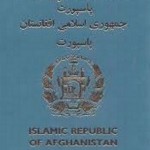 Ariana: Japan has the world’s most powerful passport as its citizens can travel to 191 countries around the world visa-free or visa on arrival. The Henley Passport Index, which measures the world’s most travel-friendly passports from time to time based on data received from the International Air Transport Authority (IATA), has released its report for 2021. Meanwhile, Afghan citizens have visa-free or visa on arrival access to 26 countries only, ranking 110th place or the world’s least powerful passport. Click here to read more (external link).
Three Arrested In Connection With Assassination Of Afghan Election Activist
 Radio Free Europe/Radio Liberty
January 9, 2021
KABUL– Afghan forces have arrested three people in connection with the December killing of prominent election activist Yusuf Rasheed.
Kabul police spokesman Ferdaws Faramarz did not give the names of the three arrested or say if they belonged to any group in comments to RFE/RL on January 9.
Faramarz said the case was under investigation by security forces and that details would be shared when the investigation is completed.
Rasheed, who headed the independent Free and Fair Election Forum Of Afghanistan (FEFA), was slain along with his driver after unknown gunmen fired on his vehicle in a southern district of the capital on the morning of December 23.
Rasheed was on his way to participate in the inauguration of a peace advocacy group in Kabul when the vehicle he was riding in was ambushed.
It was one of several recent targeted attacks on journalists, activists, and politicians that have drawn condemnation from the United Nations and Afghan and foreign officials.
No militant group has taken responsibility for Rasheed’s assassination.
The extremist Islamic State group has claimed responsibility for multiple deadly incidents in recent months, however, including attacks on educational institutions that killed 50 people, most of them students.
Rasheed’s killing came just days after Rahmatullah Nikzad, a freelance reporter and head of a media-safety union in the central Ghazni Province, was killed in an attack by unknown armed men in the province.
On December 24, the day after Rasheed’s death, social and political activist Freshta Kohistani was slain in a village in Kapisa Province, northeast of Kabul.
On November 12, RFE/RL reporter Ilyas Dayee was assassinated in Helmand Province when a magnetic bomb attached to his vehicle exploded. Afghan security officials claimed to have arrested a man suspected of involvement in Dayee’s killing and released a video of the suspect’s confession on December 11.
The targeted killings of prominent figures have come despite ongoing efforts between government negotiators and the Taliban to try put an end to decades of war in Afghanistan.
After a 20-day break in the negotiations, representatives of the government and the Taliban met in Qatar on January 6 for preliminary talks aimed at starting a second round of peace talks.
A spokesman for the Afghan National Reconciliation Council has said that negotiators are scheduled to hold their first session with the Taliban on January 9.
With reporting by AFP and CNN
Copyright (c) 2021. RFE/RL, Inc. Reprinted with the permission of Radio Free Europe/Radio Liberty, 1201 Connecticut Ave NW, Ste 400, Washington DC 20036
Afghanistan: 84 New Cases of COVID-19, 12 Deaths Reported
 Tolo News: The Ministry of Public Health on Saturday reported 84 new positive cases of COVID-19 out of 1,003 samples tested in the last 24 hours. The Health Ministry stated that the cumulative total of known COVID-19 cases is 53,462, the total number of reported deaths is 2,279, and the total number of recoveries is 43,740. Click here to read more (external link).
Ariana Afghan Airlines Reports $3.4M Profit in 2020
 Tolo News: The Ariana Afghan Airlines reported nearly $3.4 million profit in last year despite COVID-19 crisis, officials of the government-owned company said. The company faced $350,000 loss last year, officials said. “We managed to overcome the losses despite the challenges that emerged from lockdown and the coronavirus,” said Salim Rahimi, head of business department of Ariana Afghan Airlines. Click here to read more (external link).
‘Psychological Warfare’: Taliban Adopts New Strategy In Afghanistan

Taliban militants (file photo)
By Frud Bezhan
January 8, 2021
Radio Free Europe/Radio Liberty
For years, the Taliban’s suicide bombers frequently struck high-profile political and security targets in Afghanistan’s major cities.
But in a marked shift, the Taliban is now targeting civilians — government workers, journalists, rights activists, moderate religious leaders, and women in public roles — in urban areas.
The extremist group has reduced the number of indiscriminate, headline-grabbing suicide bombings it carries out. Instead, the militants are using so-called “sticky” bombs — homemade magnetic bombs attached to vehicles and often detonated remotely — to target specific individuals.
In a new trend, many of the targeted killings have gone unclaimed, with the Taliban denying responsibility in many cases.
Observers say the new tactics are a response to the U.S.-Taliban deal signed in February 2020, which limits where and what type of attacks the militants can conduct.
The shift, observers say, is also linked to the Taliban’s strategy at peace talks with the Afghan government.
“Their intent seems to be to further disable and discredit the current government but also to decrease the number of people who might stand in their way postsettlement,” says Jonathan Schroden, a security expert with the U.S.-based nonprofit research and analysis organization CNA.
Intra-Afghan peace talks — which started in September 2020 in the Gulf state of Qatar — are a key part of the U.S.-Taliban agreement.
That deal calls for the withdrawal of all foreign forces in Afghanistan by May in return for counterterrorism guarantees from the Taliban, which has pledged to negotiate a permanent cease-fire and a power-sharing formula with the internationally recognized government in Kabul.
‘Psychological Warfare’
Since signing the deal with the United States, the Taliban has been blamed for a surge of targeted killings, including of prominent civic and political leaders.
The latest victim was Afghan journalist Bismillah Adel Aimaq, who was shot dead on January 1 by unidentified gunmen in the western Ghor Province. He was the fifth journalist slain in Afghanistan in the past two months.
On December 24, 2020, prominent Afghan women’s rights activist Freshta Kohistani was shot dead by unknown gunmen on a motorcycle in the province of Kapisa.
Meanwhile, a sticky bomb attached to an armored vehicle killed Kabul’s deputy provincial governor, Mahbobullah Mohibi, and two others on December 15, 2020.
The campaign of assassinations has provoked public anger at authorities and struck fear among civilians in major cities where many oppose the Taliban.
“The new strategy is to win the support or submission of the population in government-controlled areas, particularly in urban centers, through intimidation and psychological warfare,” says Rahmatullah Amiri, a Kabul-based political analyst.
‘Chaotic Approach’
Taliban spokesman Zabiullah Mujahid has denied any involvement in the attacks, calling the accusations “propaganda.”
But Afghan officials and independent observers say there is little doubt the Taliban is behind the wave of attacks.
Afghan intelligence chief Ahmad Zia Siraj recently told lawmakers that security forces had arrested 270 members of a special Taliban unit with ties to the targeted killings, called Obaida Karwan.
In response to the wave of assassinations, Afghan authorities have said they will double the number of police in Kabul and spend some $100 million on high-tech security cameras in the city of around 5 million people, leading many to question why the measures were not introduced sooner.
“The Afghan government’s chaotic approach when it comes to dealing with security provides an excellent window of opportunity for the Taliban to benefit,” says Amiri.
The Kabul government is deeply divided, corrupt, and heavily dependent on foreign aid and military support.
The government controls provincial capitals, major population centers, and most district centers. But only around 30 percent of Afghanistan’s 407 districts are fully in government hands, with the rest contested or controlled by the Taliban.
‘Optimizing’ Tactics
Observers say the Taliban’s new tactics are, in part, a response to the constraints imposed by the U.S.-Taliban deal.
Under the agreement, the insurgents are believed to be banned from carrying out suicide bombings in urban centers.
U.S. officials say the Taliban also verbally agreed to reduce overall violence, although that is contested by the militants.
Schroden says the militants are “optimizing their tactical approach to do as much as they can” within the constraints of the bilateral deal.
“The Taliban places great value in that agreement, but it also sees violence as its primary form of leverage against the government,” he says.
Since February 2020, the militants have increased the overall number of their attacks without taking credit for them, allowing them to claim they are adhering to the deal.
But U.S. frustration over the Taliban’s breaches of the deal appears to be spilling over.
For the first time, the U.S. military directly blamed the Taliban for the surge of targeted killings, saying it was an impediment to peace.
“The Taliban’s campaign of unclaimed attacks & targeted killings of government officials, civil society leaders & journalists must also cease for peace to succeed,” tweeted Colonel Sonny Leggett, the U.S. military spokesman in Afghanistan, on January 4.
The remarks come amid an ongoing war of words between the U.S. military and the Taliban over the terms of the deal.
U.S. forces have retaliated to the Taliban’s intensifying violence across the country by increasing air strikes against the militant group.
The militants allege the strikes are a violation of the U.S.-Taliban deal. The U.S. military has forcefully reiterated that it reserves the right to defend Afghan forces who come under Taliban attack.
Despite the Taliban’s widespread violations of the deal, outgoing U.S. President Donald Trump ordered in November 2020 an accelerated U.S. troop withdrawal from Afghanistan.
The move was seen as an election ploy ahead of the November presidential vote that he lost.
The current deployment of around 5,000 American troops will be halved by mid-January when President-elect Joe Biden takes office, the lowest level since the beginning of the war in 2001.