
 Tolo News: The public health ministry on Saturday reported 36 new positive cases of COVID-19 out of 882 samples tested in a day. The cumulative total of known COVID-19 cases is 54,595, the total number of reported deaths is 2,378, and the total number of recoveries is 46,943, according to data by the public health ministry. Click here to read more (external link).
U.S. To Review Afghan Peace Deal With Taliban

By RFE/RL Gandhara
January 23, 2021
The United States intends to review an agreement reached with the Taliban last year in order to determine if the militant group is meeting its commitments under the Afghan peace accord.
President Joe Biden’s national-security advisor, Jake Sullivan, spoke with his Afghan counterpart Hamdullah Mohib, the White House said in a January 22 statement.
Under a U.S.-Taliban deal reached last February, all foreign forces are to leave Afghanistan by May 2021 in exchange for security guarantees from the militant group, including severing ties with Al-Qaeda.
Afghan government and Taliban negotiators have made halting progress since direct talks began in Qatar in the autumn against the backdrop of rising violence and calls for a cease-fire.
Sullivan underscored the new Biden administration “will support the peace process with a robust and regional diplomatic effort, which will aim to help the two sides achieve a durable and just political settlement and permanent ceasefire,” according to the statement.
The United States would also review the agreement reached under former President Donald Trump’s administration, “including to assess whether the Taliban was living up to its commitments to cut ties with terrorist groups, to reduce violence in Afghanistan, and to engage in meaningful negotiations with the Afghan government and other stakeholders.”
Sullivan and his Afghan counterpart also discussed “the United States’ support for protecting the extraordinary gains made by Afghan women, girls, and minority groups as part of the peace process.”
The United States is also committed to working with the Afghan government, NATO allies, and regional partners “to support a stable, sovereign, and secure future for Afghanistan.”
Copyright (c) 2021. RFE/RL, Inc. Reprinted with the permission of Radio Free Europe/Radio Liberty, 1201 Connecticut Ave NW, Ste 400, Washington DC 20036
Related
Pakistan calls on Biden to stick to US-Taliban deal
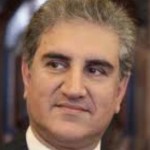
Pakistani Foreign Minister Shah Mahmood Qureshi
Ariana: Shah Mehmood Qureshi, Pakistan’s foreign minister, on Thursday called on Joe Biden, the US president to follow up on the current Afghan peace process and US troops’ withdrawal from the country, reported Al Jazeera. “I think they should realise there is an opportunity in Afghanistan and they should persevere with what was initiated and not reverse things,” said Qureshi quoted by Al Jazeera. Click here to read more (external link).
Related
Afghanistan’s 1st female animation artist thanks Turkey
 AA: Afghanistan’s first female animation artist and illustrator thanked Turkey for contributing to her career. “Thanks to Turkey, I was able to study this, my dream came true. Now I want to expand the animation field and establish a studio in Afghanistan,” Sara Barackzay said. She recalled her journey to becoming Afghanistan’s first female animation artist. Click here to read more (external link).
Tolo News in Dari – January 22, 2021
Afghan Police Accused Of Using Drug Addicts As Free Labor
Drug addicts in Farah City in Afghanistan’s Farah Province say they have been forced to work without pay for the local police. They claim they were made to work away from prying eyes on construction sites inside military compounds. The provincial offices of Afghanistan’s Labor and Social Affairs Ministry confirmed the allegations, but the local police called the accusations baseless.
Targeted Killings of Afghan Journalists Threaten Free Media in Afghanistan
 Roshan Noorzai
VOA News
January 21, 2021
WASHINGTON – A recent string of targeted killings in Afghanistan has created an atmosphere of fear among Afghan journalists who say they cannot carry out their duties under growing threats.
The Afghan Journalists Safety Committee, a local media advocacy group, has warned that the country might lose one of its main achievements in the past two decades, freedom of expression and press, if the attacks on journalists continue.
At least five journalists have been killed in Afghanistan in the past two months as part of a wave of targeted attacks against women working outside their homes, rights activists, tribal and community leaders, religious figures and journalists.
“If this trend continues, we will lose one of the most noteworthy achievements of this country, which is press freedom and freedom of expression,” Najib Sharifi, president of the Afghan Journalists Safety Committee, told VOA.
Journalists in many parts of Afghanistan say they no longer feel safe amid the increased killings of fellow journalists.
“We are in constant fear of being targeted,” said Sami Serat, a journalist working with a local radio station in Helmand province. “We do not feel safe in the city, in our offices or even at home.”
Serat added that the recent targeted killings of journalists in the country have “negatively affected” news coverage of his home province of Helmand, which has seen intensified clashes between government forces and Taliban militants in recent months.
“We rarely go to the scenes for news coverage. It has become nearly impossible for us to go there because of the fear of being targeted and the ongoing fighting in the city [Lashkargah] and provincial districts,” he told VOA.
Serat said that some of his fellow journalists have left Helmand for Kabul because “it has become difficult to work in the province, and some of our own journalists, fearing their lives, are now in Kabul.”
Walwala, 23, who worked as a journalist in the northern province of Baghlan, said that she left her job because of security concerns.
“I love my profession, but I had to stop all my social and journalistic activities,” she said.
Walwala said the killing of Malalai Maiwandi, a female journalist killed by unknown gunmen on December 10 in the eastern Nangarhar province, “has shocked all the female journalists across Afghanistan,” adding that many female journalists “are looking for jobs in other areas.”
She added that she would “only start working as a journalist again when the security situation gets better in the country.”
Nai, a local media organization in Afghanistan, reported that 11 Afghan journalists and media workers were killed in 2020.
Demand for investigation
The Afghan government says several suspected attackers in some targeted killings have been arrested, including those suspected of killing Mohammad Ilyas Dayee, a journalist with Radio Free Europe/Radio Liberty, who was killed December 12.
However, Mudasar Dawat, Dayee’s younger brother, told VOA that the security officials have not informed his family about the arrests.
“The government has not given us any information [about the progress made in the investigation],” he told VOA. “We have seen videos on Twitter and Facebook of someone confessing [to the killing], but that is not enough nor acceptable. We have the right to know about the investigation and who was behind the attack.”
Tariq Aryan, a spokesperson for the Afghan Interior Ministry, said the government is investigating into the targeted killings of journalists “in collaboration with media organizations.”
He blamed the Taliban for the attacks, claiming that the government has “arrested the killers of Dayee and Malalai Maiwand, and [those killers] were members of the Taliban.”
The Taliban have denied any involvement in the recent killings of human rights activists and journalists though they have targeted journalists and media workers in the past.
In 2016, the militant group claimed responsibility for an attack on a bus, killing seven Tolo TV staffers and injuring 25 others. The Taliban at the time described the journalists as “enemy personnel.”
Call for protection
In a letter released December 12, Reporters Without Borders (RSF) and a number of other media organizations called on the U.N. to take “concrete measures” for the protection of journalists in Afghanistan.
The letter urged the U.N. Security Council to “take serious actions to reduce violence and pressure the perpetrators to cease targeting journalists.”
Danish Karokhel, the head of Pajhwok Afghan News Agency, also believes the international community should pressure the Taliban to stop targeting journalists.
“It is not enough that they send press releases rejecting involvement in these killings. The Taliban should be accountable for the actions of their fighters in the provinces,” he told VOA.
The United States signed a peace agreement with the Taliban in February 2020, which paved the way for the start of intra-Afghan negotiations in September 2020.
However, violence in Afghanistan, particularly targeted killings, has surged in Afghanistan as negotiations continue in the Qatari capital, Doha.
Karokhel said that in some instances Taliban commanders and fighters have “created problems” for journalists, though the Taliban political leaders insist that they have changed and do not oppose free media anymore.
In a report released last year, Human Rights Watch (HRW) accused Taliban militants of imposing restrictions on media groups in the areas they control.
John Sifton, the Asia Advocacy director at HRW, told VOA in a recent interview that “what the Taliban say at the leadership level … does not mean that is what happens on the ground,” adding that the Taliban commanders in provinces “interpret things their own way.”
Afghanistan ranks 122nd out of 180 countries in RSF’s 2020 press freedom index.
The establishment of independent media has been considered as one of the main achievements of the post-Taliban Afghanistan, said RSF, adding that “given the country’s political and security challenges, this achievement is extremely vulnerable.”
VOA’s Afghan Service contributed to this report.
COVID-19: 76 New Cases, 3 Deaths Reported in Afghanistan
Tolo News: The Ministry of Public Health on Friday reported 76 new positive cases of COVID-19 out of 1,847 samples tested in the last 24 hours. The Health Ministry stated that the cumulative total of known COVID-19 cases is 54,559, the total number of reported deaths is 2,373, and the total number of recoveries is 46,912. Click here to read more (external link).
Gurbaz Century Helps Afghanistan Defeat Ireland in ODI Match
 Tolo News: An outstanding century by Rahmanullah Gurbaz on debut helped Afghanistan defeat Ireland by 16 runs in the first of their three-match series in Abu Dhabi. Gurbaz became the first Afghan player, and 16th overall, to achieve the rare feat before getting out for a run-a ball 127 in which he got 9 sixes and 8 fours. Click here to read more (external link).
Undermining The Taliban? Kabul Tries To Bolster Its Religious Credentials
 Frud Bezhan
Radio Free Europe/Radio Liberty
January 21, 2021
Afghanistan’s government has been fighting the Taliban militarily for many years, but Kabul is increasingly waging an ideological battle with the Islamist group.
On the battlefield, government forces and Taliban militants are fighting a grinding war for control of the country. Off the battlefield, the foes are fighting a war for religious legitimacy in the predominantly Islamic country.
That latter struggle has intensified as the adversaries hold peace talks aimed at ending the 19-year war.
Among the most contentious issues under negotiation is the role of Islam in a future power-sharing government and whose version of Islam should shape postwar Afghanistan.
The Taliban, a militant Islamist group, upholds a radical interpretation of Islam. It considers the internationally recognized government in Kabul a “foreign puppet” that has adopted Western values and trampled on Islamic ones.
The Taliban’s stated goal is to establish what it calls a “pure” Islamic state in Afghanistan.
The Afghan government considers the current political system — an Islamic republic that is modeled on Western-style democracy — sufficiently Islamic. Kabul maintains that the Taliban is waging an illegitimate jihad, or holy war, and contravening Islamic beliefs by employing terror tactics.
To push back against the Taliban’s narrative, the Afghan government has attempted to demonstrate its religious credentials.
Observers say the government’s goal is to broaden its own appeal while undermining the Taliban’s claim to Islamic authority.
In recent months, Kabul has proposed a raft of conservative policies, including changes to the education system and family law. But critics say in pursuing a Taliban-style agenda, the government could roll back progress made in the country since the Taliban regime’s ouster in 2001.
“This is an intentional and calculated move by the government to redefine the nature of the state further toward Islam,” says Omar Sadr, a Kabul-based political analyst.
‘Powerful Islamic Identity’
In December, the Education Ministry announced a plan under which children would study in mosques for the first three years of school, an unprecedented move that critics said would promote the Talibanization of society.
The ministry said the aim is to provide schoolchildren with a “powerful Islamic identity” and give Islam a more central role in education.
But critics said the move was reminiscent of the Taliban regime in the 1990s, when madrasahs — or Islamic schools — were common.
After a public outcry, the government shelved the proposal.
In June, the Afghan government approved changes to the media law, including a provision that would force media outlets to reveal their sources without a court order.
After condemnation by the press, the government backtracked and called off the changes.
Afghanistan’s flourishing media scene has been hailed as one of the biggest achievements of the past 19 years, coming after the Taliban had banned an independent press.
The government has also proposed changes to family law, which is governed by the Civil Code of 1976. It was adopted by the secular government of President Daoud Khan.
A presidential spokesman said in August that a new family law was needed to “reflect the new realities of Afghanistan” and “ensure that the rights of women and children are upheld while also ensuring convergence with our Islamic principles.”
Under the proposed changes, underage marriage would be permissible with the consent of a male relative and the approval of a court. Meanwhile, a woman would forfeit her right to maintenance — basic necessities needed to live — if she refused sexual intercourse or left home without her husband’s permission.
“Introducing these random conservative policies will only reinforce the Taliban’s narrative that the government lacks an Islamic identity,” says Ali Adili, a researcher at the Afghanistan Analysts Network, an independent think tank in Kabul. “It will also bring chaos to the governance system.”
‘Our System Is Islamic’
In recent months, President Ashraf Ghani has been campaigning to assert his government’s religious legitimacy.
“Our main problem is that we are unaware of the deep roots of our culture, civilization, and religion,” Ghani said at a gathering in October marking the birthday of the Prophet Muhammad. “The nature of our system is Islamic and the security and defense forces share Islamic beliefs.”
During the same address, Ghani stressed that the Koran and Islamic Shari’a law should be the basis of the ongoing peace talks between the government and the Taliban.
Since the talks began, the government has insisted on referring to itself by its official name — the Islamic Republic of Afghanistan. That is seen as a way to contrast itself with the Taliban, which refers to itself as the Islamic Emirate of Afghanistan, the formal name of its brutal regime that ruled from 1996-2001.
Ghani has also announced plans to build and renovate hundreds of mosques across Afghanistan.
“We build mosques, but the Taliban destroy them,” he claimed recently, a reference to government accusations that the militant group attacks mosques.
In recent years, Ghani has also sought the support of Islamic councils throughout the Muslim world to declare the Taliban’s insurgency illegitimate.
In 2018, some 70 Muslim clerics gathered in Indonesia, the world’s most populous Muslim nation. The clerics issued a fatwa, or Islamic decree, at the conference, declaring that the Taliban’s “violence against civilians and suicide attacks are against the holy principles of Islam.”
The Taliban has rejected the fatwa and urged clerics to boycott events organized by the government.
Religion’s Supreme Role
Observers say the government faces a major test to balance the need to reach a peace settlement with the Taliban while also safeguarding the gains of the past 19 years.
Kabul is seeking to preserve as much of the current constitutional order as possible, including key democratic tenets like women’s rights, free speech, and competitive elections.
The Taliban, meanwhile, is seeking to transform the Afghan state into a theocracy. It envisions playing a central role in a future power-sharing government.
The intra-Afghan peace talks are a key part of the U.S.-Taliban agreement signed in February 2020 that is aimed at ending the war.
That deal calls for the withdrawal of all foreign forces in Afghanistan by May in return for counterterrorism guarantees from the Taliban, which is to negotiate a permanent cease-fire and a power-sharing arrangement with the government.
Fragile and deeply divided, the Afghan government has come to the peace negotiations that started on September 12 in the Gulf state of Qatar in relative weakness.
With roughly half of the country controlled or contested by the Taliban, Kabul lacks the military advantage to drive a hard bargain, especially as U.S. forces continue to withdraw.
As a result, some observers say, the Afghan government will likely have to accept significant constitutional changes and alterations to the current political system to achieve peace.
Common Ground
There is some common ground in the legal and governance systems of the Afghan government and the Taliban.
Both the Taliban’s political vision and the Afghan political system rely heavily on the centralization of power and the supreme role of Islam.
Afghanistan’s 2004 constitution prescribes that “no law can be contrary to the beliefs and provisions of the sacred religion of Islam” and sometimes appears contradictory with more liberal and democratic elements within it.
Power resides in a heavily centralized government.
According to the Taliban’s views on governance, power should be centralized in an “Amir ul-Momineen,” or leader of the faithful. This supreme leader is the head of state and has ultimate authority.
The Taliban, too, regards Shari’a as the supreme law.
But the warring parties have staunchly different interpretations of Shari’a law and the role of Islam.