
 Reuters: When 18-year old Manizha Talash joined a small but ardent breakdancing community in Afghanistan a few months ago, she was the only woman. In that short time, however, she’s already set her sights on representing her country in one of the latest sports to be added to the program for the Summer Olympics. Click here to read more (external link).
Taliban Calls on Biden Administration to Honor Trump Afghan Commitments

Sher Mohammad Abbas Stanikzai
Ayaz Gul
VOA News
January 29, 2021
ISLAMABAD – The Taliban on Friday said its February 2020 agreement with the United States is meant to give American “invading” troops a “safe passage” out of Afghanistan, insisting the insurgent group expects President Joe Biden administration’s “review” of the document will not disrupt it.
Sher Mohammad Abbas Stanikzai, the deputy Taliban peace negotiator, made the statement during an ongoing visit to Moscow, where his delegation is meeting with top Russian officials.
Stanikzai told a news conference that the Taliban signed the pact with a “legal, elected government in America” and the new U.S. administration reviewing it “is their “internal decision.” But it does not mean Washington is abandoning the treaty, he added.
“In the history of Afghanistan, no one ever gave a safe passage to foreign invading troops. So, this is a good chance for the Americans that we are giving them safe passage to go out according to this treaty. We hope that when they are reviewing it they will come to the same positive [conclusion],” Stanikzai stressed.
He also rejected as “completely false” allegations that the Taliban had received bounties from Russia for killing U.S. troops in Afghanistan.
“We do not need anyone to give us reward for the killing of Americans. Americans are the invaders and we are [have been] killing them since 2001,” Stanikzai said and stressed the need for Washington to stick to the mutually agreed troop withdrawal timeline.
VOA has asked the Pentagon for reaction to Stanikzai’s statement.
Stanikzai led the Taliban team in talks with U.S. negotiators that lasted over 18 months and produced the landmark deal between the two adversaries to bring closure to the 19-year-old war in Afghanistan, America’s longest.
U.S. officials acknowledge the insurgents have not attacked American troops since the signing of the pact, which binds the Taliban to halt attacks on foreign forces.
The U.S.-Taliban agreement requires all American and NATO troops to leave the country by May in return for the insurgents’ counterterrorism guarantees and pledges they will negotiate with Afghan rivals a political deal to permanently end two decades of Afghan war.
“If they remain in Afghanistan after this [the agreed deadline] we will also kill them even if somebody reward us or do not reward us. We take our reward from God. We fight the invaders without a reward, without any bounty,” Stanikzai warned.
The U.S.-initiated Feb. 29 accord opened direct talks between the Taliban and the Afghan government in September but the process has progressed slowly with both Afghan foes blaming the other for not being serious in moving the dialogue further.
Kabul has been demanding the Taliban declare a cease-fire for the talks to progress while the insurgents insist a political understanding must lead to its cessation of the conflict.
“Without them [the Taliban] meeting their commitments to renounce terrorism and to stop the violent attacks on the Afghan National Security Forces … it’s very hard to see a specific way forward for the negotiated settlement, but we’re still committed to that,” Pentagon spokesperson John Kirby told reporters on Thursday.
But Stanikzai accused Washington of failing to meet their timelines outlined in the deal, such as removal of the names of Taliban leaders from a United Nations blacklist and release of all insurgent prisoners from Afghan jails.
Related
Taliban PsyOps: Afghan Militants Weaponize Commercial Drones
 By Frud Bezhan
Radio Free Europe/Radio Liberty
January 29, 2021
The Taliban has used small commercial drone aircraft in recent years for reconnaissance and to make propaganda videos of attacks.
But now, the militant group is deploying the remote-controlled devices as a new weapon against Afghan security forces.
Using a tactic of the Islamic State (IS) extremist group in Iraq and Syria, Taliban fighters are rigging low-cost, over-the-counter drones with explosives and dropping them on targets.
Since October, the Taliban has carried out weaponized drone attacks in at least six of Afghanistan’s 34 provinces. Some have killed and wounded Afghan security personnel. Others have damaged military infrastructure.
It is unclear why the Taliban only recently weaponized the commercial drones at its disposal. But the move has coincided with intensified attacks against Afghan forces despite ongoing peace talks between the warring sides.
Observers say the rigged drones could enhance the Taliban’s battlefield capabilities and provide the militants with a potent propaganda tool.
Battlefield Impact
So far, Taliban drones have not had a significant impact on the battlefield.
But experts say the threat posed by drones could be significant if the devices are used properly and under optimal conditions.
“These drones have relatively small firepower: one or two grenade-sized munitions,” says Nick Waters, an analyst with Britain’s open-source research group Bellingcat. “However, they are quite accurate and, if dropped in the right place, they can have considerable effect.”
Waters, a former British Army officer, told RFE/RL the Taliban could use weaponized drones to target commanders, groups of soldiers, vehicles, and ammunition depots.
He says they can also guide Taliban suicide bombers, direct artillery fire, and provide “situational awareness” for tactical commanders.
Several different tactics have been used in other war zones to try to neutralize the threat of weaponized commercial drones. They include shooting drones down, using directional jammers, and physically intercepting them with nets or even birds of prey.
But observers say many of these tactics require the ability to first identify a drone.
“If you’re being attacked by a very small drone 1,000 feet up in the air, then it’s actually quite difficult to work out where to point your weapon,” Waters says.
Propaganda ‘PsyOps’
Taliban drone attacks also have propaganda value for the militants as psychological operations — or “psyops.”
In recent months, Taliban fighters and pro-Taliban accounts have uploaded videos and photos on social media boasting of their new capabilities.
“There is undoubtedly an element of psychological operations in their use,” says Jonathan Schroden, a security expert with the U.S.-based nonprofit research and analysis organization CNA.
Military experts cite Taliban propaganda about its so-called “Red Unit” — a commando-style Taliban force blamed for deadly attacks on Afghan troops.
Better trained and armed than ordinary Taliban fighters, the Red Unit has been described as an elite Taliban special forces group.
“Tactical drones are another way for the Taliban to try and portray that they’re a stronger force than the Afghan forces,” Schroden told RFE/RL. “It also helps them mitigate views of their primary disadvantage relative to the Afghan forces, which is their lack of technologically advanced equipment.”
The Taliban’s arsenal mainly consists of rockets, mortars, small arms, improvised explosives devices (IEDs), and explosive-laden cars, or what military experts call “suicide vehicle-borne improvised explosive devices” (SVBIEDs).
There is irony in the Taliban’s efforts to weaponize small commercial drones.
The U.S. military has employed large unmanned Predator and Reaper drones armed with powerful Hellfire missiles to kill militants in Afghanistan.
Those drones, which each cost more than $4 million, can fly up to 740 kilometers and linger overhead for up to 14 hours.
The controversial program also has been blamed for killing civilians.
The Taliban’s use of drones comes as it ramps up attacks against beleaguered Afghan forces despite signing a deal with the United States in February 2020 aimed at ending the war.
Under the agreement, all foreign troops are meant to leave Afghanistan in exchange for counterterrorism guarantees from the Taliban, which pledged to launch talks with the internationally recognized government in Kabul about a permanent cease-fire and political settlement.
Military analysts say the Taliban is employing a fight-and-talk strategy, seeking to increase its leverage in peace talks through gains on the battlefield.
‘Sold In The Market’
Afghan intelligence chief Ahmad Zia Shiraj told lawmakers in November that the Taliban was using off-the-shelf drones and rigging them with explosives.
“The drones they are using are sold in the market,” he said. “They are basically camera drones.”
Shiraj’s remarks came a month after the Taliban dropped explosives from a weaponized drone inside the governor’s compound in the northern province of Kunduz, killing at least four people and wounded eight others.
It was the first known Taliban drone attack in Afghanistan.
Since then, rigged Taliban drones have been reported in the provinces of Baghlan, Balkh, Paktia, Logar, and Faryab.
In one of the most recent attacks, the Taliban used a drone on January 15 to drop explosives inside a military base in Kunduz. The blast wounded two Afghan soldiers and damaged a military helicopter.
Earlier in January, the government banned the use of any type of drones over the presidential palace in Kabul.
‘Seek Overhead Cover’
Analysts say the Taliban drone tactics have been adopted from IS militants in Iraq and Syria.
IS also initially used drones for reconnaissance before weaponizing them for attacks against Iraqi and Syrian troops.
Those drones either dropped bombs from the air or were rigged with explosives to detonate on the ground.
The United States was so concerned by the threat of IS drones that, in 2017, it launched a $700 million program to develop tactics and technology against the extremist group’s vast fleet of drones — many of them quadcopters.
Waters says IS militants deployed weaponized drones most effectively in Mosul, Iraq’s second-largest city, which was overrun by the group in 2015.
Two years later, U.S.-backed Iraqi forces recaptured the city following a protracted and devastating campaign.
“These drones were so prevalent it was reported they helped to slow and even pause the assault on the city until the drones could be neutralized,” Waters says. “It got to the point where the sound of the drone alone became a weapon: when fighters heard a drone above them they would immediately seek overhead cover because of the threat.”
But experts say it would be difficult for the Taliban in Afghanistan to replicate the exact tactics used by IS militants, which targeted positions in urban areas.
Afghan security forces are spread out across the country with more than 10,000 small checkpoints, many of which are in rural areas.
“It’ll be harder to achieve a surprise attack on a small checkpoint in open terrain if Afghan forces are cued to the possibility of the threat, which they should now be,” Schroden says.
“Still, the drones have the potential to be a threat to any unsuspecting checkpoints as well as larger installations and those in urban or cluttered terrain,” he concludes.
Copyright (c) 2021. RFE/RL, Inc. Reprinted with the permission of Radio Free Europe/Radio Liberty, 1201 Connecticut Ave NW, Ste 400, Washington DC 20036
Tolo News in Dari – January 29, 2021
Afghanistan: 69 New Cases of COVID-19, 1 Death Reported
 Tolo News: The Ministry of Public Health on Friday reported 69 new positive cases of COVID-19 out of 1,790 samples tested in the last 24 hours. The ministry says the cumulative total of known COVID-19 cases is 55,008, the total number of reported deaths is 2,400, and the total number of recoveries is 47,606. Click here to read more (external link).
Ghani appoints Wahid Majroh as MoPH Acting Minister
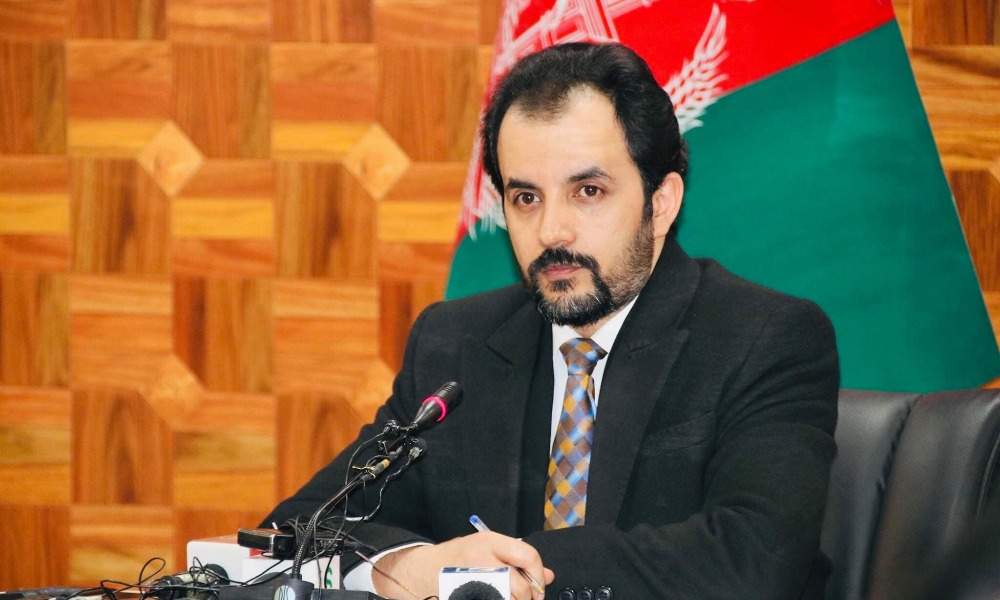
Majroh
Ariana: Afghan President Mohammad Ashraf Ghani has appointed Wahid Majroh the Acting Minister of Public Health Ministry (MoPH), the Presidential Palace confirmed. This comes as, President Ghani had fired the country’s former health minister, Ahmad Jawad Osmani, on December 31st, 2020, which raised questions over the legitimacy of President Ashraf Ghani’s move. Click here to read more (external link).
Afghanistan scores dismally on Corruption Perception Index
 Ariana: Afghanistan has been ranked 165 out of 180 countries in Transparency International’s 2020 Corruption Perceptions Index (CPI) which was released on Thursday. The watchdog stated that Afghanistan scored only 19 out of 100 points in terms of prohibiting corruption. Click here to read more (external link).
U.S.-Taliban Deal Hangs In The Balance

By Abubakar Siddique
Radio Free Europe/Radio Liberty
January 28, 2021
A week after U.S. President Joe Biden’s administration said it would review Washington’s peace deal with the Afghan Taliban, the fate of the nearly year-old agreement is in the balance.
The Taliban rejected a U.S. Treasury Department memo saying Al-Qaeda was “gaining strength in Afghanistan” because it operates under the Taliban’s protection.
The Afghan government, which is not party to the agreement but is greatly affected by it, is eager to exploit the growing fractures between the Taliban and Washington and is pushing to at the very least disrupt the agreement. All this adds to the uncertainty over the future of the deal that outlined a complete U.S. withdrawal from Afghanistan in return for Taliban counterterrorism guarantees and peace talks with Kabul.
“We are in new territory. The review will be a first reality check in a process that at times seem to stray a long way away from reality,” says Michael Semple, a former European Union and United Nations adviser in Afghanistan. “It will be a real challenge for this new administration to pressurize the Taliban toward a compliance with what the U.S. saw as the spirit of the deal while not precipitating a complete breakdown of the deal.”
Semple spent years negotiating with the Afghan insurgents as a diplomat and scholar. He says the Taliban and Washington had different perceptions upon signing the agreement in the Qatari capital, Doha, last February.
“The Taliban had told their supporters that the deal represented a U.S. acknowledgement of defeat and the Taliban were doing them a favor by helping them extricate themselves from Afghanistan,” Semple said. “Whereas the U.S. has always said they want to see peace in Afghanistan and that’s the way for them to withdraw their troops.”
Al-Qaeda And The Taliban
The memo, sent by the Treasury Department to the Pentagon’s lead inspector general on January 4, outlines terrorist financing and the current progress against Al-Qaeda and the Islamic State militants. It has subsequently spurred a debate over the Taliban’s compliance with the agreement.
“As of 2020, al-Qaeda is gaining strength in Afghanistan while continuing to operate with the Taliban under the Taliban’s protection,” the memo noted. “Al-Qaeda capitalizes on its relationship with the Taliban through its network of mentors and advisers who are embedded with the Taliban, providing advice, guidance, and financial support.”
“Senior Haqqani Network figures have discussed forming a new joint unit of armed fighters in cooperation with and funded by al-Qaeda,” the report said, referring to the Taliban’s military arm. In October, a senior UN counterterrorism official said Al-Qaeda is still “heavily embedded” within Taliban.
But the Taliban is now venting over criticism for its alleged ties with Al-Qaeda, which the movement had promised to sever as part of the deal. The group released a vitriolic statement on January 27, calling the claims “propaganda” that is “corrupting minds and creating unwarranted fears.”
“Some circles are seeking the extension of this imposed war on the Afghan nation in pursuit of their interests and malicious objectives,” the statement said. “[They] are sourcing information from warmongering individuals and parties before forwarding it to other departments.”
In Kabul, officials are eager to see the Taliban blamed and held accountable for mounting violence. They maintain that the Doha agreement failed to garner any major concession from the Taliban, which is still firmly opposed to a cease-fire, and yet has fulfilled most of the Taliban’s demands, including the release of thousands of Taliban prisoners and a timetable for the withdrawal of U.S. troops.
Sensing an opportunity to advance their interests, Afghan officials are now pushing to keep a U.S. counterterrorism force beyond the May deadline for complete withdrawal. Biden has long advocated keeping a counterterrorism force in Afghanistan as a deterrent against possible terrorist threats.
“Afghanistan is now more of a base than a battlefield for Americans, and their presence is mutually beneficial,” Roya Rahmani, Afghanistan’s ambassador in Washington, argued in an op-ed for the Washington Post on January 27. “Similar to U.S. presence in South Korea, Germany and Kuwait, American troops in Afghanistan serve as a stabilizing force,” she added, while calling on the new administration “to hold the Taliban accountable for its egregious violations of the agreement and fully commit to the U.S.-Afghan partnership.”
Mawlawi Rahmatullah, a spokesman for Afghanistan’s national security council, said a visit by the Taliban’s top political leader, Mullah Abdul Ghani Baradar, to Iran this week was an effort to prevent the fallout from the Biden administration’s review of the deal.
“The Taliban appear to be afraid of the review,” he said in a video statement. “Instead of talking to [a] delegation of Afghanistan’s Islamic Republic in Qatar, they are busy [with] foreign trips, which means that they are not committed to peace and do not care about prolonging the fighting that sheds Afghan blood.”
Hameed Hakimi, a research associate at London’s Chatham House think tank, however, argues that the Afghan government’s relief about a possible review will be short-lived.
“For all its problems and shortcomings, the deal spearheaded by Ambassador Zalmay Khalilzad is the closest any U.S. administration has come to seeking a political solution for its troop withdrawal from Afghanistan since 2001,” he told Gandhara, referring to the U.S. peace envoy who is considered the key architect of the deal. “It is difficult to envisage that the Biden administration will be able to make a successful case for a continued, unending commitment to a military presence in Afghanistan.”
Hakimi says the most important element under review will be the “secret annexes” to which only senior U.S. officials and Taliban representatives are privy.
“For the Americans, any Taliban compliance with the agreement will be based on those annexes, as opposed to what the other non-Taliban Afghan sides — including the government — consider a violation or lack of implementation of the deal,” he noted. “Sadly, increasing violence impacting Afghans on a daily basis may not be the most important deciding factor of the Taliban’s compliance with the deal.”
Hakimi says the Doha agreement is politically relevant for Washington as it eyes an eventual exit from Afghanistan. “It is also highly unlikely that President Biden will be on a phone call with the Taliban leadership — unlike the warmth shown to them by President Trump,” he said.
Finding A Way Out
The Biden administration wants to avoid getting locked into an interminable war in Afghanistan, says Semple. “I think they will find some way to keep the deal alive but to lengthen the timelines as a reflection that it does take longer to reach peace,” he noted.
In an indication of some continuity of policy, the new U.S. secretary of state, Antony Blinken, said on January 27 that the administration has asked Khalilzad to remain in his position.
But he also said Biden’s administration had not seen certain parts of the accord that were not made public.
“One of the things that we need to understand is exactly what is in the agreements that were reached between the United States and the Taliban, to make sure that we fully understand the commitments that the Taliban has made as well as any commitments that we’ve made,” he told journalists.
For now, the Taliban is adamant that it is in full compliance with the agreement.
“We consider the full implementation of the Doha agreement a logical solution to the ongoing problem, and also in the interest of both the American and Afghan people,” the Taliban statement said, adding that the group “shall remain committed to all clauses of the Doha agreement, not allow anyone to pose a threat to the security of the United States and its allies from the soil of Afghanistan or build bases here.”
Washington might be mulling significant changes in its approach to the current stalemate in talks between the Taliban and the Afghan government and the peace process as a whole. Semple says this could involve “a broader peace process which maintains the negotiations that have been started but does not depend on the negotiations in quite the same way that the Khalilzad approach did.”
Washington’s complicated struggle with the coronavirus pandemic, war weariness, and an imminent withdrawal date might, however, prevent it from redefining the Afghan war or adopting a different approach to ending it.
Copyright (c) 2021. RFE/RL, Inc. Reprinted with the permission of Radio Free Europe/Radio Liberty, 1201 Connecticut Ave NW, Ste 400, Washington DC 20036
1TV Afghanistan Dari News – January 28, 2021
U.S. Afghan Envoy Asked To Stay And Continue ‘Vital’ Work, Blinken Says

Zalmay Khalilzad
Radio Free Europe/Radio Liberty
January 28, 2021
The U.S. envoy who brokered a deal with the Taliban last year has been asked to stay in his position, Secretary of State Antony Blinken said on January 27.
U.S. Special Representative for Afghanistan Reconciliation Zalmay Khalilzad has been asked to “continue the vital work that he’s performing,” Blinken said, speaking at his first news conference since being sworn in on January 26.
Khalilzad negotiated the agreement, signed in February 2020, calling for a U.S. troop withdrawal from Afghanistan in return for security guarantees from the militant group, including severing ties with Al-Qaeda.
Under the agreement all foreign forces are to leave Afghanistan by May 2021.
Blinken also reiterated that U.S. President Joe Biden’s new administration is reviewing the agreement to determine if the militant group is meeting its commitments, including reaching a cease-fire and engaging in meaningful negotiations with the Afghan government.
The Afghan government has welcomed the review.
Blinken said the new administration has not seen parts of the accord that were not made public.
“One of the things that we need to understand is exactly what is in the agreements that were reached between the United States and the Taliban, to make sure that we fully understand the commitments that the Taliban has made as well as any commitments that we’ve made,” Blinken said.
Khalilzad, a political scientist born in Afghanistan, is a veteran diplomat who served as U.S. ambassador to the United Nations and as U.S. ambassador to Iraq and Afghanistan under former President George W. Bush.
Former President Donald Trump, eager to end America’s longest war, tasked Khalilzad with negotiating with the Taliban. That effort culminated with the signing of the U.S.-Taliban deal in Qatar on February 29.
The Taliban and the Kabul government began negotiations in Doha, Qatar, in September, but violence has continued in the country.
The Afghanistan Independent Human Rights Commission’s (AIHRC) said on January 27 that killings of civilians rose to nearly 3,000 last year, threatening the talks, which are aimed at ending decades of conflict.
The AIHRC said in its annual report that 2,958 civilians were killed in 2020. That was an increase from 2,817 civilians killed the previous year.
A string of killings targeting officials, government employees, and journalists has swept the country in recent months, with Afghan and U.S. officials blaming the Taliban.
Afghan government negotiators this week complained that Taliban negotiators are stalling.
Afghan government negotiator Nader Nadery on January 26 claimed the Taliban have not joined formal meetings in Doha for nine days and are “not willing to engage in talks to end the conflict and save lives.”
The Taliban called the suggestion “false” and said the two sides are in touch with each other.
With reporting by Reuters and AFP