
logo

Daily Updated Afghan News Service

  • Home
  • About
  • Opinion
  • Links to More News
  • Good Afghan News
  • Poll Results
  • Learn about Islam
  • Learn Dari (Afghan Persian/Farsi)

Recent Posts

  • Afghan Deportations Is Strategic Mistake, Says European Parliament Member May 6, 2026
  • Ex-MP Mohsin Dawar says Pakistan strikes avoid Taliban members May 6, 2026
  • Afghan fighter Waheedullah Nezhand to face Argentine opponent May 6, 2026
  • Tolo News in Dari – May 6, 2026 May 6, 2026
  • Rising Crime in Afghanistan: Citizens Say Taliban Are Behind Most Cases May 5, 2026
  • Local elders broker fragile ceasefire between Taliban, Pakistan in Kunar May 5, 2026
  • Catalan Parliament Voices Concern Over Hazaras Situation In Afghanistan May 5, 2026
  • Afghanistan’s powerlifting team to compete in Belarus competitions May 5, 2026
  • Tolo News in Dari – May 5, 2026 May 5, 2026
  • Taliban say three civilians killed in new Pakistan shelling in Kunar May 4, 2026

Categories

  • Afghan Children
  • Afghan Sports News
  • Afghan Women
  • Afghanistan Freedom Front
  • Al-Qaeda
  • Anti-Government Militants
  • Anti-Taliban Resistance
  • AOP Reports
  • Arab-Afghan Relations
  • Art and Culture
  • Australia-Afghanistan Relations
  • Book Review
  • Britain-Afghanistan Relations
  • Canada-Afghanistan Relations
  • Censorship
  • Central Asia
  • China-Afghanistan Relations
  • Civilian Injuries and Deaths
  • Corruption
  • Crime and Punishment
  • Drone warfare
  • Drugs
  • Economic News
  • Education
  • Elections News
  • Entertainment News
  • Environmental News
  • Ethnic Issues
  • EU-Afghanistan Relations
  • Everyday Life
  • France-Afghanistan Relations
  • Germany-Afghanistan Relations
  • Haqqani Network
  • Health News
  • Heroism
  • History
  • Human Rights
  • India-Afghanistan Relations
  • Interviews
  • Iran-Afghanistan Relations
  • ISIS/DAESH
  • Islamophobia News
  • Japan-Afghanistan Relations
  • Landmines
  • Media
  • Misc.
  • Muslims and Islam
  • NATO-Afghanistan
  • News in Dari (Persian/Farsi)
  • NRF – National Resistance Front
  • Opinion/Editorial
  • Other News
  • Pakistan-Afghanistan Relations
  • Peace Talks
  • Photos
  • Political News
  • Reconstruction and Development
  • Refugees and Migrants
  • Russia-Afghanistan Relations
  • Science and Technology
  • Security
  • Society
  • Tajikistan-Afghanistan Relations
  • Taliban
  • Traffic accidents
  • Travel
  • Turkey-Afghanistan Relations
  • UN-Afghanistan Relations
  • Uncategorized
  • US-Afghanistan Relations
  • Uzbekistan-Afghanistan Relations

Archives

Dari/Pashto Services

  • Bakhtar News Agency
  • BBC Pashto
  • BBC Persian
  • DW Dari
  • DW Pashto
  • VOA Dari
  • VOA Pashto

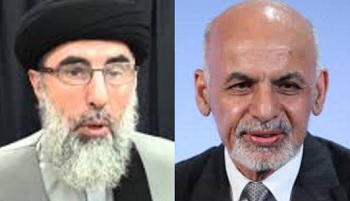
Hekmatyar, His Supporters Ask President Ghani to Step Down

2nd April, 2021 · admin

Hekmatyar (left) and Ghani (right)

Tolo News: Hizb-e-Islami leader Gulbuddin Hekmatyar at a rally of his supporters in Kabul on Friday asked President Ashraf Ghani to resign over what they described as the Afghan leader’s “deliberate attempt” to disrupt the peace process and his “failure” to fix the ongoing fragile security situation.  Hekmatyar, who addressed his supporters from an armored booth, said that those at the Presidential Palace are trying to disrupt the peace process. Click here to read more (external link).

Posted in Political News | Tags: Ashraf Ghani, Hekmatyar, Hezb-e Islami |

Roadside Bombs Kill Five, Wound Seven Civilians In Afghanistan

2nd April, 2021 · admin

Radio Free Europe/Radio Liberty
April 2, 2021

A roadside bomb attack killed at least five civilians and wounded seven others on April 2 in Afghanistan, local officials said.

Omer Zwak, a spokesman for the provincial governor in southern Helmand Province, said the five killed were traveling by car near Lashkar Gah, the capital of the province.

He said the death toll could rise.

In a separate roadside bomb attack in western Herat Province, seven women traveling in a minivan were wounded, the provincial governor’s office said.

No group has claimed responsibility for the attacks.

Meanwhile, in a statement late on April 1, the extremist group Islamic State (IS) claimed responsibility for the killing of a policewoman in eastern Nangarhar Province earlier that day.

A wave of assassinations has in past weeks targeted government employees, academics, rights workers, and journalists as peace negotiations in Qatar between the Taliban and the Afghan government have stalled.

On March 30, three women working to administer polio vaccines were killed in Jalalabad, the capital of Nangarhar Province.

Earlier last month, Islamic State claimed responsibility for the killing of three female employees of a privately owned media outlet, also in Jalalabad.

Many other killings have gone unclaimed.

Afghan and U.S. officials blame the Taliban, which has denied involvement in many attacks.

Based on reporting by AP, Reuters, and TOLOnews

Copyright (c) 2021. RFE/RL, Inc. Reprinted with the permission of Radio Free Europe/Radio Liberty, 1201 Connecticut Ave NW, Ste 400, Washington DC 20036

More Security News

  • Taliban ambush kills security official in Baghlan
Posted in Civilian Injuries and Deaths, ISIS/DAESH, Security, Taliban | Tags: Helmand |

Tolo News in Dari – April 2, 2021

2nd April, 2021 · admin

Posted in News in Dari (Persian/Farsi) |

Afghans to testify in Australian ex-soldier’s case

2nd April, 2021 · admin

Ariana: An Australian court on Thursday said it will allow four Afghans to give evidence via video link in a defamation case filed by a former Australian soldier accused of being involved in killing civilians in Afghanistan, Anadolu News Agency reported. Click here to read more (external link).

Posted in Australia-Afghanistan Relations, Civilian Injuries and Deaths, Crime and Punishment, Human Rights | Tags: War Crime |

23 New Cases of COVID-19, 2 Deaths Reported in Afghanistan

2nd April, 2021 · admin

Tolo News: The Ministry of Public Health on Friday reported 23 new positive cases of COVID-19 out of 1,637 samples tested in the last 24 hours. The ministry reported that the cumulative total of known COVID-19 cases is 56,595, the total number of reported deaths is 2,497, and the total number of recoveries is 51,798. Click here to read more (external link).

Related

  • COVID-19 Cases on the Rise in Afghanistan: Ministry
Posted in Health News | Tags: Coronavirus (COVID-19) in Afghanistan |

50% of national revenue being embezzled: Officials

2nd April, 2021 · admin

Ariana: Afghanistan’s acting finance minister Khalid Payanda said on Thursday that 50 percent of national revenue is being embezzled due to corruption, a lack of capacity and outdated finance system. According to Payanda, reforms will be brought to the current finance system. Click here to read more (external link).

Posted in Corruption, Economic News | Tags: Embezzelment, Khalid Payanda |

Biden’s Confusion Keeps US Mired in Afghanistan

1st April, 2021 · admin

Joe Biden

Michael Hughes: U.S. President Joe Biden and his brain trust seem uncertain about if, when and how NATO forces will leave Afghanistan a month before an exit deadline that, if missed, will see American troops come under Taliban fire. To be fair, Biden faced a no-win situation in Afghanistan and deep internal contradictions within the establishment have made a straightforward solution impossible. However, the Biden administration’s incoherent approach and muddled thinking has only exacerbated the dilemma. Click here to read more.

Posted in Opinion/Editorial, Peace Talks, Security, Taliban, US-Afghanistan Relations |

Pakistan Seen As Repeating ‘Pyrrhic Victory’ In Afghanistan

1st April, 2021 · admin

Taliban’s Baradar (left) and Pakistani Foreign Minister Qureshi (right). File photo.

Abubakar Siddique
Radio Free Europe/Radio Liberty
April 1, 2021

Pakistani leaders have spent decades touting their role in shaping the various phases of war in Afghanistan that saw Islamabad gain influence in Afghan politics despite its often-acrimonious relationship with Kabul.

Leaders in Islamabad and Rawalpindi, home to Pakistan’s powerful military, once again see themselves on the cusp of a historic opportunity to shape Afghanistan’s future and fend off threats from ethno-nationalists and the influence of regional archrival India.

But observers say the prospect of Pakistan’s Taliban allies assuming power or becoming major powerbrokers is likely to be a hollow victory for Islamabad reminiscent of the 1990s, when a civil war followed the April 1992 demise of Afghanistan’s socialist government. The ensuing chaos forced millions of Afghans to seek shelter in Pakistan, which faced international isolation in a post-Cold War world defined by cooperation and freedom.

Islamabad’s obsession with molding the Afghan state has come at the cost of regional rivalries, sluggish economic growth, and a domestic blowback from the Islamist groups it supported to bolster the Afghan Taliban and keep India tied up in a counterinsurgency campaign in the disputed Himalayan region of Kashmir.

“This glee of the security establishment over an imaginary victory is misplaced because it is a pyrrhic victory,” former lawmaker Farhatullah Babar told Gandhara. “Our policy toward Afghanistan really should be that it is a sovereign country and not Pakistan’s backyard.”

Babar, a senior leader of the secular Pakistan Peoples Party, has followed Islamabad’s involvement in Afghanistan since the early 1980s, when Pakistani military dictator General Zia-ul-Haq hosted Islamist Afghan mujahedin to fight Afghanistan’s Soviet occupation with American and Saudi largesse. After the terrorist attacks of 9/11, General Pervez Musharraf, another military ruler, crafted a dual approach toward Afghanistan. After becoming a U.S. ally, Musharraf turned a blind eye to the Taliban’s regrouping inside Pakistan, which helped the group stage a comeback in Afghanistan.

It was this approach, Babar emphasizes, that proved instrumental in giving Islamabad a leading role in facilitating the Taliban’s negotiations with Washington, which culminated in an agreement between the two last year and reinforced notions that Islamabad will once again have a say in who rules Kabul.

“The dilemma of Pakistan’s security establishment is that it’s an economically impoverished country seeking to project its powers beyond borders through nonstate actors under the umbrella of nuclear capability,” he said, alluding to Islamabad’s ties with the Afghan Taliban.

Babar says he wants his country to first address its domestic crises, including the dire economic straits it has landed in. “The reality of Pakistan today is that it is a politically fragmented and ethnically divided country,” he said. “A country with so many fault lines must first put its own house in order before looking across the border.”

The head of Pakistan’s military, the country’s most powerful leader, echoed this sentiment in a speech earlier this month. Pakistani military chief General Qamar Javed Bajwa said Pakistan has realized that “unless our own house is in order, nothing good could be expected from outside.”

He told a conference in Islamabad that his country’s role in the Afghan peace process is evidence of Pakistan’s “goodwill and understanding of it global and moral obligations.”

Bajwa pledged his commitment to a lasting and enduring peace both domestically and regionally, outlining an economic roadmap to boost regional trade and connectivity path based on “noninterference of any kind in the internal affairs of our neighboring and regional countries.”

Resilient Taliban Ties

Ahmed Rashid, a Pakistani journalist, says that despite Bajwa’s promises Islamabad still makes a show of supporting the international community while helping the Taliban gain an upper hand.

“We have heard a lot about Pakistan being active in helping the U.S. end this war. But we don’t know what it is exactly that Pakistan has been doing,” he asked. “There has been no transparency at all.”

Rashid, the author of several books about Afghanistan’s wars, says Islamabad’s most meaningful contribution toward Afghan peace would be to push the Taliban back across the border. “They should end the Taliban’s safe sanctuary in Pakistan because it is creating a lot of problems for Pakistan and its policy,” he told Gandhara.

Pakistan has mostly denied sheltering the Taliban, but after the 2016 killing of former Taliban leader Mullah Akhtar Mohammad Mansur in a U.S. drone attack in the southwestern province of Balochistan in May 2016, Islamabad grudgingly acknowledged the Taliban’s presence in the country.

Ayesha Siddiqa, an author and expert on the Pakistani military, says Islamabad wants to oust Afghan President Ashraf Ghani but isn’t entirely on board with the Taliban gaining power. Earlier this month, Pakistan joined the United States, Russia, and China to declare they “do not support the restoration of the Islamic Emirate” as the Taliban’s hard-line regime was called, which is still the formal name of the group.

Siddiqa says Islamabad risks becoming increasingly dependent on the militants. “The military believes the Taliban are the only Pashtuns it can rely on,” she told Gandhara. “It has not invested in modern Afghan civil society and, therefore, there is this increased dependence,” she added, suggesting the Taliban and smaller Islamist groups are Islamabad’s only allies within the Afghan political spectrum.

She argues Islamabad will face a domestic blowback. “You can’t escape the crosscurrents,” she noted. “In the past, this has meant increased religious intolerance in Pakistan. Once the Taliban dominate politics, there is a possibility they will have an influence on Pakistani society, as well.”

Pakistan has already paid a high price for supporting the Taliban. The regime’s demise in late 2001 pushed Afghan Taliban, Al-Qaeda, Central Asian, and Pakistani militants to seek shelter in Pakistan’s western borderlands. Many of these militants eventually turned on Islamabad, and some, like Tehreek-e Taliban Pakistan, gained control of large swathes of territories. Tens of thousands of Pakistani soldiers and civilians were killed and maimed in attacks claimed by these groups. Thousands more were killed in counterterrorist operations, which also displaced millions for years.

Regional Rivalries

Siddiqa says Islamabad is likely to push the Taliban toward a power-sharing agreement in order to moderate its influence. “Pakistan doesn’t want to see Afghanistan turn into a pariah state like in the 1990s. And it wants Western powers and China to invest in the country to minimizes Pakistan’s burden if it does support the Taliban,” she noted.

Other neighbors of Afghanistan want a say, too, Siddiqa adds. “Iran is going to contest,” she said. “As the Americans get ready to leave, Iran will engage with the Taliban and other forces, so Pakistan’s position will be challenged.”

In an interview with Afghan TV in December, Iranian Foreign Minister Mohammed Javad Zarif said it would offer the help of its Division, an Iranian militia comprising mainly Haraza Shi’ite fighters from Afghanistan, in fighting the Islamic State militants. Hundreds if not thousands of Fatemiyoun members have died fighting in Syria on Iran’s behalf in the past decade. To some, Zarif’s statement was a reminder that just like Islamabad, Tehran also has armed allies inside Afghanistan.

For Islamabad, New Delhi is always the main competitor. Pakistan bristled at the United States’ recent proposal to invite India to a U.N.-sponsored meeting in Turkey to adopt a “unified approach” in regional backing for a possible power-sharing agreement among Afghans.

Pakistan maintains that New Delhi uses Afghan soil to foment unrest in Pakistan – claims that India rejects and counters by saying Pakistan sponsors terrorism.

“India does not have any interest in peace in Afghanistan,” Moeed Yousaf, a special adviser to the Pakistani prime minister, said recently. “If there is peace in Afghanistan, India will lose its influence there.”

Rashid argues that India cannot match Pakistan’s influence or the lengths to which Islamabad is prepared to go to secure its interests in Afghanistan. “Certainly, no regional peace settlement can happen without India’s involvement, and it’s far better that Pakistan goes along with it,” he noted.

Babar agrees. He says Islamabad’s paranoia about New Delhi’s influence is misplaced. “The commonalities and the bonds between Afghanistan and Pakistan are so deep-rooted that India cannot replace Pakistan in Afghanistan.”

Given Pakistan’s deep-seated involvement in Afghanistan, Islamabad is unlikely to leave what it views as its core security and strategic interests to the goodwill of regional rivals.

Copyright (c) 2021. RFE/RL, Inc. Reprinted with the permission of Radio Free Europe/Radio Liberty, 1201 Connecticut Ave NW, Ste 400, Washington DC 20036
Posted in Pakistan-Afghanistan Relations, Security, Taliban | Tags: Pakistan takeover of Afghanistan via Taliban, Taliban - Pakistani asset |

Human Rights Watch Accuses Taliban of Targeting, Killing Journalists

1st April, 2021 · admin

Ayesha Tanzeem
VOA News
April 1, 2021

ISLAMABAD – The Afghan Taliban are deliberately targeting, intimidating and killing journalists, particularly women, according to a new report issued Thursday by an international rights group as well as VOA’s own research.

Human Rights Watch found militant commanders in areas under Taliban influence use direct threats and violence to try and control the media coverage of their activities. In areas beyond their control, they use oral or written threats through phones, letters, and social media.

“Those making the threats often have an intimate knowledge of a journalist’s work, family, and movements and use this information to either compel them to self-censor, leave their work altogether, or face violent consequences,” the HRW report said.

Taliban spokesman Zabihullah Mujahid rejected the claims, calling them “unfounded and based on Kabul’s intelligence agencies.”

“We have been from the outset condemning these targeted killings and stating that Taliban have nothing to do with them. It is a matter of grave concern for us that such a reputable international organization has used baseless information and became part of a propaganda campaign seeking to malign Taliban,” he told VOA.

HRW interviewed 46 media workers in multiple provinces between November 2020 and March 2021 and reported that local Taliban commanders seem to have the authority to make their own decisions in terms of targeting journalists, without approval from senior Taliban leadership.

“The commanders have considerable autonomy to carry out punishments, including targeted killings,” the report said.

“By silencing critics through threats and violence, the Taliban have undermined hopes for preserving an open society in Afghanistan,” said Patricia Gossman, associate Asia director.

The information provided in the report corresponds with other similar reports, including one from Afghan Journalists Safety Committee, that suggest targeting of journalists spiked in the period soon after direct negotiations started in September 2020, between Taliban and an Afghan government-sanctioned team in Doha.

At least eight journalists were killed in the span of a couple of months. Unlike the past, none of those attacks were claimed by Taliban and a few were claimed by the Islamic State group.

The HRW report mentions specific examples collected from across the country to make its case.

A journalist in Kandahar told the rights group that the Taliban threatened him when he refused to beef up the casualty figure in a suicide attack. Another journalist in the province received threats within minutes of reporting a Taliban attack on a civilian facility.

In Helmand, journalists were targeted for covering the Taliban’s military operations.

“In the months before he was killed by an improvised explosive device (IED) on November 11, Elyas Dayee, a journalist, had received multiple threats from Taliban commanders in Helmand, warning him to stop his reporting on their military operations,” the report said.

Multiple journalists said the Taliban called and accused them of giving the government publicity.

One journalist reported receiving a call and a threat to “count down to his death” when he refused Taliban demands.

In Baghdis, a radio station was threatened after it reported the Taliban extorting payments from highway drivers.

“The martyrs of the Islamic Emirate will soon kill the employees of this media station,” a comment under the report said on the station’s Facebook page.

In parts of the country, local Taliban commanders threatened stations that broadcast music, according to the rights group.

“A caller shared a lot of information about me as proof that they have been watching me – he told me my name, my father’s name, where I work, and the address of my house … after a few days, I got a message saying ‘the path you have chosen is not the right path, so you should move on from it or else we will decide what to do with you,’” a journalist in Khost province told HRW.

Women journalists have faced threats not just because of their work but also due to their gender.

“The letter repeated that I must not work anymore for news agencies because this job doesn’t suit me morally,” a Kabul based female journalist told HRW.

Multiple female journalists, including some famous names in Afghanistan, have either left their profession or left the country due to direct threats.

In Ghazni province, the Taliban have instructed media outlets that the hosts of entertainment programs should not be women, and that no music should be broadcast.

While a majority of threats come from Taliban since they are the biggest group and have control or influence over the large swaths of the country, other groups also threaten or target journalists in areas where they operate.

In Nangarhar province, for example, which has long been a base for the Islamic State Khorasan Province (ISKP), the group has claimed responsibility for killing four female journalists from the same station, Enikass Radio and Television, in December and March.

According to AJSC, 14 female media workers were threatened or attacked last year.

In conversations with various journalists across the country, VOA found that the are scared of the Taliban and are unwilling to give on-the-record interviews, fearing for their lives and those of their loved ones.

Ayaz Gul contributed to this report.

More Security News

  • Afghan Policewoman Killed On Way To Work Amid Targeted Killing Rise
Posted in Civilian Injuries and Deaths, Human Rights, ISIS/DAESH, Media | Tags: Afghan Journalists, Assassination |

Afghan Women Pyrography Artists Challenge Male Counterparts in the Arts Industry

1st April, 2021 · admin

A group of female artists in Afghanistan’s central province of Bamyan has recently opened a small pyrography and engraving studio to promote fine arts in the region. VOA’s Zafar Bamiyani has more from Bamyan in this report narrated by Bezhan Hamdard.

Posted in Afghan Women, Art and Culture | Tags: Bamiyan, pyrography |
Previous Posts
Next Posts

Subscribe to the Afghanistan Online YouTube Channel

---

---

---

Get Yours!

Peace be with you

Afghan Dresses

© Afghan Online Press
  • About
  • Links To More News
  • Opinion
  • Poll